Halfway through a meeting, heat floods your face and chest, and you reach for anything to fan yourself.
The same thing wakes you at 3 a.m., and it happens again the next night.
You keep hearing that menopause is inflammatory. The advice keeps coming: cut seed oils, cut gluten, cut dairy, try this supplement, drink that tea. You cut one food for a whole month and felt no different.
Now you can’t tell which advice is worth the effort.
In this article, you’ll find which foods help calm inflammation after menopause, which ones to cut back on and what food can do for hot flashes and joint pain.
What is an anti-inflammatory diet for menopause?
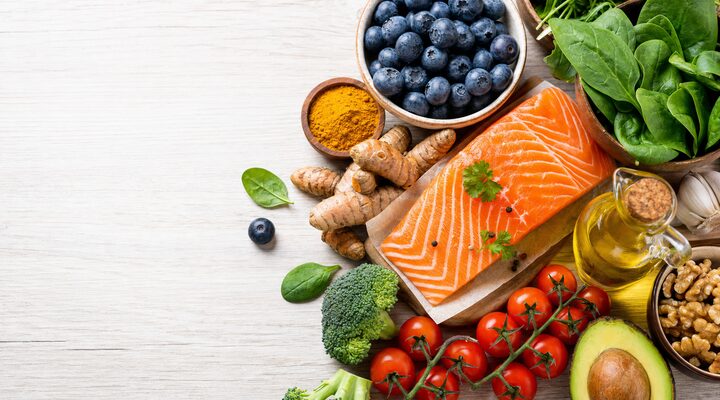
An anti-inflammatory diet for menopause is a way of eating built on vegetables, fruit, legumes, whole grains, nuts, olive oil and fish. Its aim is to keep low-grade, long-term inflammation in check as estrogen falls. The Mediterranean diet is the best-studied version of it: in trials, this way of eating lowered C-reactive protein (CRP) by about 1 mg/L compared with other diets.
CRP is a blood marker of inflammation.
An anti-inflammatory diet also supports your heart, your bones and your muscles. It works alongside medical care and doesn’t replace it.
No single food does the job. What counts is what you eat most days, over months and years.
In practice, that means vegetables and legumes at most meals, oily fish twice a week and olive oil as your everyday fat. Swap butter for olive oil when you cook, and make fish or legumes the center of dinner. Expect a steadier way of eating that lowers your risk over time. No food cures menopause symptoms.
Why menopause raises inflammation
Falling estrogen is linked to a rise in the body’s inflammatory signals, and the belly fat many women gain after menopause pushes inflammation up further.
Estrogen helps keep inflammation in check, and its decline at menopause is linked to higher levels of inflammatory signals in the blood. In a study that followed women from before to after menopause, the women who gained more fat deep in the belly had the biggest rise in CRP. This is visceral fat, the kind that wraps around your organs, not the fat you can pinch.
In a study that followed women through menopause, the rate of fat gain about doubled, adding roughly 3.5 pounds of extra fat over three to four years, while women lost a little muscle.
Poor sleep, ongoing stress and less movement add to the mix. You can read more about what causes inflammation in the body and how a CRP test measures it.
During perimenopause, the years before the final period, estrogen rises and falls unevenly. That stage has its own anti-inflammatory diet for perimenopause, built around heavy periods and cravings. After menopause, estrogen settles at a low, steady level, and that is when changes to bone, heart and muscle come to the front.
What your body needs more of after menopause
After menopause your body needs more protein to hold on to muscle and more calcium and vitamin D for your bones. It also needs more omega-3 fats and fiber for your heart. Anti-inflammatory foods can cover all of them.
Bone loss is fastest from a year before to two years after the final period. The risk of heart disease climbs after menopause.
The table sums up the targets.
| What you need | Why it matters after menopause | Anti-inflammatory foods that provide it |
|---|---|---|
| Protein | Women lose muscle with age; experts advise at least 1.0 to 1.2 g of protein per kilogram of body weight a day for adults over 65. For a 150-pound woman, that’s about 70 to 80 g a day. | Fish, eggs, Greek yogurt, tofu, edamame, lentils, chickpeas |
| Calcium | Women over 50 need 1,200 mg a day. | Plain yogurt (415 mg per 8 ounces), canned sardines with bones (325 mg per 3 ounces), tofu made with calcium sulfate (253 mg per half cup), kale |
| Vitamin D | Women 51 to 70 need 600 international units (IU) a day, and 800 IU after 70. | Salmon, sardines, eggs, fortified milk |
| Omega-3 fats | Support heart health as heart-disease risk rises. | Salmon, sardines, walnuts, chia seeds, ground flaxseed |
| Fiber | Helps keep cholesterol and blood sugar in check. | Legumes, oats, quinoa, vegetables, berries |
Among adults at high risk of heart disease, a Mediterranean diet with extra olive oil or nuts led to about 30% fewer heart attacks, strokes and heart-disease deaths than a low-fat diet. If your doctor has mentioned high blood sugar or a large waist, those are two signs of metabolic syndrome. The same foods are the base of a Mediterranean diet for metabolic syndrome.
Needs were different before menopause: an anti-inflammatory diet for women puts more iron on the plate in the years of periods and more folate around pregnancy.
Best anti-inflammatory foods for menopause
The best anti-inflammatory foods for menopause are oily fish, leafy greens and cruciferous vegetables, berries, legumes and soy foods, whole grains, nuts and seeds, olive oil, yogurt and spices, eaten most days. To help you choose, each food has an inflammation score from 1 (most anti-inflammatory) to 10 (most inflammatory). You can build the whole pattern with an anti-inflammatory diet plan.
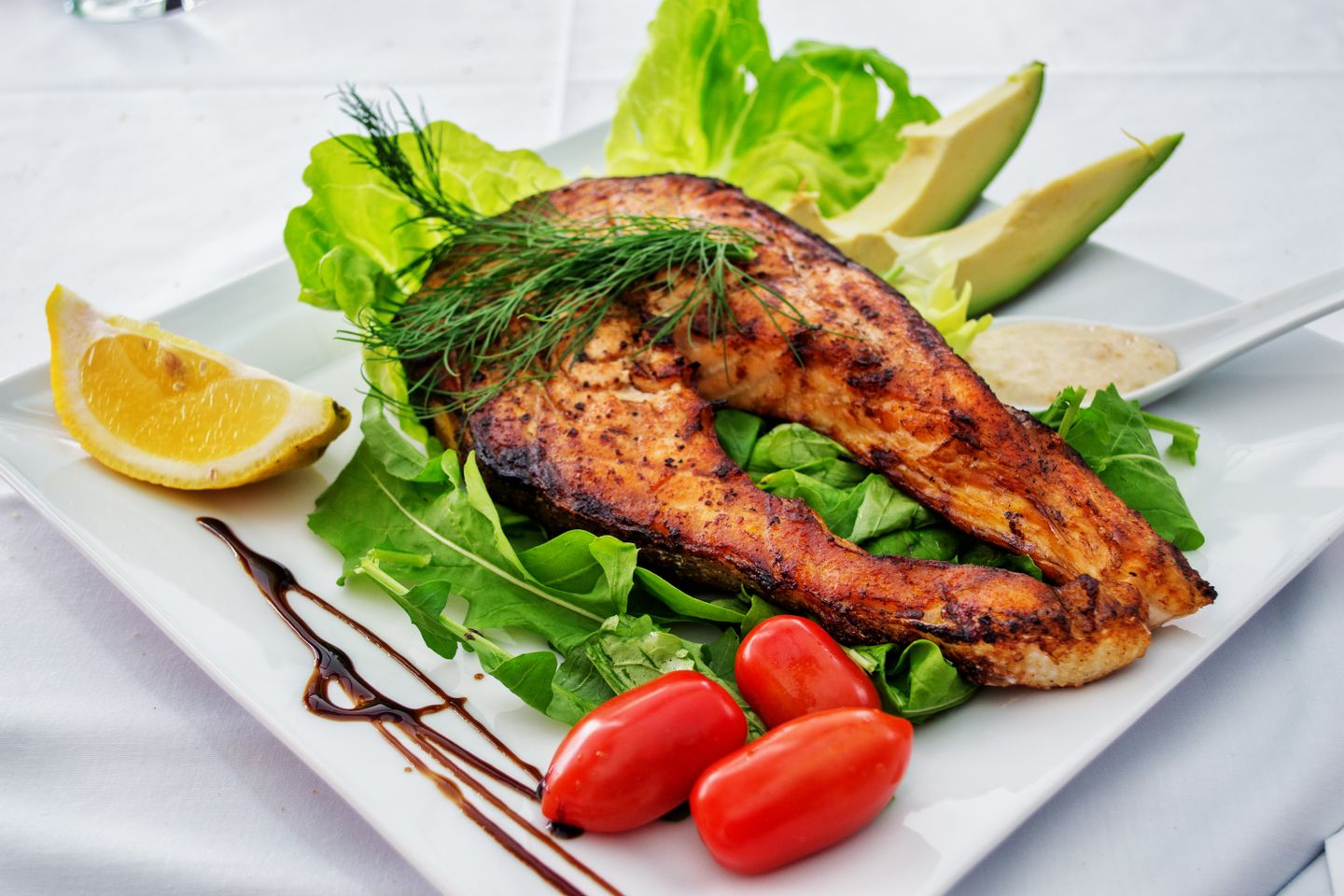
Oily fish
Oily fish gives you omega-3 fats, protein and vitamin D in one food. Aim for two servings a week. Salmon and sardines score 1, and canned sardines with bones add calcium. Bake a salmon fillet with vegetables on a weeknight, or mash sardines onto whole grain toast for lunch.
Leafy greens and cruciferous vegetables
Leafy greens and cruciferous vegetables bring fiber and plant compounds, and kale and broccoli add some calcium for your bones. A cup of cooked kale has 94 mg of calcium. Spinach, kale and broccoli all score 1, so rotate them through the week in salads, soups and stir-fries.
Berries
Berries satisfy a sweet craving with fiber and plant pigments instead of sugar. Keep a bag in the freezer for smoothies, or toss fresh ones over yogurt and oatmeal in the morning. Blueberries score 1, and a bowl of berries works as an after-dinner dessert.
Legumes and soy foods
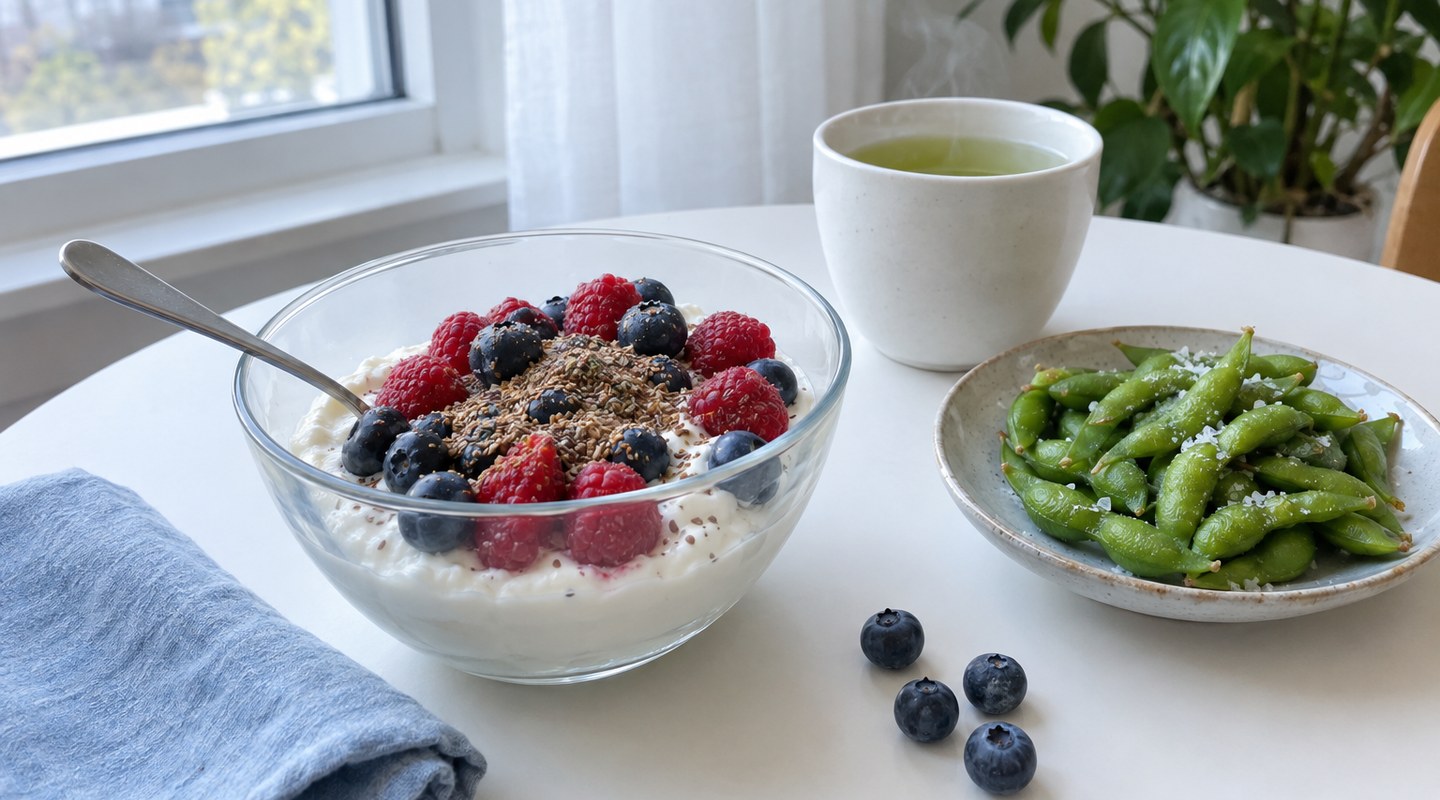
Legumes and soy foods supply protein and fiber in the same bowl, which helps you hold on to muscle and keeps blood sugar steady. Lentils, chickpeas, tofu and edamame score 2. Tofu made with calcium sulfate adds calcium too. Simmer lentils into soup on Sunday, or toss edamame into a stir-fry on a weeknight.
Whole grains
Whole grains deliver the fiber that helps keep blood sugar steady through the day. Oats and quinoa both score 2. Swap white bread for oatmeal at breakfast, or cook a pot of quinoa on Sunday to spoon alongside dinners all week.
Nuts, seeds and olive oil
Nuts, seeds and olive oil supply the healthy fats your heart needs as risk rises after menopause. Walnuts, chia seeds and ground flaxseed also bring plant omega-3 fats. Walnuts and olive oil score 1, and chia seeds, flaxseed and avocado score 2. A handful of walnuts over yogurt covers an afternoon snack.
Yogurt and kefir
Yogurt and kefir bring calcium and protein together, and plain versions skip the added sugar. By score, they are the better dairy picks: Greek yogurt and kefir score 3, while milk scores 5. Spoon Greek yogurt over berries for breakfast, or pour kefir into a smoothie.
Herbs and spices
Herbs and spices make vegetables and legumes taste good without piling on salt. Turmeric and ginger stir easily into lentil soups and stir-fries, and a cup of green tea stands in for a second coffee. Turmeric, ginger and green tea all score 1.
For the list by category, see the guide to anti-inflammatory foods.
Foods to limit during menopause
The foods to limit during menopause are added sugar and refined carbs, ultra-processed snacks, processed meat, alcohol and large amounts of saturated fat. They feed inflammation, and they crowd out the foods your body needs more of now.
- Added sugar and refined carbs: sweets, soda and white bread spike blood sugar and push better options off the plate. White bread scores 7 and soda scores 9. To dig into the research, see whether sugar causes inflammation.
- Ultra-processed snacks and fast food: in a 9-year study of 6,040 Australian women, those who ate the most high-fat, high-sugar food had 23% higher odds of hot flashes and night sweats than those who ate the least.
- Processed meat: bacon, sausages and deli meats are worth keeping occasional. Bacon scores 9.
- Alcohol: if you drink, keep it light. The guide to the least inflammatory alcohol compares the options.
- Large amounts of saturated fat: butter and fatty cuts of meat add up when they crowd out fish and legumes. Butter scores 6 and cheese scores 5, so cook with olive oil and choose leaner cuts of meat.
Most of these sit on the list of foods that cause inflammation.
Are seed oils inflammatory?
The trial evidence doesn’t show that seed oils raise inflammation. In trials in healthy people, adding linoleic acid did not raise markers of inflammation. Linoleic acid is the main omega-6 fat in oils such as soybean, corn and sunflower oil.
The issue with seed oils is mostly the fried and ultra-processed foods they come in. At home, olive oil is the better default, because of the evidence behind the Mediterranean diet, which uses olive oil as its main fat. The small amount in a packaged whole-grain bread is not a reason to worry.
Foods that can trigger hot flashes
Caffeine, alcohol and spicy food are the usual suspects for hot flashes, but the evidence is weak, and triggers vary from woman to woman.
In a survey of 1,806 women at a menopause clinic, women who used caffeine rated their hot flashes as slightly more bothersome than women who didn’t. Coffee scores 3. You can find more ideas in the guide to anti-inflammatory drinks.
Alcohol studies disagree: one found that current drinkers had fewer hot flashes than women who didn’t drink. Don’t start drinking for your hot flashes.
No studies have tested spicy food or hot drinks for hot flashes, and no clinical trials have tested avoiding triggers.
Keep a two-week diary of your hot flashes, what you ate and drank, and how you slept. Cut back on a suspect only if the pattern shows up for you.
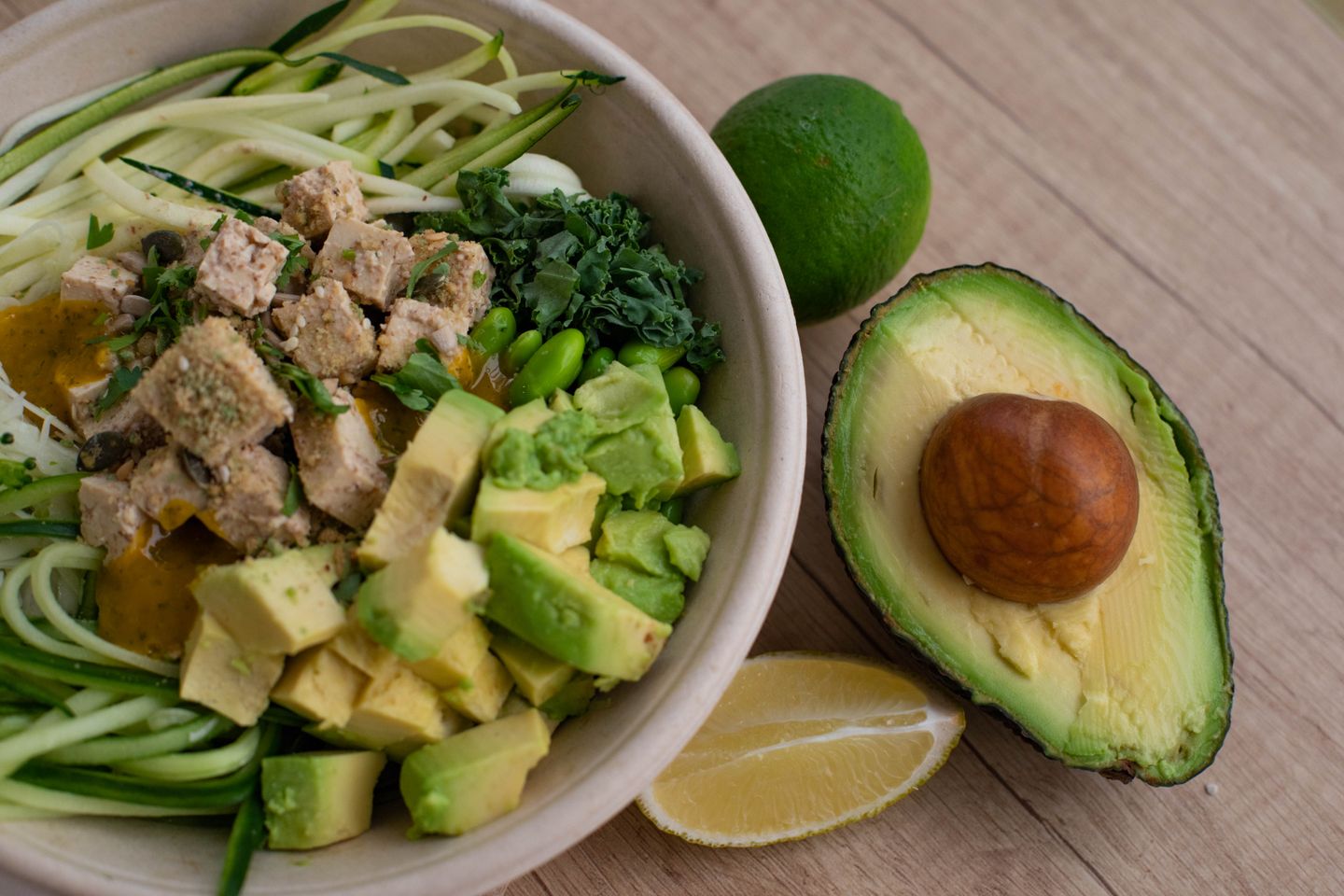
Soy isoflavone supplements, pills made from plant compounds in soy, cut hot flashes by about a fifth in frequency and a quarter in severity compared with a placebo. Even so, The Menopause Society doesn’t recommend soy foods or extracts for hot flashes, because the evidence is mixed. In the study of Australian women in midlife, women who ate the most Mediterranean-style diet had 20% lower odds of hot flashes and night sweats than those who ate the least.
Hormone therapy remains the most effective treatment for hot flashes, so bothersome ones are worth a conversation with your doctor.
Joint pain in menopause: what food can do
Joint and muscle pain is common after menopause, and an anti-inflammatory diet, especially omega-3 fats, may ease it, though it hasn’t been tested in menopause specifically.
Across studies of 93,021 women, about 59% of postmenopausal women reported muscle or joint pain, compared with 40% before menopause.
In people with inflammatory joint disease, omega-3 supplements taken for 3 to 4 months eased joint pain and morning stiffness. Those trials were not in women going through menopause.
Start with the same eating pattern, and add these steps:
- Oily fish twice a week.
- Walnuts and ground flaxseed on oatmeal or yogurt.
- A Mediterranean-style pattern overall.
- A steady weight, to take load off your knees.
If you have rheumatoid arthritis, see the Mediterranean diet for rheumatoid arthritis.
New joint swelling, redness or pain that wakes you up at night is a reason to see a doctor.
Beyond food: exercise, sleep and treatment
What you eat works best alongside strength training, enough sleep and the right medical care.
In a trial in postmenopausal women with low bone density, supervised, twice-weekly heavy strength and impact training raised spine bone density by 2.9%, while women on a gentle home program lost 1.2%.
In a large study of postmenopausal women, losing 10% or more of body weight was linked to higher odds of hot flashes going away.
Aim for a consistent bedtime and a cool, dark room. A daily walk or another steady habit can lower day-to-day stress.
At home, a strength session can be squats, wall push-ups and step-ups with a pair of dumbbells, twice a week.
Ask your doctor about hormone therapy and about a bone-density test if you haven’t had one, and bring your list of questions to the visit. For more steps, see how to reduce inflammation.
A day of anti-inflammatory eating after menopause
Here’s a sample day built from easy recipes, with protein at every meal.
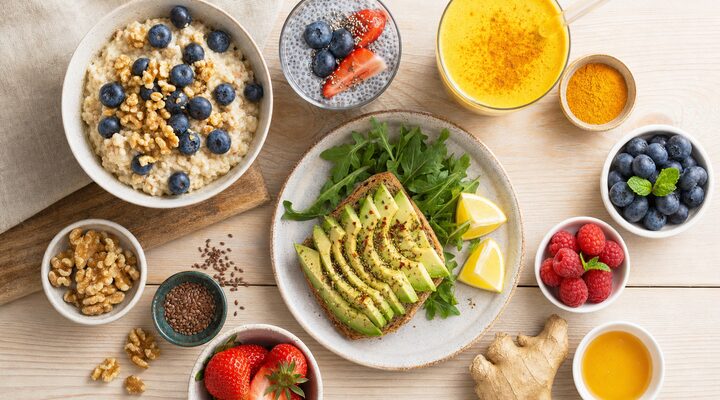
- Breakfast: savory quinoa breakfast bowl with kale and eggs, an easy option for busy mornings, or turmeric tofu scramble with bell peppers, which comes together easily.
- Lunch: roasted beet, lentil and walnut salad, or Mediterranean lentil and vegetable soup, both easy to make.
- Dinner: lemon thyme baked salmon with asparagus, or sardine and arugula whole grain toasts, easy either way.
- Snack: plain Greek yogurt with blueberries and a spoonful of ground flaxseed.
For a first step, add one serving of oily fish and one of yogurt or tofu this week.
Frequently asked questions
What supplements are good for menopause?
Calcium and vitamin D are the supplements to consider after menopause, but only if your diet falls short of the amounts women need. Your doctor can check that before you start any. Omega-3 supplements did not reduce hot flashes in a trial, and soy extracts have mixed evidence.
Is coffee bad during menopause?
Coffee is fine for most women during menopause, and it has an inflammation score of 3. In one survey of women at a menopause clinic, caffeine was linked to slightly more bothersome hot flashes. If hot flashes or sleep are a problem, try cutting back for two weeks.
Is soy safe after menopause?
Eating soy foods such as tofu and edamame is not linked to a higher risk of breast cancer. In a study of 300,000 Chinese women, soy intake was not linked to breast cancer risk. That finding covers soy foods, not high-dose soy extracts. Tofu and edamame score 2.
Can an anti-inflammatory diet help with menopause weight gain?
An anti-inflammatory diet can help with menopause weight gain, because protein and fiber fill you up. No diet stops the body changes of menopause on its own, though. Strength training to hold on to muscle matters as much as what you eat.
How long until an anti-inflammatory diet makes a difference?
An anti-inflammatory diet can change how full and energetic you feel within a few weeks. CRP, cholesterol and bone density change over months. The Mediterranean trials that lowered CRP lasted at least 12 weeks, so give the diet at least three months before you judge it.