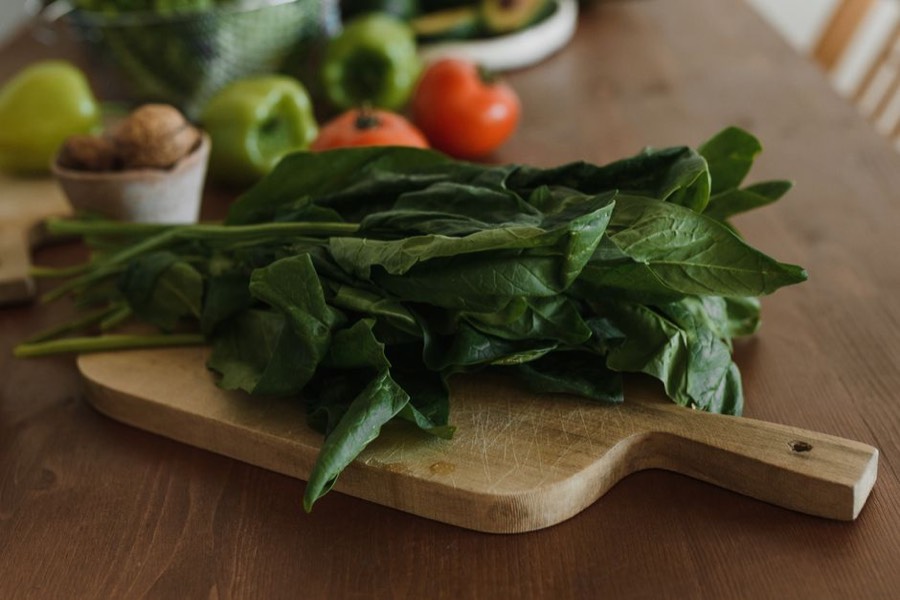
Fresh spinach leaves on a wooden chopping board

Spinach

Anti-InflammatoryVegetables
Low
Inflammation Score
1/10
Anti-inflammatoryInflammatory
Serving size
1 cup cooked (180 g)
Key nutrients
MagnesiumVitamin KLutein and zeaxanthinFolate
How often
Most days, a couple of handfuls wilted into whatever you are cooking

Why spinach is anti-inflammatory

Spinach is anti-inflammatory, and two nutrients explain most of it: magnesium and vitamin K. It is a leafy green that shrinks a lot when cooked, so a large serving is easy to eat.

It is one of the best plant sources of magnesium, a mineral many people do not get enough of. In population studies, people who eat the most magnesium tend to have lower levels of an inflammation marker in their blood than people who eat the least. This is an association: it does not prove that eating spinach lowers inflammation, but it fits with how the body uses magnesium.

Spinach also contains more vitamin K than almost any other food, and one cooked cup covers several days’ worth. Studies that measured vitamin K levels in people found the same kind of association: higher levels went with less inflammation.

If you eat spinach often, frozen is a good option: it is picked and frozen the same day and costs less than bagged leaves. Products with spinach in the name usually contain little of it. Creamed spinach is mostly a butter and flour sauce, and spinach dip is mostly cream cheese and mayonnaise. Green wraps and spinach pasta use a small amount of powder for colour.

Spinach is high in oxalates, compounds that can contribute to kidney stones. If you have had one, boil the leaves rather than steaming them, because some of the oxalate passes into the water. Spinach is also known for its iron, but its own oxalate blocks most of that iron from being absorbed.

Spinach on the AIP diet

Spinach is allowed on the Autoimmune Protocol from the first day of the elimination phase. None of the groups that come out in that phase covers a leafy green: not grains, legumes, nuts, seeds, nightshades or dairy. It matters more here than in an ordinary diet, because elimination takes away beans and nuts, which is where most people get their magnesium, and spinach is one of the few sources left standing.

Benefits

  • One of the best plant sources of magnesium, a mineral most people fall short of
  • More vitamin K than almost any food, and people with plenty of it show less inflammation
  • A bag cooks down to two forkfuls, so a big portion fits any meal
  • Frozen is as good as fresh and costs a fraction of the bagged leaves

Watch out for

  • High in oxalates, which matters if you have ever had a kidney stone
  • Spinach is famous for its iron, but its own oxalate blocks most of what it carries
  • Creamed spinach and spinach dip are mostly butter, cream cheese and mayonnaise
  • Green wraps and spinach pasta carry a pinch of powder for the colour, no more

Get the inflammation score of any meal

Just snap a photo or describe your food to get its inflammation score and uncover hidden patterns that may be affecting your well-being.

Download on the App StoreGet it on Google Play
InflammaScan app

Frequently asked

Is spinach inflammatory?

No, spinach is anti-inflammatory. It is one of the best plant sources of magnesium and it holds more vitamin K than almost any other food, and people who get plenty of both show less inflammation in a blood test.

Is raw or cooked spinach better?

Cooked, for a dull reason: a bag of raw leaves fills a bowl and cooks down to two forkfuls, so you get through far more of it. Raw in a salad still counts, you just end up eating less.

Is frozen spinach as good as fresh?

Yes, and it is usually the better buy. It is picked and frozen the same day, costs a fraction of the bagged leaves, and since spinach collapses in the pan anyway, you lose nothing.

Can you eat spinach on the AIP diet?

Yes, in every phase including elimination. It is a leafy green, not a grain, legume, nut, seed, nightshade or dairy, and it is one of the few good sources of magnesium left once beans and nuts go.

The easiest way to follow an anti-inflammatory diet.

Identify inflammatory foods in seconds, log your symptoms and discover what’s inflaming you. Includes hundreds of recipes.

Download on the App StoreGet it on Google Play
InflammaScan app