
From your first period to the years after menopause, your body goes through several stages, and what you eat to keep long-term inflammation low can change with each one.
The problem is that most advice treats every woman the same, as if a 25-year-old with painful periods and a 55-year-old after menopause needed the same plate. Advice aimed at women usually comes from social media or supplement ads promising to balance your hormones.
In this article, you’ll find an anti-inflammatory diet for women: the foods to eat every day, what changes at each stage of life and a week of meals to start with.
What is an anti-inflammatory diet for women?
An anti-inflammatory diet for women is a way of eating built on vegetables, fruit, legumes, whole grains, nuts, olive oil and fish. It aims to keep low-grade, long-term inflammation in check, with the nutrients women need most at each stage of life.
The Mediterranean diet is the best-studied version: it lowered C-reactive protein (CRP), a blood marker of inflammation, by about 1 mg/L compared with other diets.
No single food on its own lowers inflammation. What counts is what you eat most days. The core foods are the same for every woman, and what changes from one stage of life to the next is which nutrients and which foods deserve more room on the plate.
Why inflammation affects women differently
Women’s immune systems generally react more strongly than men’s, and estrogen, which rises and falls across the menstrual cycle, pregnancy and the years around menopause, shapes how the immune system responds.
Estrogen can dampen inflammation in some settings and promote it in others. After menopause, falling estrogen is linked to a rise in signals of inflammation in the blood.
That stronger immune response has a cost. Nearly 80% of people with an autoimmune disease are women. Two examples are Hashimoto’s thyroiditis and rheumatoid arthritis. With Hashimoto’s, some women follow an AIP (autoimmune protocol) diet for Hashimoto’s alongside their treatment; with rheumatoid arthritis, a Mediterranean diet for rheumatoid arthritis.
Heart disease is the leading cause of death for women in the US. The CDC puts it at about 1 in every 5 female deaths. Long-term inflammation is one of the processes behind heart disease.
The best anti-inflammatory foods for women
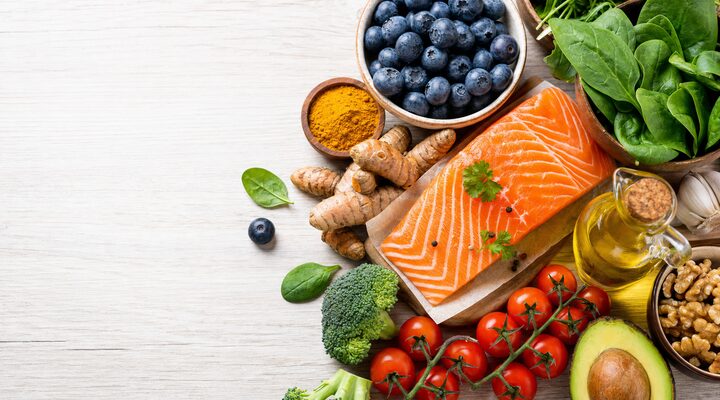
The best anti-inflammatory foods for women are oily fish, leafy greens and cruciferous vegetables such as broccoli and cauliflower, berries and citrus, legumes and soy foods, whole grains, nuts and seeds, olive oil and plain yogurt, eaten most days. You don’t need all of them in one day: the goal is to eat from most of these groups over a normal week.
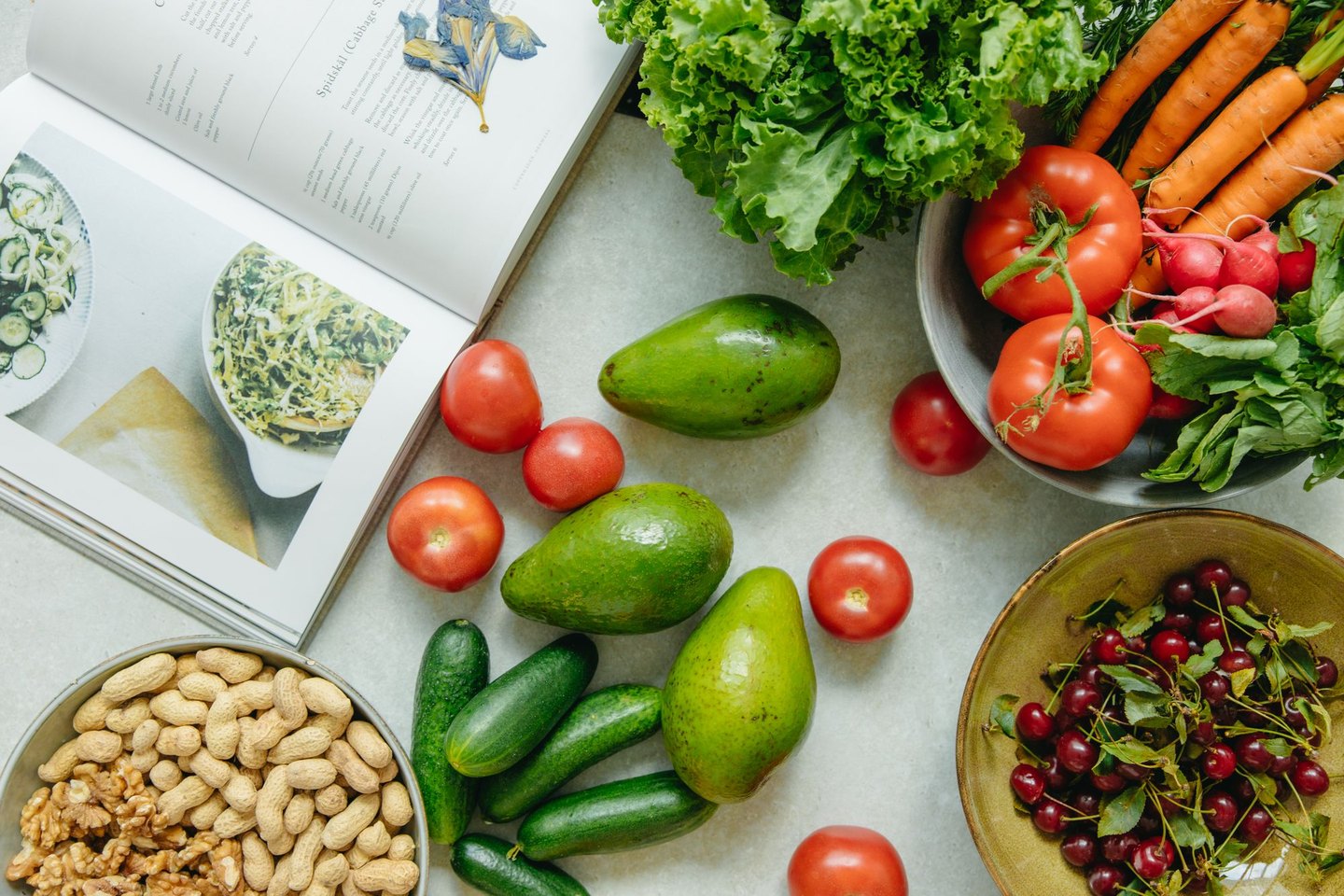
This table lists each food group, a few of the best anti-inflammatory foods in it and what they give you. Each food has an inflammation score from 1 (most anti-inflammatory) to 10 (most inflammatory).
| Food group | Foods and their inflammation score | What they give you |
|---|---|---|
| Oily fish | Salmon (1), sardines (1) | Omega-3 fats and vitamin D; sardines eaten with their soft bones add calcium |
| Leafy greens and cruciferous vegetables | Spinach (1), kale (1), broccoli (1) | Folate; kale and broccoli add calcium; vitamin C in broccoli helps you absorb iron from plant foods |
| Berries and citrus | Blueberries (1), strawberries (1), oranges (2) | Vitamin C, which helps you absorb iron from plant foods |
| Legumes and soy | Lentils (2), chickpeas (2), black beans (2), tofu (2) | Iron from plant foods, fiber, folate; tofu made with calcium sulfate adds calcium |
| Whole grains | Oats (2), quinoa (2), brown rice (3) | Fiber |
| Nuts and seeds | Walnuts (1), almonds (2), chia seeds (2), flaxseed (2) | Omega-3 fats from plants (walnuts, chia, flaxseed) and fiber |
| Healthy fats | Olive oil (1), avocado (2) | The main fat of the Mediterranean diet |
| Yogurt and eggs | Greek yogurt (3), eggs (3) | Protein; yogurt adds calcium; eggs add a little vitamin D |
| Herbs, spices and drinks | Turmeric (1), ginger (1), green tea (1) | Flavor in place of salt and sugar |
Fill most of your plate with the foods that score 1 and 2, and mix foods from different groups during the week. Foods that score 3, like Greek yogurt and eggs, still fit every day.
Foods that cover the nutrients women most often lack
Iron, calcium, vitamin D, folate and omega-3 fats are the nutrients women most often fall short on. Each one comes in foods that also have a low inflammation score.

Iron
Iron helps your blood carry oxygen, and falling short leaves you unusually tired. About 1 in 6 US women aged 20 to 45 is low in iron. Women 19 to 50 need 18 mg of iron a day, and heavy periods raise the risk of falling short. From age 51, the amount drops to 8 mg.
Foods with iron include:
- Lentils
- Beans
- Spinach
- Tofu
Your body absorbs iron from plant foods better with vitamin C foods like:
- Citrus
- Strawberries
- Bell peppers
- Tomatoes
- Broccoli
Lentils cooked with tomatoes, or chickpeas with a squeeze of lemon, are easy pairings. If you feel unusually tired, ask your doctor for a blood test of your iron levels before taking iron pills.
Calcium and vitamin D
Calcium and vitamin D work together to keep your bones strong. Women need 1,000 mg of calcium a day from 19 to 50 and 1,200 mg from 51, plus 600 IU of vitamin D a day up to age 70. Bone loss also speeds up around menopause, from about a year before the final period, so calcium and vitamin D foods deserve extra attention in those years.
Foods with calcium include:
- Plain yogurt
- Sardines eaten with their soft bones
- Tofu made with calcium sulfate
- Kale
Salmon and eggs give vitamin D.
Folate
Folate helps your body build new cells, and it matters most around pregnancy. The CDC advises every woman who could become pregnant to take 400 micrograms of folic acid a day, because it helps prevent serious birth defects of the brain and spine. Folic acid is the form of folate in supplements and fortified foods. These defects happen in the first weeks of pregnancy, often before a woman knows she is pregnant.
Foods with folate include:
- Asparagus
- Lentils
- Beans
- Chickpeas
- Leafy greens like spinach
Remember that food alone doesn’t replace the supplement if you could become pregnant. Your body absorbs about 85% of the folic acid in a supplement taken with food, but only about half of the folate in food.
Omega-3 fats
Omega-3 fats are a type of fat found mainly in oily fish and in some nuts and seeds. The main sources are:
- Oily fish like salmon and sardines
- Walnuts
- Chia seeds
- Flaxseed
Walnuts, chia seeds and flaxseed give a plant form of omega-3.
The FDA advises 2 to 3 servings (8 to 12 ounces) a week of lower-mercury fish in pregnancy and while breastfeeding. Salmon, sardines, shrimp and canned light tuna are on the FDA’s list of lower-mercury fish. Two servings of oily fish a week is a simple target for every woman.
What to eat at each stage of a woman’s life
The foods you eat most stay steady across life, and what changes is which ones deserve more room on your plate: more iron in the years of periods, more folate in pregnancy and more calcium after menopause.
Foods that ease period cramps
The anti-inflammatory foods for period cramps with study results behind them are ginger and oily fish such as salmon and sardines, along with water and warm drinks.
Period pain comes from prostaglandins, substances made in the lining of the uterus that make its muscles contract. Ginger eased period pain about as well as common painkillers. In other research, omega-3 fats reduced pain and the need for painkillers.
Salmon and sardines contain those same omega-3 fats, and ginger works as a spice or a tea.
See your doctor if the pain stops your usual activities.
Foods that help with PCOS and insulin resistance
With polycystic ovary syndrome (PCOS), an anti-inflammatory diet for PCOS means more legumes, whole grains, vegetables, oily fish and nuts, and fewer refined carbs and added sugar.
Women with PCOS have higher CRP than women without it. Insulin resistance, when the body responds less to insulin so blood sugar stays higher, is common in women with PCOS. The DASH (Dietary Approaches to Stop Hypertension) diet, rich in fruit, vegetables, whole grains and low-fat dairy, lowered insulin, insulin resistance and CRP in women with PCOS and overweight.
Foods that may ease endometriosis pain
An anti-inflammatory diet for endometriosis is built on oily fish, vegetables, legumes and olive oil, with less red and processed meat.
Endometriosis is a long-term condition, and there is currently no cure. Eating more omega-3 fats from fish is linked to a lower chance of being diagnosed with endometriosis. In another study, eating a lot of red meat was linked to a higher chance.
For women whose pelvic pain continued despite hormonal treatment, adding Mediterranean diet coaching and exercise to that treatment eased pelvic pain between periods more than hormonal treatment alone.
On most days, that means vegetables and legumes at meals, olive oil as your main fat and red and processed meat kept small, with salmon or sardines twice a week.
What to eat during pregnancy and after birth
During pregnancy, you need more iron and folate, fish from the lower-mercury list and the same core foods as before.
Iron needs go up to 27 mg a day, and folate to 600 micrograms a day, so keep taking your folic acid supplement alongside folate-rich foods. Eat 2 to 3 servings of fish a week from the FDA’s lower-mercury list, such as salmon and sardines. Skip the fish highest in mercury:
- King mackerel
- Marlin
- Orange roughy
- Shark
- Swordfish
- Tilefish from the Gulf of Mexico
- Bigeye tuna
In pregnant women with risk factors such as obesity or high blood pressure, a Mediterranean-style diet was linked to a lower risk of gestational diabetes, diabetes that starts during pregnancy, and to less weight gain, though it didn’t lower pregnancy complications overall.
While breastfeeding, the fish advice stays the same and iron needs drop to 9 mg a day. Your doctor or midwife will recommend the appropriate supplements for you during pregnancy, including any omega-3 supplement you may need.
Foods for heavy periods and cravings in perimenopause
An anti-inflammatory diet for perimenopause replaces the iron that heavier periods take and keeps blood sugar steadier through the day.
In perimenopause, estrogen rises and falls without a steady direction, and periods often last longer or are heavier than before, sometimes with spotting in between. Iron from legumes and spinach, eaten with a vitamin C food such as bell peppers, tomatoes or oranges, helps replace what heavy bleeding takes each month.
Protein and fiber at every meal keep blood sugar steadier and cravings lower. The foods to reach for are:
- Lentils
- Chickpeas
- Spinach
- Bell peppers
- Oats
- Greek yogurt
Foods that protect bone, heart and muscle after menopause
After menopause, estrogen stays low, so bone, heart and muscle need more care than before.
Calcium needs rise to 1,200 mg a day from age 51. Heart disease risk rises faster across the years around menopause, so these are good years to build heart-healthy habits. In a study that followed 6,040 midlife women for 9 years, eating the most Mediterranean-style diet was linked to 20% lower odds of hot flashes and night sweats.
Most days, build meals on:
- Yogurt
- Tofu
- Leafy greens
- Legumes
- Sardines or salmon, twice a week
Yogurt, legumes and fish also give protein, and experts advise adults over 65 to eat at least 1.0 to 1.2 g of protein per kilogram of body weight a day to help keep muscle. An anti-inflammatory diet for menopause builds each day around calcium and vitamin D foods such as yogurt, sardines and salmon.
Foods to limit
No food is off-limits, but added sugar, refined grains, ultra-processed snacks, processed and red meat, fried food and alcohol are the foods linked to inflammation, so they are best kept for once in a while.
- Added sugar: soda (9), other sugary drinks and sweets. Swapping soda for water or green tea is an easy first change, and it cuts the added sugar linked to inflammation.
- Refined grains: white bread (7) and white rice (6), which lack the fiber that whole grains keep.
- Processed and red meat: bacon (9) and other processed meats, and beef (7) in large portions.
- Ultra-processed snacks: pastries, chips and similar.
- Alcohol: best kept to occasional drinks.
You don’t need to cut seed oils such as soybean, corn or sunflower oil. In healthy people, eating more linoleic acid, an omega-6 fat found in those oils, left markers of inflammation unchanged.
A 7-day anti-inflammatory meal plan for women
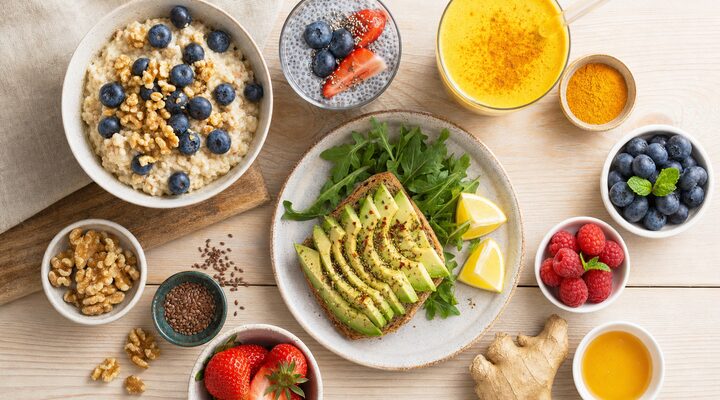
This 7-day meal plan puts everything above into practice: the core foods every day and the nutrients women most often lack, in easy recipes. Snacks are built on fruit, nuts and yogurt.
- Protein at every meal, which keeps meals filling.
- Legumes or whole grains every day, for fiber.
- Vegetables at two meals or more.
- Oily fish three times in the week, for omega-3 fats and vitamin D, within the FDA’s advice for pregnancy.
- A calcium food every day.
- A vitamin C food next to iron from plant foods.
Day 1
- Breakfast: strawberry pistachio yogurt parfait: Greek yogurt for calcium and protein, strawberries for vitamin C.
- Lunch: roasted beet, lentil and walnut salad: lentils for iron and folate, walnuts for plant omega-3.
- Dinner: salmon and vegetable soup with dill: salmon for omega-3 and vitamin D, the first of your three oily fish meals this week.
- Snack: an orange and a handful of almonds, for vitamin C plus fiber.
Day 2
- Breakfast: broccoli and spinach egg muffins: spinach for folate, eggs for protein and a little vitamin D, easy to make ahead.
- Lunch: sardine and arugula whole-grain toasts: sardines for omega-3, vitamin D and calcium, your second oily fish meal.
- Dinner: lentil bolognese with whole-wheat spaghetti: lentils for iron, tomatoes for vitamin C and whole-wheat pasta for fiber.
- Snack: raspberry almond chia pudding: chia for plant omega-3 and fiber.
Day 3
- Breakfast: blueberry walnut overnight oats: oats for fiber, Greek yogurt for calcium, walnuts and chia for plant omega-3, assembled the night before.
- Lunch: Mediterranean chickpea and quinoa salad: chickpeas for iron and folate, tomatoes and lemon for vitamin C.
- Dinner: ginger sesame tofu with bok choy: tofu for plant protein, bok choy as the day’s leafy green.
- Snack: strawberry yogurt freezer bark: yogurt for calcium.
Day 4
- Breakfast: savory quinoa breakfast bowl with kale and eggs: kale for folate and calcium, eggs for protein.
- Lunch: Tuscan kale and cannellini bean soup: beans for iron, folate and fiber, kale for calcium.
- Dinner: lemon thyme baked salmon with asparagus: salmon for omega-3 and vitamin D, your third oily fish meal, asparagus for folate.
- Snack: pumpkin seed and cranberry oat bars: oats and flaxseed for fiber, make-ahead.
Day 5
- Breakfast: Mediterranean hummus breakfast toast: chickpeas for iron, tomatoes and lemon for vitamin C.
- Lunch: baked falafel bowls with tahini sauce: chickpeas and quinoa for iron and fiber, lemon for vitamin C.
- Dinner: mushroom and spinach buckwheat risotto: spinach for folate, lemon for vitamin C, buckwheat as a whole grain.
- Snack: dark chocolate-dipped strawberries: strawberries for vitamin C, and dark chocolate for something sweet.
Day 6
- Breakfast: sweet potato and black bean breakfast hash: black beans for iron and fiber, red bell pepper and lime for vitamin C.
- Lunch: chicken and vegetable soba noodle salad: chicken for protein, plenty of crunchy vegetables.
- Dinner: Moroccan chickpea and apricot stew: chickpeas for iron and fiber, lemon for vitamin C.
- Snack: cherry almond breakfast smoothie: flaxseed for plant omega-3, and cherries score 1.
Day 7
- Breakfast: banana flaxseed oat pancakes: oats and flaxseed for fiber, walnuts for plant omega-3.
- Lunch: white bean and kale stuffed sweet potatoes: white beans for iron and fiber, kale for calcium, lemon for vitamin C.
- Dinner: turmeric chicken with brown rice and spinach: chicken for protein, spinach for folate and iron, lemon for vitamin C.
- Snack: grilled peaches with vanilla yogurt: Greek yogurt for calcium.
To keep eating this way after the first week, follow a general anti-inflammatory diet plan built on the same foods or a 21-day anti-inflammatory diet with three weeks of meals.
Frequently asked questions
Is Greek yogurt anti-inflammatory?
Greek yogurt scores 3 out of 10, close to the anti-inflammatory end of the inflammation score. Dairy foods did not raise inflammation and leaned slightly anti-inflammatory, except in people allergic to cow’s milk. Plain, unsweetened yogurt is the better pick, because sweetened versions add the sugar this way of eating limits.
What is the best drink to reduce inflammation?
Water is the best everyday drink on an anti-inflammatory diet. Green tea scores 1 and drinking coffee is linked to slightly lower CRP, and the link tended to be stronger in women. Sugary drinks like soda score 9, so they are the ones to swap first.
Can an anti-inflammatory diet balance your hormones?
No diet balances hormones in general. In specific conditions, food helps specific things: in women with PCOS and overweight, the DASH diet lowered insulin and CRP. For hot flashes, hormone therapy remains the most effective treatment. Be wary of any product sold as hormone-balancing.
Can an anti-inflammatory diet help women lose weight?
A Mediterranean-style diet led to modest weight loss compared with other diets, more when combined with fewer calories and exercise. Protein and fiber keep meals filling, which helps with appetite. The diet isn’t built as a weight-loss plan, though.
Do you need a meal plan to follow an anti-inflammatory diet?
You don’t need a meal plan to follow an anti-inflammatory diet. A plan helps most in the first weeks, when deciding every meal from scratch takes energy. What makes the diet work is eating the same pattern most days: vegetables, fruit, legumes, whole grains, fish and olive oil, with sugary drinks and processed meat as occasional choices. Once that pattern feels automatic, you can plan less.