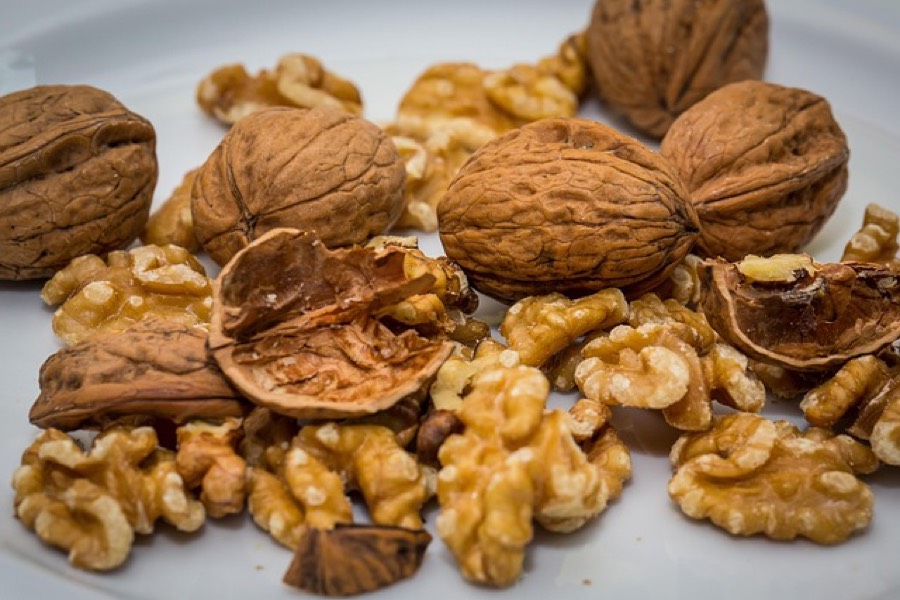
Whole walnuts in the shell next to shelled walnut halves with their thin papery brown skin, on a white plate

Walnuts

Anti-InflammatoryNuts & Seeds
Low
Inflammation Score
1/10
Anti-inflammatoryInflammatory
Serving size
1 small handful (28 g, about 14 halves)
Key nutrients
Alpha-linolenic acid (ALA)Ellagitannins (in the skin)Gamma-tocopherolCopper
How often
Daily, one small handful, raw and with the skins on

Why walnuts are anti-inflammatory

Walnuts are anti-inflammatory, and among nuts they are the odd one out. Almost every other nut is built on stable fat that keeps for months in a cupboard. A walnut is not. Most of its fat is the fragile kind, and it carries more of the plant form of omega-3 than any other common nut. That is a large part of why walnuts sit right at the bottom of the inflammation scale. It is also why they go stale faster than anything else in the nut bowl.

The other half of the story is the papery skin, the bitter bit that recipes tell you to rub off. It is packed with plant compounds your body cannot absorb as they are. The bacteria in your gut take them apart first and turn them into a form that does reach you. So how much a walnut does for you depends partly on which bacteria you happen to have. Some people convert plenty. Some convert almost none. It is one reason the same handful shows up clearly in one person’s blood work and barely at all in another’s.

Walnuts score 1 out of 10 on the inflammation scale, on one condition: they have to be fresh. Warmth, light and time break down that delicate fat. A stale walnut tastes sharp and sour, closer to old paint than to a nut, and that is not the honest bitterness of the skin. It is the fat spoiling, and the fat is the part you bought the nut for. Buy small bags, keep them in the fridge or the freezer, and eat them raw or barely toasted.

Walnuts on the AIP diet

Walnuts are out during the elimination phase of the Autoimmune Protocol. So is every other nut and seed, and walnut oil with them. This is one of the harder cuts for anyone who lives on salads and pesto, where walnuts do the work of both crunch and fat. Nuts return early in the reintroduction, and a walnut is easy to trial because you eat it on its own.

Benefits

  • Carries more plant omega-3 than any other common nut
  • The bitter papery skin is where the plant compounds sit, so leave it on
  • Your gut bacteria turn those compounds into a form the body can use
  • Walnut-rich diets brought down triglycerides and cholesterol in pooled trials

Watch out for

  • The fragile fat spoils fast, and a sharp, sour taste means the nut is past it
  • Sugar glazed and candied walnuts belong with dessert, not with a handful of nuts
  • Tree nut allergy is common and can be severe
  • Around 185 calories in a handful, so a bag goes down quickly

Get the inflammation score of any meal

Just snap a photo or describe your food to get its inflammation score and uncover hidden patterns that may be affecting your well-being.

Download on the App StoreGet it on Google Play
InflammaScan app

Frequently asked

Are walnuts inflammatory?

No, walnuts are anti-inflammatory, and they usually sit at the top of the nuts for it. They carry more plant omega-3 than any other common nut, and the bitter papery skin brings compounds that your gut bacteria turn into something useful. Freshness is the catch: a stale walnut has lost the fat that made it worth eating.

Should you eat the skin on walnuts?

Yes. That thin papery layer is where most of the plant compounds are, and it is also where the bitterness comes from, which is exactly why recipes tell you to rub it off. Leave it on and put up with the edge.

How can you tell if walnuts have gone off?

Taste one. A fresh walnut is mild and slightly sweet with a bitter edge from the skin. A stale one is sharp and sour, closer to old paint, and that flavour does not cook out. Keep them in the fridge or the freezer rather than the cupboard, and buy small bags you will finish.

Are walnuts allowed on the AIP diet?

No, not during the elimination phase, which takes out every nut and seed, walnut oil included. Nuts come back early in the reintroduction stage, and a walnut is easy to trial because you eat it on its own rather than baked into something.

The easiest way to follow an anti-inflammatory diet.

Identify inflammatory foods in seconds, log your symptoms and discover what’s inflaming you. Includes hundreds of recipes.

Download on the App StoreGet it on Google Play
InflammaScan app