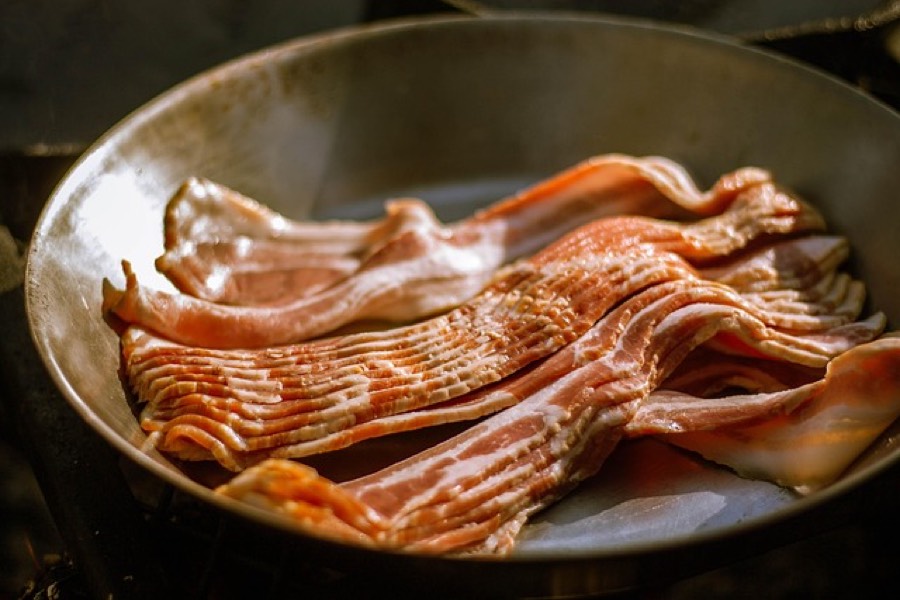
Raw streaky bacon rashers laid out in a metal frying pan

Bacon

InflammatoryProteins
High
Inflammation Score
9/10
Anti-inflammatoryInflammatory
Serving size
3 rashers cooked (35 g)
Key nutrients
SodiumSodium nitriteSaturated fatProtein
Better swap

Why bacon is inflammatory

Bacon is inflammatory. It is pork belly packed in salt and sodium nitrite for days, often smoked, then fried until the edges crisp. Curing and hard heat are what push it to 9 out of 10 on our inflammation scale.

Among hundreds of thousands of British adults, those who ate more processed meat had higher inflammation markers in their blood. The link was stronger than for fresh red meat or poultry. Most of the difference faded once body weight was taken into account, so part of that gap was body fat, not the bacon.

Sodium nitrite keeps bacon pink and holds off dangerous bacteria. In the gut it can also form N-nitroso compounds, which can damage the DNA in your bowel lining. That is one reason health agencies count processed meat among the causes of bowel cancer, and browning the meat hard produces more of those compounds.

Uncured bacon is not an exception: it is cured with celery powder, a natural source of the same nitrite. Read the salt figure instead of the front of the pack. Three rashers carry about a third of an adult’s daily sodium, and salty diets appear to push immune cells toward a more inflammatory state.

Cook it in the oven or on medium heat instead of blackening it, and pour off the fat rather than cooking with it. Bacon works better as a seasoning than as a serving: one rasher chopped through a pan of lentils gives most of the flavour for a fraction of the meat.

Bacon on the AIP diet

Bacon is not allowed during the elimination phase of the Autoimmune Protocol, and the reason is the curing rather than the pork. AIP removes added sugar and manufactured preservatives, and most bacon carries both, often with a spice blend on top. Fresh pork is allowed from day one, so a plain cut cooked at home covers the same meal. A few salt-only brands fit once you start adding foods back.

Benefits

  • Complete protein, with every amino acid your body cannot make
  • Selenium, zinc and B vitamins, the same ones fresh pork provides
  • Strong enough in flavour that one rasher can season a whole pan
  • Curing keeps it edible for weeks without freezing

Watch out for

  • Cured with sodium nitrite, which can form N-nitroso compounds in the gut
  • Three rashers carry about a third of an adult's daily sodium
  • Usually fried hard, and browning meat creates more of those compounds
  • Processed meat, the category most closely linked to inflammation markers

Get the inflammation score of any meal

Just snap a photo or describe your food to get its inflammation score and uncover hidden patterns that may be affecting your well-being.

Download on the App StoreGet it on Google Play
InflammaScan app

Frequently asked

Is bacon inflammatory?

Yes. Bacon is processed meat, cured with salt and preservatives before it reaches you, and that group of foods lines up with higher inflammation markers more closely than fresh meat does.

Is turkey bacon better than pork bacon?

Only a little. It carries less fat, but it is cured the same way and often holds just as much salt, so the part that makes bacon a problem is still in it.

Does uncured bacon avoid nitrites?

No. Uncured bacon is cured with celery powder, a natural source of nitrite. The label describes where the nitrite came from, not whether the meat has any.

How much bacon is too much?

There is no safe number to quote. The usual advice on processed meat is to make it occasional rather than weekly, and to keep the portion small when you do eat it.

The easiest way to follow an anti-inflammatory diet.

Identify inflammatory foods in seconds, log your symptoms and discover what’s inflaming you. Includes hundreds of recipes.

Download on the App StoreGet it on Google Play
InflammaScan app



