You’re eating to lower inflammation. You’ve cut the obvious sugar, yet the list of suspects keeps growing: the juice, the yogurt and the granola.
At some point every sweet thing starts to feel suspect. Does sugar cause inflammation, even in a banana or a spoon of honey?
By the end of this guide, you’ll know which sugar to cut first and which you can keep.
Added sugar in excess, especially from sugary drinks, is linked to chronic inflammation, mostly through extra calories, belly fat and insulin resistance. Whole fruit doesn’t act the same way: in controlled trials it lowered C-reactive protein (CRP), a standard blood marker of inflammation.
Does sugar cause inflammation?
Yes, when it’s added sugar eaten in excess: too much, too often. A single dessert doesn’t cause chronic inflammation; the pattern around it does.
The link runs less through sugar itself and more through what excess sugar brings: extra calories, belly fat and insulin resistance. A narrative review argues that high sugar intake can drive low-grade inflammation and worsen inflammatory diseases, though much of that evidence comes from animal studies.
You don’t have to guess whether it applies to you. A CRP blood test gives you a number. The guide to inflammatory markers explains what it measures.
Sugar is one of several causes of inflammation, so a raised result points to the whole picture, not sugar alone.
How sugar drives inflammation
Excess sugar pushes inflammation up through blood sugar spikes, belly fat, liver fat and gut bacteria. Each route builds over months of daily habits.
Blood sugar spikes
Very high blood sugar briefly raises inflammation messengers such as interleukin-6 (IL-6) and tumor necrosis factor-alpha (TNF-α), the signals your immune system uses to call cells to a problem. In one trial, researchers infused glucose to keep blood sugar high for five hours, and both messengers rose within two hours before falling back. In people with impaired glucose tolerance, the rise was higher and lasted longer.
That test put glucose straight into the blood, so it doesn’t show what one meal does. The concern is repetition: spikes several times a day, for years.
Belly fat
Daily sugary drinks are linked to more visceral fat, the fat packed around your organs. In a study of about 1,000 adults scanned six years apart, daily sugary drinks went with more visceral fat gain than never drinking them, even after accounting for weight change.
Over the six years, that gap came to roughly 200 cubic centimeters of extra fat, a little less than a cup. Diet soda showed no link, which points to the sugar rather than the fizz.
That matters because visceral fat releases inflammatory substances into your bloodstream.
Fructose and the liver
The liver handles fructose, and heavy fructose loads make it produce fat. In one trial, healthy men drank 80 grams of fructose or table sugar a day for seven weeks, and the liver’s fat production roughly doubled. The same dose of glucose didn’t change it.
Cutting fructose works the other way too. In children with obesity, nine days of cutting fructose, at the same calories, lowered liver fat from 7.2% to 3.8%. A fatty liver feeds chronic low-grade inflammation.
Gut bacteria
High-sugar, low-fiber diets shift your gut bacteria, and those bacteria influence inflammation throughout the body. A review found that high sugar intake shifts the gut bacterial balance toward types linked with inflammation.
That shift may promote low-grade inflammation through the gut lining. This pathway still rests mostly on animal and lab studies, so it isn’t proven in people yet.
Not all sugar acts the same: what the trials show
Whether sugar raises inflammation depends less on the sweetness than on where it comes from and whether it adds extra calories. Controlled feeding trials show this cleanly, because researchers decide exactly what each participant eats. In a pooled analysis of 64 of these trials, swapping one sugar for another at the same calories didn’t change CRP overall.

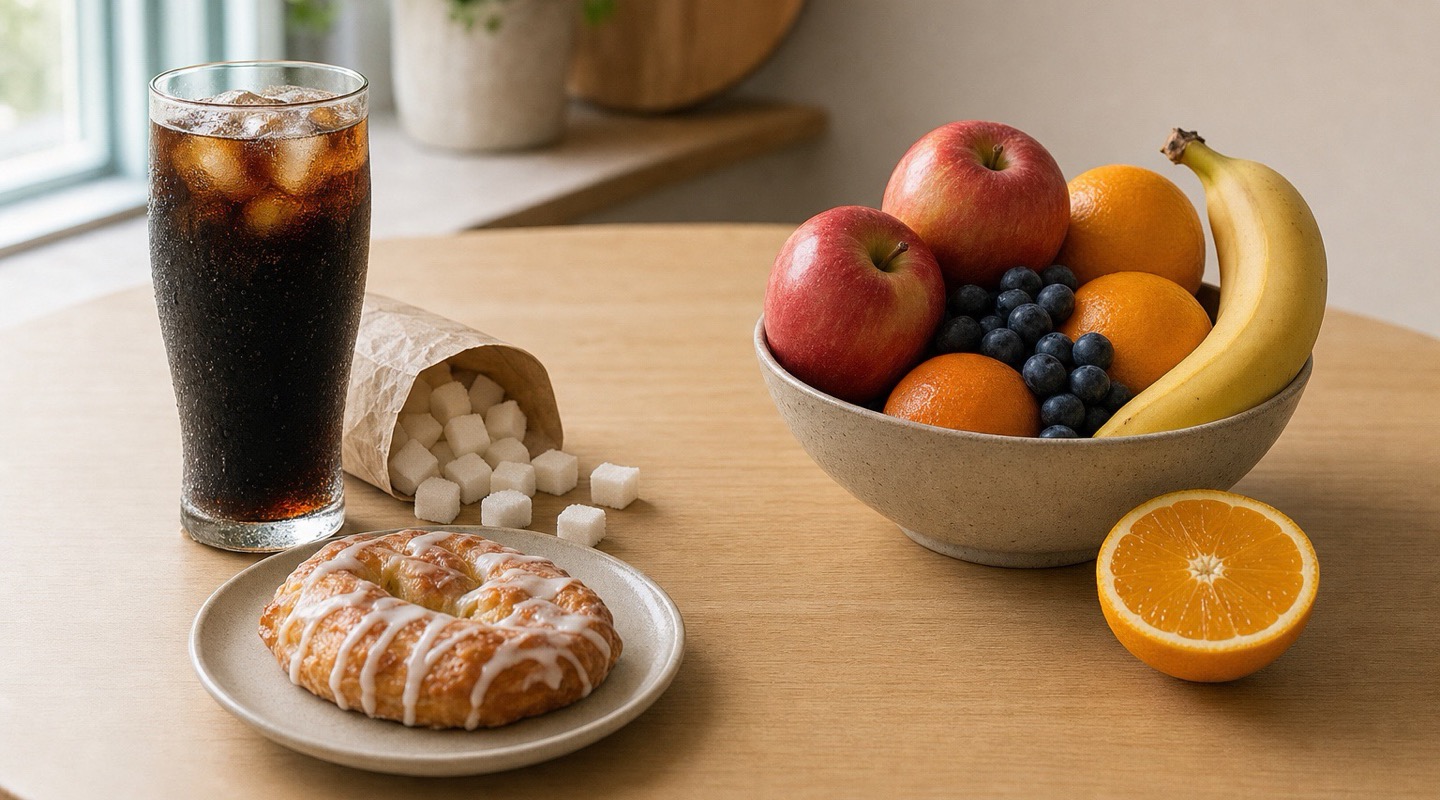
Mixed sugar sources that included sugary drinks raised CRP by 0.64 mg/L on average. Two small trials found 100% fruit juice lowered it. Adding whole fruit lowered CRP by 0.50 mg/L and TNF-α as well.
Sugary drinks on their own, without the mixed pattern, didn’t move CRP in these trials. The researchers rated the certainty of this evidence as moderate to low. Its senior author has received funding from the sugar and sweetener industries.
| Sugar source | What happened to CRP in trials | What it means for you |
|---|---|---|
| Mixed added sugars, including sugary drinks | Went up | The pattern to cut first |
| Sugary drinks on their own, same calories | No clear change | Still worth cutting: they add calories fast |
| 100% fruit juice, same calories | Went down (only two small trials) | Fine in small glasses; whole fruit is better |
| Whole fruit, added to the diet | Went down (CRP and TNF-α) | Keep eating it |
| One sugar swapped for another, same calories | No change | Type of sugar matters less than amount |
Whole fruit comes out ahead, and the guide to anti-inflammatory fruits shows which ones rank highest. If most of your added sugar comes with sugary drinks, that’s your first cut.
How much sugar is too much?
The American Heart Association sets the limit at 25 grams (6 teaspoons) of added sugar a day for women and 36 grams (9 teaspoons) for men.
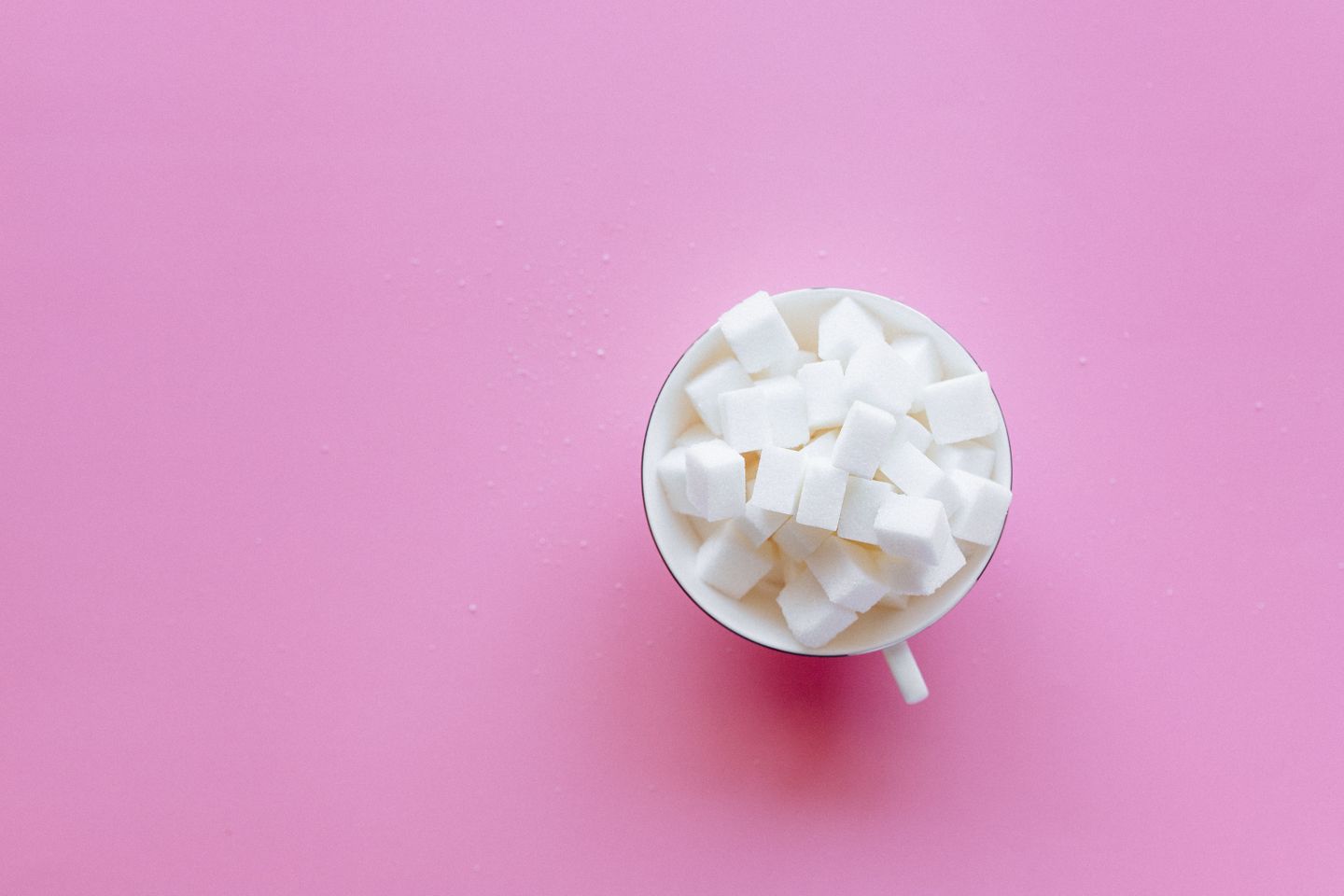
US adults average about 17 teaspoons a day, well above both limits.
The current Dietary Guidelines for Americans draw the line differently: no amount of added sugar is recommended, and one meal should hold no more than 10 grams.
Natural sugar in whole fruit and plain milk doesn’t count toward these limits. Honey, maple syrup and other syrups do.
Sugar is one item on the list of other foods that cause inflammation. The labels on your usual groceries show how close your day comes to these limits.
Does sugar cause inflammation in your joints?
The clearest link between sugar and your joints runs through fructose, and it shows up as gout, a painful form of joint inflammation. In a study that followed about 46,000 men for 12 years, two or more sugary sodas a day went with about 85% higher risk of gout compared with fewer than one a month.
Fruit juice and fructose-rich fruit such as apples and oranges were also linked. Diet soda wasn’t.
The study only observed what the men drank, so soda is linked to gout but not proven to cause it.
Rheumatoid arthritis is a different picture, and it comes mostly from what patients report. In a survey of people with rheumatoid arthritis, about 1 in 8 of those who drank sugary soda said it made their symptoms worse, and the same share said so of desserts. Those answers are self-reported, so treat them as a clue.
If your joints flare, the sugary drink is the first thing worth cutting to see what changes. Ongoing joint pain still belongs with a doctor.
Honey, maple syrup and artificial sweeteners
Honey and maple syrup count as added sugar, and artificial sweeteners haven’t raised CRP in trials but do change gut bacteria.
Honey and maple syrup
Being natural doesn’t exempt them. The Food and Drug Administration counts syrups and honey as added sugars on the Nutrition Facts label, so swapping sugar for honey doesn’t shrink the number you’re tracking.
Trials give honey some credit. Across 18 trials, honey improved fasting blood sugar, cholesterol and triglycerides. But it didn’t lower CRP, and two other inflammation markers, IL-6 and TNF-α, rose slightly.
The bottom line: a spoonful of honey in your tea is fine, but honey is not an anti-inflammatory food.
Artificial sweeteners
Do artificial sweeteners cause inflammation? So far, trials haven’t shown them raising CRP. In one 10-week trial, CRP rose 6% on sugar and fell 26% on sweeteners, a difference that could have been chance. A trial that put the same adults on table sugar, saccharin and stevia in turn found no CRP difference between them.
The gut picture is less reassuring. In a two-week trial with 120 adults, every sweetener tested changed gut bacteria, and saccharin and sucralose worsened blood sugar responses in some people. The doses stayed below the daily amount regulators consider safe.
The current Dietary Guidelines don’t recommend them either. Treat a sweetener as a swap away from sugar, not a free pass.
How long does it take for inflammation to go down after cutting sugar?
There’s no firm timeline for CRP, but some changes show up fast. In children with obesity, nine days of cutting fructose lowered liver fat. In teenagers with fatty liver, swapping their usual drinks for glucose-only drinks with the same calories dropped CRP within four weeks, while CRP rose in the group that kept their fructose drinks.
Cutting sugar doesn’t always move the markers, though. In a 12-week trial where teenagers with obesity cut added sugar, CRP and other markers didn’t change. The improvements tend to come with weight and belly-fat loss.
Plan on at least a few months, combine it with the other habits and recheck CRP with your doctor rather than going by how you feel. A recheck too early can miss a change that’s under way. For the rest of the plan beyond sugar, see the guide to how to reduce inflammation.
How to cut back without overhauling your diet
You don’t need to rebuild your diet to lower the sugar load. Cut the excess first, starting with sugary drinks, the source the trials flag.
- Start with drinks. Soda, sweet tea, energy drinks and sweetened coffee are the first to swap. Swap toward water, sparkling water or unsweetened tea, and the guide to anti-inflammatory drinks lists more options.
- Check the Added sugars line on labels. Added sugar hides in yogurt, cereal, sauces and granola.
- Keep whole fruit as dessert. In the trials, adding whole fruit lowered CRP.
- Cut gradually. Your taste for sweetness adjusts as you go.
Then build the rest of your plate around an anti-inflammatory diet, which covers the foods beyond sugar.
Frequently asked questions
Can cutting out sugar reduce inflammation?
Cutting sugar can help when the sugar was adding excess calories. Teenagers with fatty liver who swapped fructose drinks for glucose ones saw CRP fall within four weeks, but a 12-week trial cutting added sugar in teenagers with obesity found no change. A CRP test with your doctor shows whether it’s working for you.
What are the signs of too much sugar?
Frequent cravings, energy crashes, weight gain around the waist and high blood sugar on lab tests can all point to a high sugar intake. Inflammation driven by sugar has no symptoms of its own, so a CRP blood test is the direct way to check it. The guide to symptoms of inflammation covers what inflammation can feel like.
Is the sugar in fruit inflammatory?
Whole fruit isn’t inflammatory: in controlled feeding trials, adding it to the diet lowered both CRP and TNF-α. Whole fruit also doesn’t count toward the daily added-sugar limits, unlike honey and syrups. The one caution is gout: in a large study of men, apples and oranges were linked to higher gout risk.
How quickly does sugar cause inflammation?
Very high blood sugar raises inflammation messengers within a couple of hours, and in healthy people they fall back soon after. Chronic inflammation from sugar builds over months or years of excess, driven mostly by extra calories, belly fat and insulin resistance. That’s why the daily pattern matters more than any single dessert.
Does sugar cause inflammation in the brain?
There’s no firm evidence yet that sugar causes inflammation in the human brain. A review linking high sugar intake to brain inflammation (neuroinflammation) draws mostly on animal studies, so treat the brain effects as a hypothesis. The better-supported links run through extra calories, belly fat and liver fat.