
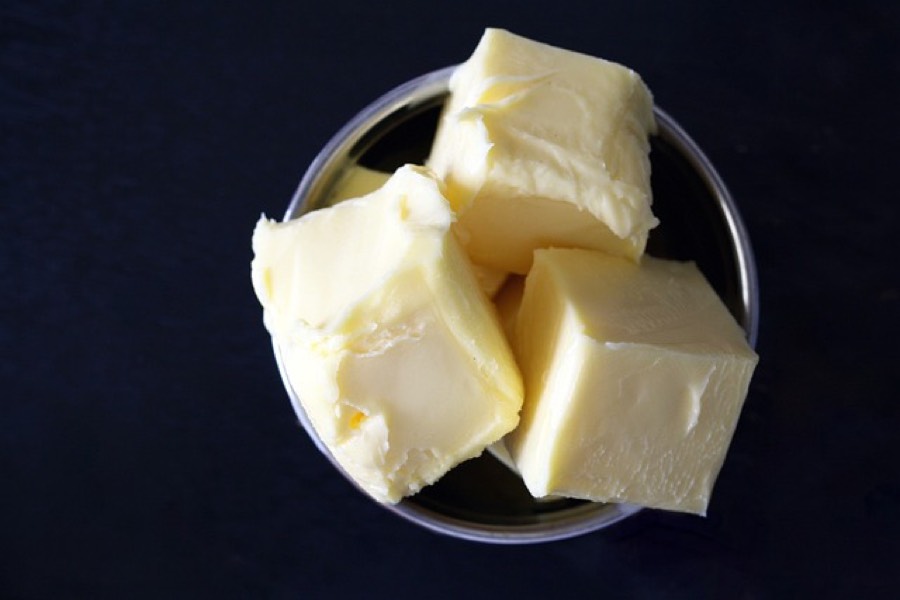
Butter
Where butter sits on the inflammation scale
Butter is mildly inflammatory, and the reason has almost nothing to do with dairy. Churning separates the fat from everything else in the cream. What comes out is about 80% fat, a little water, and only traces of the lactose and the milk protein that cause most dairy trouble. So butter is a question of fat, not of dairy.
And it is fat of a very concentrated kind. Around two thirds of it is saturated, and fat like that pushes up the cholesterol that collects in artery walls. Arteries in that state are inflamed arteries. The same saturated fat does not behave the same way in every food, though. Eaten as cheese it moves your cholesterol less than the identical amount eaten as butter, because in cheese the fat sits inside a solid protein structure. In butter there is nothing holding it back.
Butter scores 6 out of 10 on the inflammation scale, and most of that six is about what butter takes the place of. A spoonful of butter in the pan is a spoonful of olive oil you did not use, and olive oil carries plant compounds that butter has none of. People who make that trade tend to live longer than the ones who do not.
Almost nobody eats butter on its own. It arrives on white bread, in pastry or on a scone, and those bring their own load. A serving is a level tablespoon, and the layer most people cut is closer to three. Use it for flavour, in small amounts, and let something else be the default fat in your kitchen.
Butter on the AIP diet
Butter is not allowed on the Autoimmune Protocol. The elimination phase takes out all dairy, and butter goes with it even though churning has removed most of the milk protein. Ghee is the grey area: clarifying strains off the milk solids, so some versions of the protocol allow it during the elimination and it is usually the first dairy tested. If you would rather not gamble, coconut oil covers everything butter does.
Benefits
- Churning removes almost all the lactose, so people who cannot digest milk usually handle butter
- It carries butyrate, the short-chain fat that the cells lining the colon burn as fuel
- Butter from grass-fed cows brings more vitamin K2 and more vitamin A
- A little fat on vegetables helps you take up the vitamins that need fat to be absorbed
Watch out for
- Around two thirds of its fat is saturated, more than almost anything else you cook with
- Eaten as butter, that fat raises artery cholesterol more than the same amount eaten as cheese
- It rarely arrives alone: bread, pastry and cake are the usual vehicle
- A serving is a level tablespoon and the layer most people cut is closer to three
Get the inflammation score of any meal
Just snap a photo or describe your food to get its inflammation score and uncover hidden patterns that may be affecting your well-being.



Frequently asked
Is butter inflammatory?
Mildly, and less because of what it contains than because of what it replaces. Churning takes out nearly all the lactose and the milk protein, so the usual dairy complaints do not apply. What is left is a very concentrated saturated fat, and that pushes up the cholesterol collecting in artery walls once it becomes your everyday cooking fat. A spoonful now and then does very little.
Is butter worse than margarine?
It depends entirely on the tub. The old hard margarines were made with hydrogenated oil and carried trans fats, which are worse than anything in butter, and those have largely disappeared from the shelves. The soft spreads that replaced them are built on rapeseed, sunflower or olive oil, so the fat in them is the better kind, although many are heavily processed and salted. Read the ingredient list rather than the front of the packet.
Is ghee better than butter?
For the dairy side of it, yes. Clarifying strains off the milk solids, so almost no lactose or casein survives and it stops burning at a low temperature in the pan. The fat itself does not change, and the fat is what earns butter its score. Ghee solves the dairy problem, not the saturated fat one.
Can I eat butter on an anti-inflammatory diet?
Yes, in small amounts and for flavour. Use it where you actually taste it, on vegetables or on a piece of good bread, and let olive oil do the cooking. The comparison that matters is not butter against nothing. It is butter against the fat you would have used instead.
The easiest way to follow an anti-inflammatory diet.
Identify inflammatory foods in seconds, log your symptoms and discover what’s inflaming you. Includes hundreds of recipes.
