| Prep Time | 20 minutes |
|---|---|
| Cook Time | 20 minutes |
| Total Time | 40 minutes |
| Servings | 4 |
What Is Chicken and Vegetable Soba Noodle Salad?
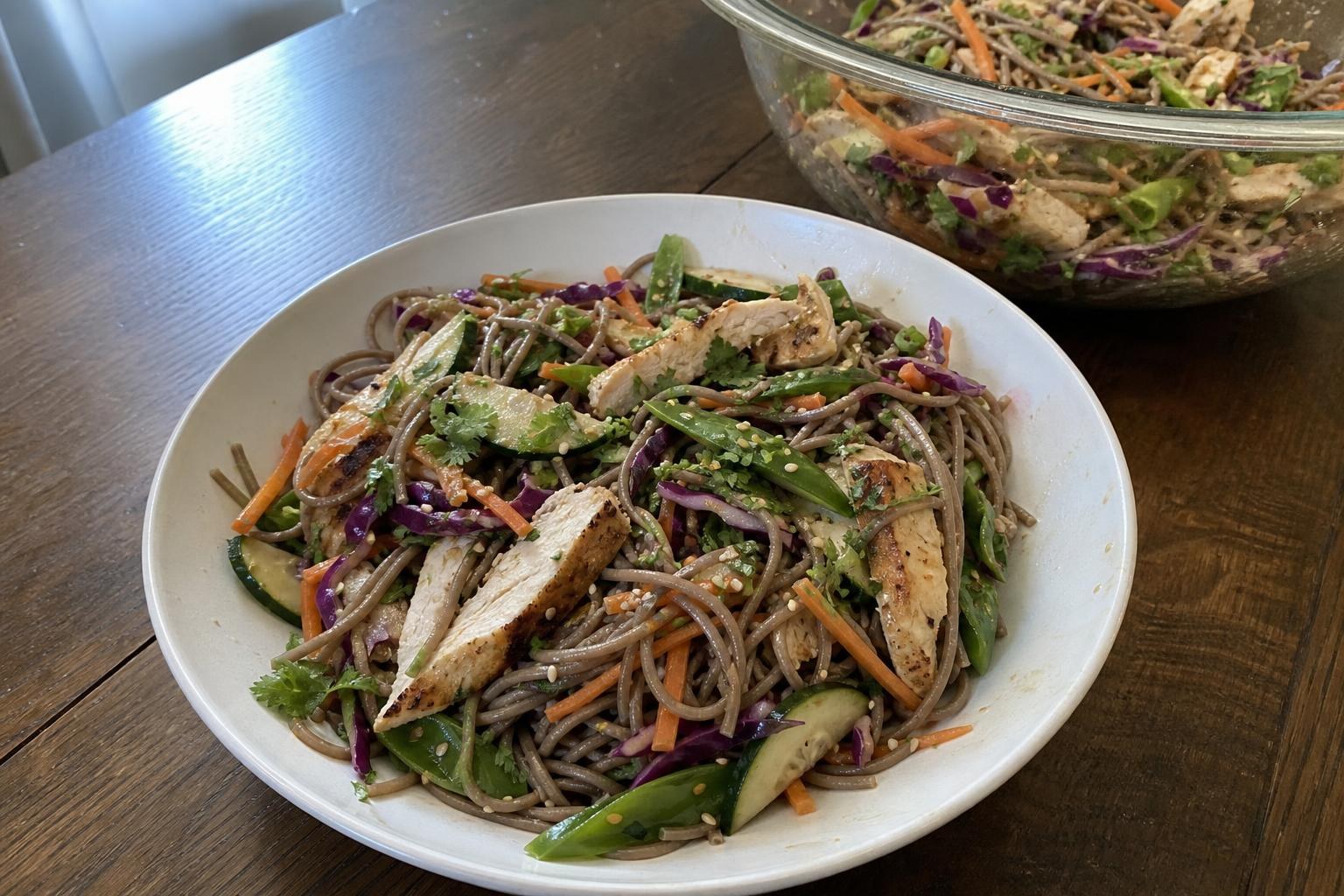
This is a Japanese-style salad built on soba noodles, thin buckwheat strands served cold. Seared chicken strips, finely cut raw vegetables and a ginger lime dressing make it a cold, crunchy single-bowl meal.
What Makes This Recipe Anti-Inflammatory?
The soba noodles are 100 percent buckwheat, a seed that carries rutin and quercetin, two flavonoids, in every serving. Fresh ginger adds gingerols, the compounds behind its sharp taste, and gingerols are among the plant compounds studied for how they interact with inflammatory signaling in the body.
Red cabbage brings anthocyanins, the pigments that give it its purple color, and the two cups in this recipe supply them in every bowl. Extra-virgin olive oil provides oleocanthal, the phenolic compound that gives the oil its peppery bite at the back of the throat. The bowl carries none of the usual noodle-salad extras: no refined wheat flour noodles, no added sugar, no creamy bottled dressing and no refined seed oils.
Ingredients
- 8 ounces dried soba noodles (100 percent buckwheat)
- 1 pound boneless, skinless chicken breasts
- 3 tablespoons extra-virgin olive oil, divided
- 3/4 teaspoon fine sea salt, divided
- 6 ounces sugar snap peas, trimmed and halved on the diagonal
- 2 medium carrots, cut into thin matchsticks
- 2 cups thinly sliced red cabbage (about 6 ounces)
- 1 English cucumber, halved lengthwise and sliced into thin half moons
- 4 scallions, thinly sliced on the diagonal
- 1/3 cup chopped fresh cilantro leaves
- 3 tablespoons coconut aminos
- 3 tablespoons fresh lime juice
- 1 tablespoon fresh ginger, peeled and grated
- 2 cloves garlic, minced
- 1 tablespoon toasted sesame oil
- 1 tablespoon sesame seeds
Directions
Step 1
Bring a large pot of water to a boil. While it heats, pat the chicken dry with paper towels and season both sides with 1/2 teaspoon of the salt.
Step 2
Heat 1 tablespoon of the olive oil in a large skillet over medium-high heat. Sear the chicken 6 to 7 minutes per side without moving it, until the surface is deeply golden and the thickest part reads 165°F. Transfer it to a cutting board and let it rest while the noodles cook.
Step 3
Drop the sugar snap peas into the boiling water and cook 90 seconds, until they turn bright green and still snap when bitten. Lift them out with a slotted spoon into a colander and cool them under cold running water.
Step 4
Cook the soba noodles in the same water for 5 to 6 minutes, until tender with some bite. Drain and rinse them under cold water, rubbing gently with your hand, until they feel cold and no longer sticky. This rinse keeps the strands from clumping into a block.
Step 5
In a large bowl, whisk the coconut aminos, lime juice, garlic, ginger, toasted sesame oil, the remaining 2 tablespoons of olive oil and the remaining 1/4 teaspoon of salt. Keep whisking until the mixture looks cloudy and blended.
Step 6
Add the noodles, snap peas, carrots, cabbage, cucumber, scallions and cilantro to the bowl. Toss with tongs until every strand is coated and the cabbage tints the dressing a faint pink. Slice the chicken into 1/2-inch strips, arrange them on top and finish with the sesame seeds.
Nutrition Facts (per serving)
| Calories | 555 |
|---|---|
| Fat | 19g |
| Carbs | 60g |
| Protein | 37g |
InflammaScore
1 Good! Very low inflammation potential
Q&A
Q1: What should I look for on the soba noodle label?
A1: Many brands blend buckwheat flour with refined wheat flour, so read the ingredient list before buying. Look for packages that state 100 percent buckwheat, sometimes labeled juwari. That keeps the noodles in line with the rest of the bowl and preserves the buckwheat flavonoids.
Q2: Why do my soba noodles turn sticky or clump together?
A2: Two things cause it. Overcooked noodles swell and turn mushy, so pull them at 5 to 6 minutes while they still have bite. Skipping the cold rinse leaves surface starch, which glues the strands together. Rinse under cold water until the noodles feel cold and no longer sticky.
Q3: Can I make this salad ahead of time?
A3: Yes. Cook the noodles and chicken up to a day ahead and store the dressing in a separate jar in the refrigerator. Toss everything together just before serving so the raw vegetables stay crisp. Assembled leftovers keep about two days in a sealed container.
Q4: What can I use instead of seared chicken breast?
A4: Shredded rotisserie chicken works with no extra cooking. Cooked shrimp also pairs well with the ginger lime dressing, and pan-seared firm tofu makes a plant-based version with a similar amount of protein. Add whichever one you choose at the same point in Step 6.
Q5: Which vegetables can I swap without watering down the bowl?
A5: Thinly sliced red bell pepper, sliced radishes and shelled edamame hold their texture and add color without releasing much liquid. Avoid swapping in tomatoes, zucchini or leafy greens for the cabbage and cucumber, since they weep water and soften the dressing over time.
This salad eats cold straight from the refrigerator, and the noodles and vegetables hold up well in a lunch container. Make a double batch and tomorrow’s lunch is done.