
Your alarm goes off on the first morning of your period, and you have a meeting at 9. You take ibuprofen and eat a banana because a video said it would help. Then you hope the ibuprofen kicks in before the meeting starts.
The cramps come back every month. You’ve tried a heating pad, a week without coffee and the bananas and dark chocolate that social media swears by. Each period hurts just the same, and you still can’t tell which tip did anything.
In this article, you’ll find what the research says about anti-inflammatory foods for period cramps: which foods help, how soon they work and what to skip.
Can anti-inflammatory foods help period cramps?
Yes, some anti-inflammatory foods can ease period cramps, because cramps are driven by prostaglandins, inflammatory chemicals made in the lining of the uterus. These foods work on two timelines.
Ginger can ease pain within the period you’re having, so it’s the one to reach for from the first day of bleeding. Omega-3 fats from oily fish, vitamin D and zinc lowered period pain in studies only after two to three months of regular intake. That means what you eat this month counts toward your next few periods.
Food works alongside your painkillers and never replaces them. Anti-inflammatory painkillers such as ibuprofen or naproxen remain the first treatment, because they cut the prostaglandins your body makes. Painkillers work best when you take them at the first sign of your period or your cramps.
What food can add over time is fewer bad days each month and less need for painkillers. No food cures period cramps.
Why period cramps hurt
Period cramps happen when prostaglandins make the muscles and blood vessels of the uterus contract. Prostaglandin levels are highest on the first day of a period and fall as bleeding goes on, which is why the first day or two usually hurt most.
More than half of women who menstruate have some pain for 1 to 2 days each month. The medical name for these ordinary cramps is primary dysmenorrhea, which means no disease is behind them.
Prostaglandins are part of your body’s inflammatory response, and that’s the link to what you eat. If you want the bigger picture, see what causes inflammation in the body.
Period pain that keeps getting worse or comes with other symptoms is a different case, and a reason to see a doctor.
Which foods have the strongest evidence?
Ginger, omega-3 fats, vitamin D and zinc have the most trials behind them, and of these, only ginger has eased pain within the same period it was taken. The table shows what the studies found, when each food or nutrient started to help and how strong the evidence is.
| Food or nutrient | What studies found | When it helps | Strength of evidence |
|---|---|---|---|
| Ginger | Eased pain more than placebo across 12 trials, with no clear difference from ibuprofen-type painkillers; doses of 750 to 2,000 mg of ginger powder | First 3 to 4 days of the period | Promising: many small trials |
| Omega-3 fats (oily fish) | Less pain and fewer painkillers across 12 studies in 881 women taking 300 to 1,800 mg a day | After 2 to 3 months | Promising: supplements, mixed-quality studies |
| Vitamin D | Less pain than control groups across 11 trials in 687 women; helped ordinary cramps but not pain from conditions like endometriosis | Over several cycles | Promising: high-dose supplements |
| Zinc | Less pain than placebo across 6 trials in 739 women, from 7 mg a day | Best after 8 weeks or more | Promising: small trials |
| Vitamin E | Cut pain more than placebo at 2 and 4 months in a trial of 278 teenage girls; no effect in two other trials | Over 2 to 4 cycles | Mixed: trials disagree |
| Low-fat, plant-based diet | In 33 women, painful days fell from about 4 to under 3 over two cycles | Over 2 cycles | Early: one small trial |
| Magnesium | Helped in a few small trials | Unclear | Weak: few small trials |
| Dark chocolate | 35 g of 70% dark chocolate eased pain within two hours in 15 women; ibuprofen eased it most, and there was no placebo group | Same day | Weak: one small trial, no placebo |
| Chamomile and other herbs | Mostly single small trials, rated very limited evidence | Unclear | Weak: single trials |
A review of supplement trials rated all of the evidence as low or very low quality, mostly because the trials were small. So treat these foods as a way to stack the odds. Give each one a few cycles before you judge it.
Foods that ease cramps this cycle
Ginger is the food with the best evidence for easing cramps during the period you’re having now. Warm drinks, water and a little dark chocolate can help you feel better while the cramps pass. To help you choose, each food has an inflammation score from 1 (most anti-inflammatory) to 10 (most inflammatory).
Ginger
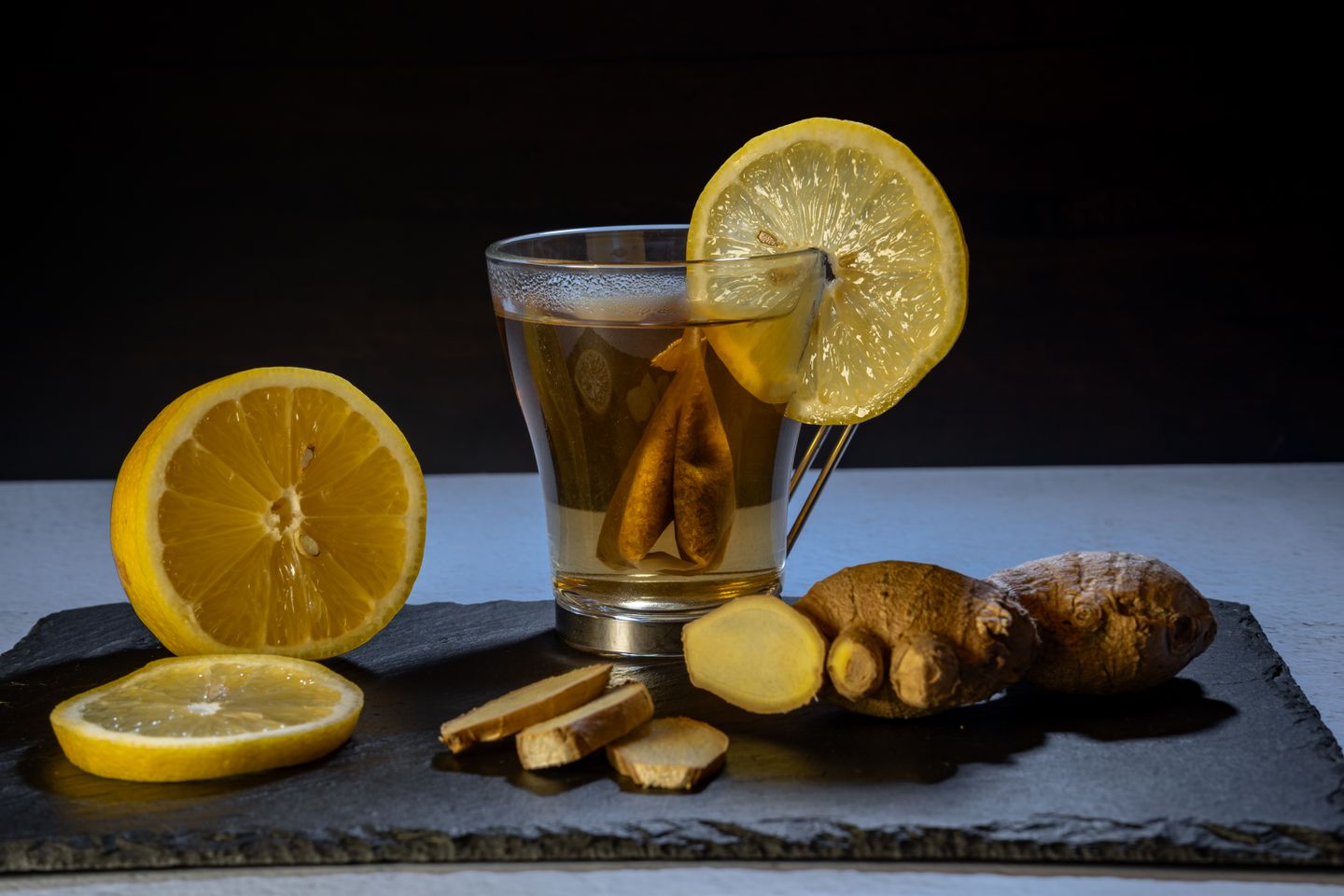
In trials, women took 750 to 2,000 mg of ginger powder a day during the first 3 to 4 days of their period. Most trials gave the powder as capsules.
At home, you can steep a teaspoon of grated fresh ginger in hot water, add ginger to soups and stir-fries or take ginger capsules. If you take blood thinners, ask a doctor before taking the capsules.
Ginger scores 1 out of 10, and turmeric also scores 1. The two pair well in a warm drink.
Water and warm drinks
Staying hydrated and sipping something warm can make you more comfortable. Heat on your belly eases cramps, so a heating pad pairs well with a warm mug.
Green tea scores 1 out of 10, but it contains caffeine, so go easy on it around the days you hurt most. For more ideas, see the guide to anti-inflammatory drinks.
Dark chocolate
One small trial found that a couple of squares of dark chocolate eased pain, though less than ibuprofen. Dark chocolate scores 3 out of 10. It’s a fine choice for a craving, with weak evidence behind it as a remedy.
Herbal teas
Chamomile and other herbs have only single small trials behind them. Enjoy a caffeine-free cup for the warmth. Just don’t count on it for the pain.
Foods that work over your next two or three cycles
Omega-3 fats, vitamin D and zinc lowered period pain in studies only after two to three months, and so did a plant-heavy, high-fiber way of eating. Most of those trials used supplements. Start now for the periods ahead.
Oily fish and other omega-3 foods
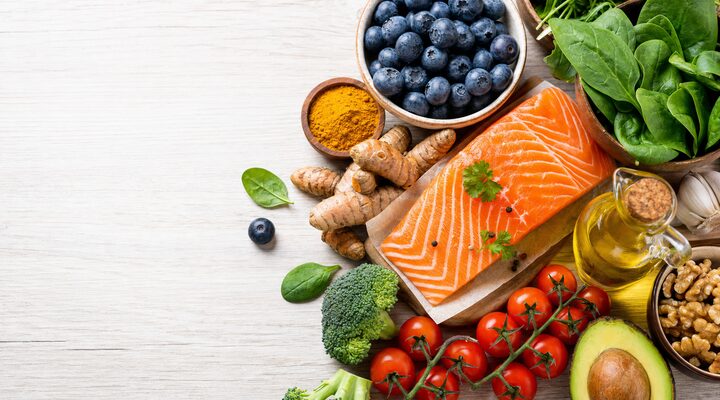
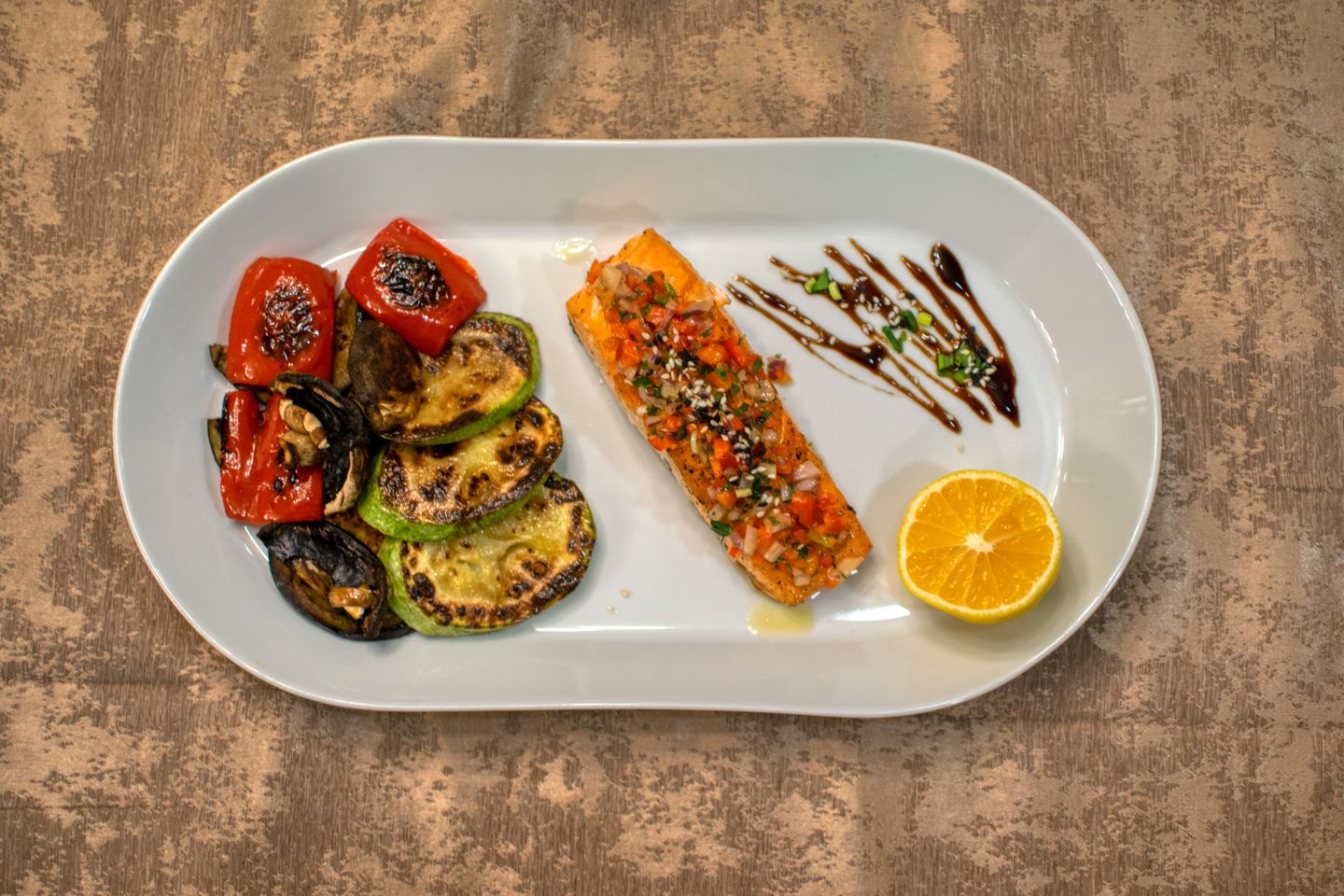
Three ounces of farmed salmon has about 1,800 mg of omega-3 fats, so two servings a week average out to about 500 mg a day, inside the range of doses tested. Salmon and sardines score 1 out of 10.
Among plant sources, walnuts score 1, and chia seeds and flaxseed score 2. The trials tested the omega-3 fats in fish oil, which plant foods supply only in a different form.
Foods with vitamin D
Oily fish, egg yolks and UV-exposed mushrooms are among the few foods with vitamin D. Three ounces of sockeye salmon has about 570 international units (IU), and half a cup of those mushrooms about 366 IU. Eggs score 3 out of 10 and mushrooms 2.
The trials that worked used weekly doses above 50,000 IU, far more than food provides and above the daily upper limit of 4,000 IU for adults. Ask a doctor to check your vitamin D level before taking a high dose.
Foods with zinc
Women need 8 mg of zinc each day. The trials saw results from 7 mg a day, given as a supplement on top of the women’s usual diet.
Matching that extra 7 mg takes oysters or several servings of other zinc foods: three ounces of oysters has about 32 mg, three ounces of roast beef about 3.8 mg, an ounce of roasted pumpkin seeds about 2.2 mg and half a cup of lentils about 1.3 mg.
Lentils score 2 out of 10, while beef scores 7, so lean on seafood, seeds and legumes.
Nuts, seeds and greens for vitamin E
Sunflower seeds and almonds are among the best food sources of vitamin E, and spinach adds some. Adults need 15 mg of vitamin E a day.
The trial that lowered period pain used a supplement dose well above that amount, and two other trials found no effect. Almonds score 2 out of 10 and spinach 1.
A plant-heavy, high-fiber plate
In a small trial, women who switched to a low-fat, plant-based diet for two cycles had shorter, less intense period pain. Fill half your plate with vegetables such as broccoli and kale (both score 1 out of 10), then add legumes and whole grains such as oats.
These are the same foods behind a general anti-inflammatory diet plan. Eating this way all month helps more than changing your diet the week before your period. For a full list by category, see anti-inflammatory foods.
Foods to avoid during your period
Cut back on caffeine, fast food and other highly processed foods, sugary snacks, alcohol and very salty foods around your period. Caffeine and fast food have the clearest links to worse period pain in studies. Sugar, alcohol and salt are worth cutting for other reasons, such as crowding out the foods that help or adding to bloating.
- Caffeine: in studies of over 18,000 college students, high caffeine intake roughly doubled the odds of period pain. The studies only show a link, so try a week with less coffee. Coffee scores 3 out of 10.
- Fast food and processed food: in a survey of college students, those who ate fast food or processed food reported more period pain than those who didn’t. Most of these sit on the list of foods that cause inflammation.
- Sugary snacks and drinks: the research on sugar alone found little link to painful periods, but sugary foods crowd out the ones that help. Soda scores 9 out of 10. To dig deeper, find out whether sugar causes inflammation.
- Alcohol: heavy drinking over time lowers your magnesium, which helps muscles relax. If you drink, the guide to the least inflammatory alcohol shows which drinks do the least harm.
- Very salty foods: chips, instant noodles and salty takeout can add to bloating around your period.
The caffeine studies also linked cold drinks and too little sleep with worse period pain. In the fast food survey, students who skipped breakfast reported more period pain than those who ate it.
What to eat during your period: a sample day
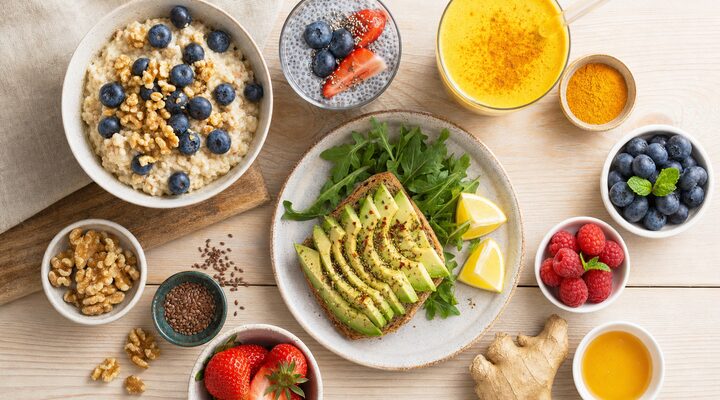
Here’s a sample day built from easy recipes, with ginger for the days you hurt most and oily fish and zinc-rich snacks all month.
- Breakfast: pear and ginger overnight buckwheat, an easy jar you prep the night before.
- Lunch: sweet potato and red lentil soup, quick to make, with a cup of ginger tea.
- Dinner: lemon thyme baked salmon with asparagus, ready with little hands-on time.
- Snacks: pumpkin seed and cranberry oat bars, or avocado chocolate mousse when a chocolate craving hits.
To start, add one serving of oily fish this week and keep ginger in the kitchen for your next period.
When period pain isn’t normal
Period pain that’s severe, keeps getting worse or doesn’t ease with painkillers can be a sign of another condition and is a reason to see a doctor. On the 0 to 10 pain scale doctors use, 10 is the worst pain you can imagine. If your cramps feel like a 10 or are worse than usual, and painkillers haven’t helped, ask for an urgent appointment.
Book a visit if you notice any of these:
- Periods getting more painful, heavier or irregular
- Pain that stops your usual daily activities
- Pain during sex or when peeing or pooing
- Bleeding between periods
Before the visit, note which day of your period the pain starts, how long it lasts and which painkillers you’ve tried.
Period pain caused by a condition in the reproductive organs tends to get worse over time and can start days before your period. Endometriosis, fibroids and adenomyosis are common causes. Doctors call this kind of pain secondary dysmenorrhea.
If you have endometriosis or polycystic ovary syndrome (PCOS), the anti-inflammatory diet for endometriosis and the anti-inflammatory diet for PCOS can help alongside medical treatment.
Beyond your period, an anti-inflammatory diet for women adds more folate before pregnancy and more calcium after menopause.
Frequently asked questions
What foods make period cramps go away?
No food makes period cramps go away completely, and anti-inflammatory painkillers remain the main treatment. Ginger has the best evidence for easing pain during the period itself. Omega-3 and zinc supplements lowered pain after a few months, and oily fish and zinc-rich foods supply both.
What fruit helps with period cramps?
No fruit has been tested on its own for period cramps. Whole fruit adds water and fiber and crowds out sugary snacks.
Oranges have an inflammation score of 2 out of 10, blueberries 1 and bananas 3. For the full list, see anti-inflammatory fruits.
Is coffee bad for period cramps?
Studies in college students link a high caffeine intake with more period pain, though they can’t prove coffee causes it. Cutting back around your period is an easy test of whether caffeine matters for you. Coffee has an inflammation score of 3 out of 10.
Does dark chocolate help with period cramps?
Dark chocolate may help a little: in one small trial, a couple of squares eased period pain, though less than ibuprofen. Eat it for a craving; the evidence for it as a remedy is weak. It has an inflammation score of 3 out of 10.
Should I take supplements instead of changing my diet?
Ginger, omega-3, vitamin D and zinc supplements have the most trials behind them, but none has high-quality evidence for period pain. The vitamin D doses that helped in trials were above the safe daily limit, so talk to a doctor before taking any supplement.
How long before my period should I change what I eat?
For omega-3 fats, zinc and vitamin D, start two to three months ahead, since that’s how long the studies took to show results. Ginger works differently: take it during the first days of the period itself.