Your period shows up two weeks late, and when it finally arrives, it’s much heavier than it used to be.
You’re still having periods, so this isn’t menopause yet. Meanwhile, social media keeps telling you that your changing hormones are causing inflammation, and that the fix is to cut seed oils, gluten or dairy, or buy a hormone-balancing supplement. You tried one of those for a month and felt the same.
You can’t tell what’s worth trying anymore.
In this article, you’ll find which foods help calm inflammation while your hormones swing, what food can do for heavy periods, cravings and hot flashes, what to cut back on and a 3-day meal plan to get started.
What is an anti-inflammatory diet for perimenopause?
An anti-inflammatory diet for perimenopause is a way of eating built on vegetables, fruit, legumes, whole grains, nuts, olive oil and fish. Its goal is to keep low-grade, long-term inflammation in check while estrogen rises and falls.
In trials, the Mediterranean version of this way of eating lowered C-reactive protein (CRP), a blood marker of inflammation, by about 1 mg/L compared with other diets.
No single food does the job. What works is the overall pattern: on most days, a meal with legumes and a food rich in vitamin C, oily fish twice a week, and berries, nuts and plain yogurt in between. The habits you build now carry into the years after your final period.
What changes in your body during perimenopause
In perimenopause, estrogen swings up and down instead of falling steadily, and your periods keep coming. Perimenopause usually starts between ages 45 and 55 and can last several years. Menopause is only confirmed after 12 months without a period.
Over the years of the transition, estrogen also drops overall, and falling estrogen is linked to higher levels of inflammatory signals in the blood.
Body fat changes too. In a large study that followed women through the menopause transition, the rate of fat gain about doubled at the start of the transition, while muscle went down a little, so body weight didn’t rise any faster. In another study that followed women from before to after menopause, those who gained more fat deep in the belly, around the organs, had the biggest rise in CRP.
Falling estrogen also affects your bones: women start losing bone faster from about a year before the final period.
Short sleep and ongoing stress are two more causes of inflammation in the body, and a CRP blood test can show where your levels are.
Bone, heart and joint needs change again after menopause, so that stage calls for its own anti-inflammatory diet for menopause.
Best anti-inflammatory foods for perimenopause
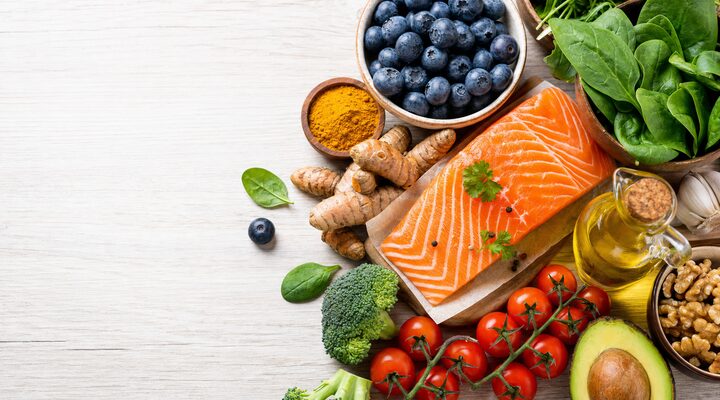
The best anti-inflammatory foods for perimenopause are oily fish, leafy greens, berries and citrus, legumes and soy foods, whole grains, nuts and seeds, olive oil and plain yogurt, eaten most days. Building your meals around these groups is the core of any anti-inflammatory diet plan. Each food below has an inflammation score from 1 (most anti-inflammatory) to 10 (most inflammatory).
- Oily fish: omega-3 fats and protein in the same food. Aim for two servings a week. Salmon and sardines score 1, and tuna scores 2.
- Leafy greens: fiber, plus plant iron in spinach, which helps when heavy periods leave you low on iron. Spinach, kale and broccoli all score 1.
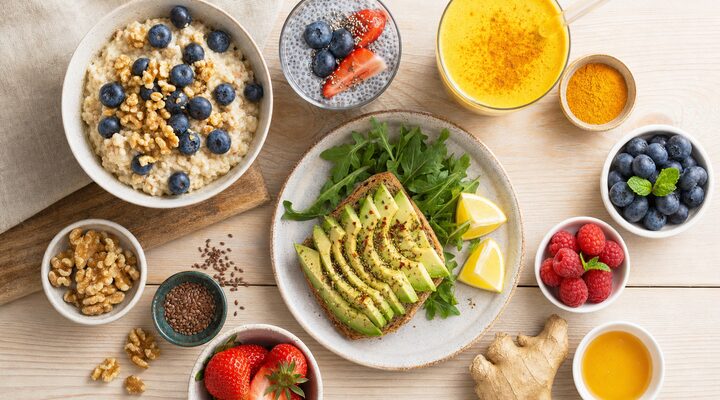
- Berries and citrus: natural sugar that comes with fiber, plus vitamin C, which helps your body absorb iron from plants. Blueberries, strawberries and cherries score 1, and oranges score 2.
- Legumes and soy foods: protein, fiber and plant iron together. Lentils, chickpeas, black beans, tofu and edamame score 2.
- Whole grains: fiber for steadier blood sugar through the day. Oats and quinoa score 2, and brown rice scores 3.
- Nuts, seeds and olive oil: healthy fats from nuts such as walnuts and almonds, seeds, olive oil and avocado, with walnuts, chia seeds and ground flaxseed adding plant omega-3 fats. Walnuts and olive oil score 1, and almonds, chia seeds, flaxseed and avocado score 2.
- Plain yogurt and eggs: protein at breakfast. Greek yogurt and eggs score 3.
- Herbs, spices and tea: Turmeric and ginger add flavor in place of salt, and green tea is a drink with no added sugar. All three score 1.
These are only a few of the anti-inflammatory foods you can choose from.
Foods that help with heavy periods and low iron
Heavier, longer periods are common in perimenopause, and losing more blood each month can leave you low on iron.
A large study that followed women’s periods through the transition found that about a third had three or more episodes of heavy bleeding, each lasting three days or more, and more than three in four had at least three periods that lasted 10 days or longer.
Women up to 50 need 18 mg of iron a day, and women with heavy periods are more likely to fall short. At 51 and older, the daily amount drops to 8 mg.
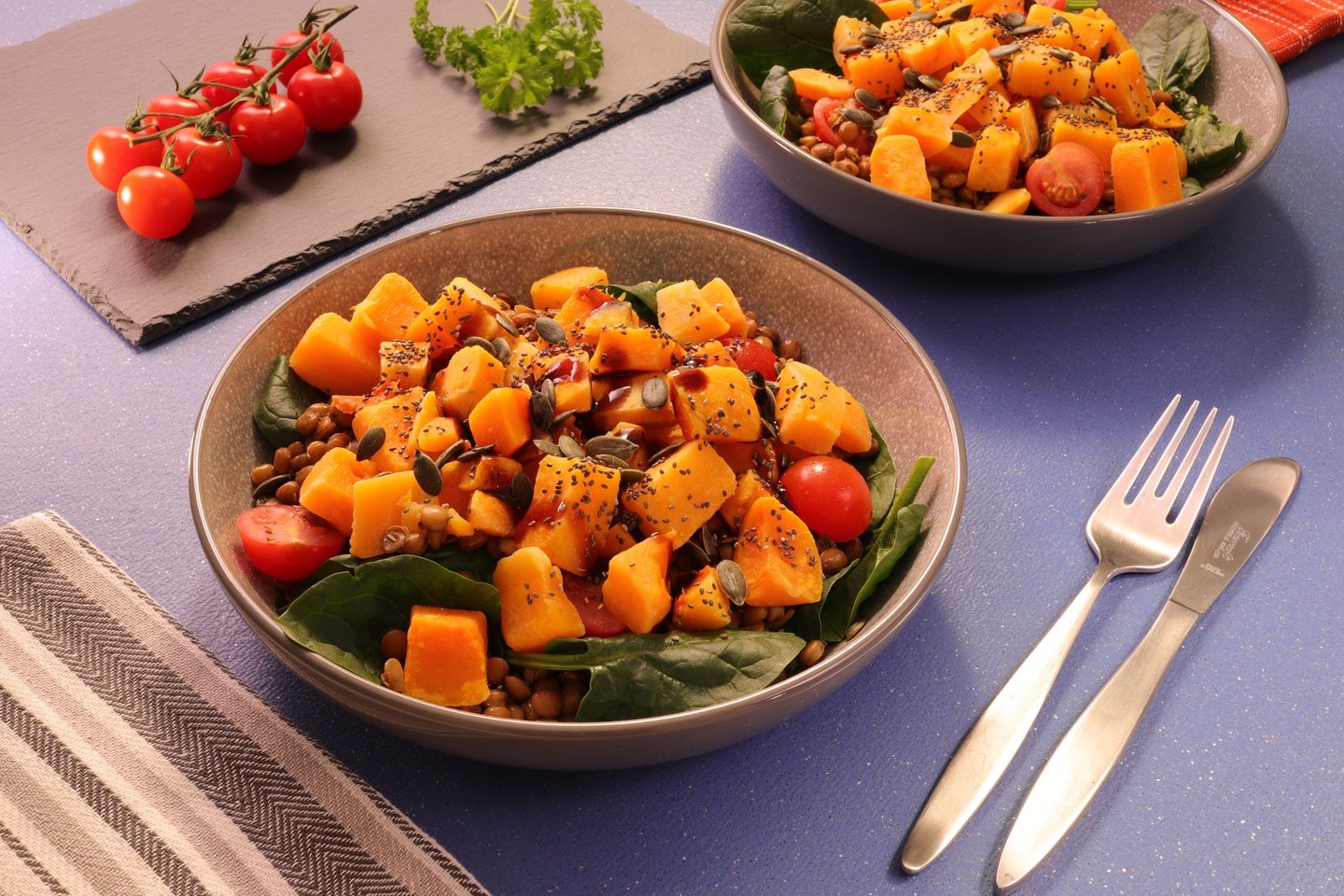
Iron from plant foods, such as lentils, beans and spinach, is absorbed better when you eat it with vitamin C from citrus, strawberries, bell peppers (which score 2), tomatoes or broccoli. Pair chickpeas with tomato and lemon, or black beans with red bell pepper.
Red meat gives you iron your body absorbs easily, but beef scores 7, so keep portions small and get most of your iron from legumes.
If your periods are heavy or you feel unusually tired, ask your doctor to test your iron levels before taking iron pills. On days when cramps come along too, these anti-inflammatory foods for period cramps can help.
Foods that keep blood sugar steady and reduce cravings
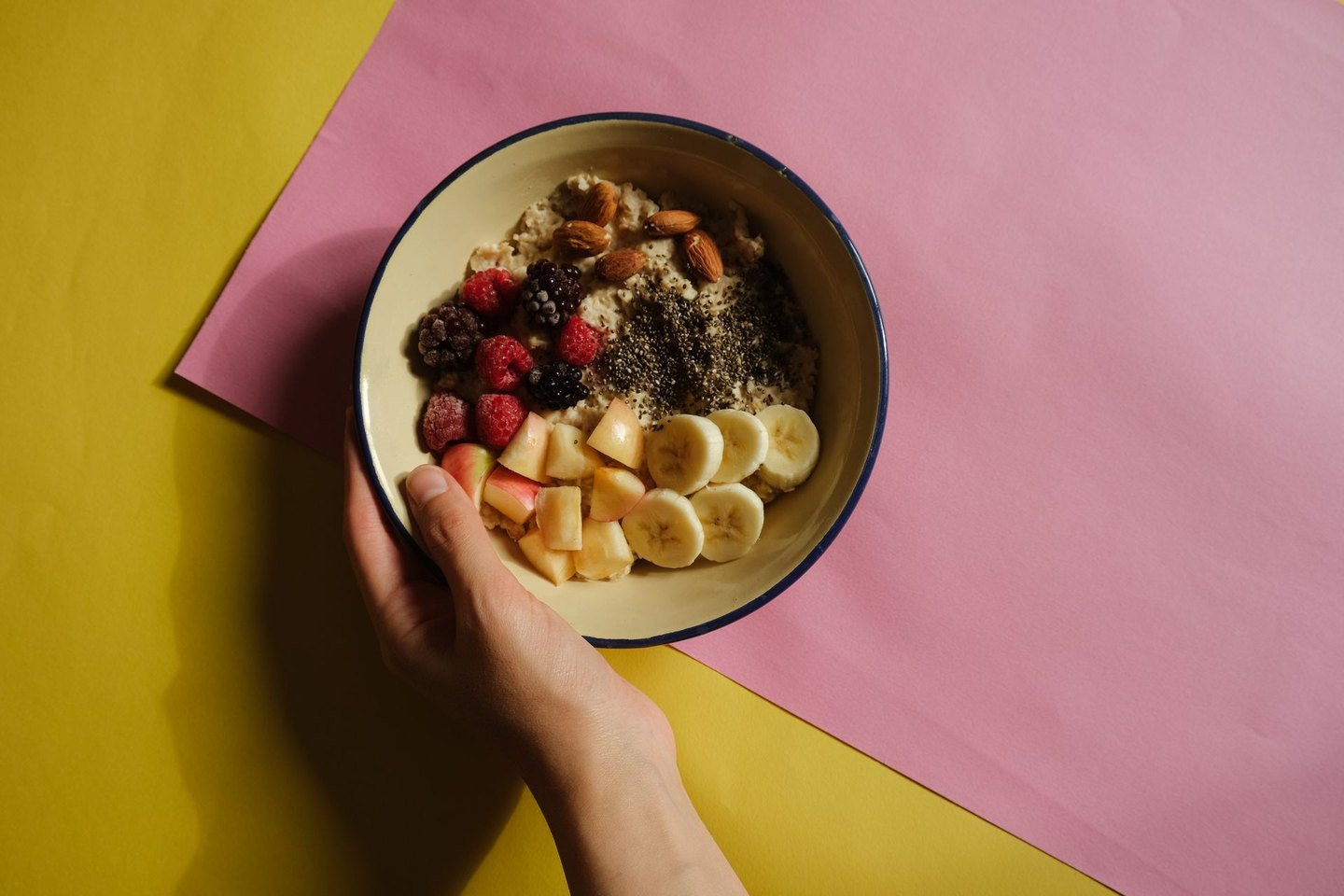
Meals built on protein and fiber keep you full longer and keep blood sugar steadier, which can make afternoon cravings easier to manage. Start with breakfast: eggs, yogurt or beans keep you full longer than something sweet. Eat at regular times and don’t skip meals.
Sweets and sugary drinks are the first foods to swap, especially if you’ve been wondering whether sugar causes inflammation.
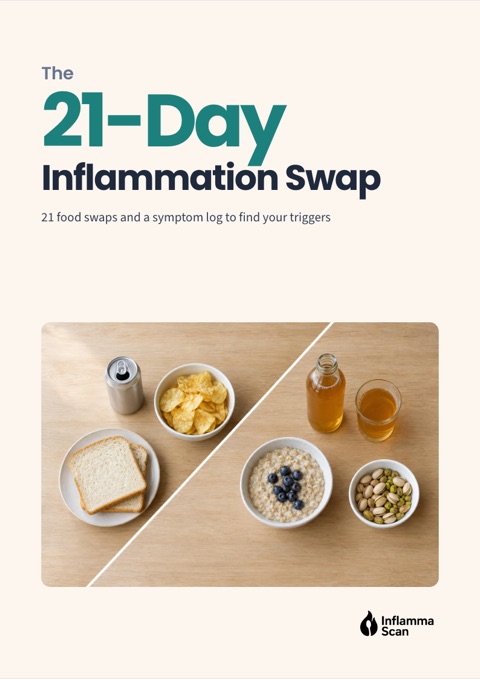
This table swaps foods that spike blood sugar for options with a lower inflammation score.
| Instead of | Try | Inflammation score |
|---|---|---|
| Pastry or sweet cereal | Oats with blueberries and walnuts | Oats 2, blueberries 1, walnuts 1 |
| Soda | Sparkling water with lemon or green tea | Soda 9, green tea 1 |
| White bread | Quinoa or a whole-grain option | White bread 7, quinoa 2 |
| White rice | Quinoa or brown rice | White rice 6, brown rice 3 |
| Bacon | Eggs or black beans | Bacon 9, eggs 3, black beans 2 |
| Candy in the afternoon | A square of dark chocolate with strawberries | Dark chocolate 3, strawberries 1 |
| Chips | A small handful of almonds | Almonds 2 |
Can food help with hot flashes and night sweats?
Food has a small, uncertain effect on hot flashes and night sweats, which often start in perimenopause.
In a large study that followed women through the transition, those whose hot flashes started early in the transition had them the longest, typically more than 11.8 years, compared with 7.4 years for women overall.
In trials, soy isoflavone supplements, pills made from soy compounds, made hot flashes about a fifth less frequent than a placebo. The Menopause Society, a US group of menopause doctors and researchers, doesn’t recommend soy foods or extracts for hot flashes, because the results from study to study don’t agree.
Some women notice that certain foods and drinks set off their hot flashes, but no clinical trials have tested avoiding these triggers. The practical step is a two-week diary of night sweats, food, drinks and sleep. In the diary, keep an eye on the most common foods that can trigger hot flashes, and cut back on one only if the diary shows a pattern.
Foods to limit during perimenopause
The foods to limit during perimenopause are added sugar and refined carbs, ultra-processed snacks, processed meat and alcohol. These are among the foods that cause inflammation, and they crowd out the foods your body needs now.
- Added sugar and refined carbs: sweets, sugary drinks and white bread spike blood sugar, which can make afternoon cravings harder to manage.
- Ultra-processed snacks and fast food: in a study of 6,040 Australian women in midlife followed for 9 years, those who ate the most high-fat, high-sugar food had 23% higher odds of hot flashes and night sweats than those who ate the least.
- Processed meat: sausages, deli meat and bacon are best kept for once in a while.
- Alcohol: it helps you fall asleep, but studies found that it wakes you up more in the second half of the night. If you drink, pick the least inflammatory alcohol and keep the amount small.
Seed oils don’t belong on this list: in trials in healthy people, eating more linoleic acid, the main omega-6 fat in soybean, corn and sunflower oil, did not raise markers of inflammation. Olive oil is still the better everyday fat.
A 3-day anti-inflammatory meal plan for perimenopause
Each meal in this plan pairs protein with fiber, because that combination keeps you full and keeps blood sugar steadier. At least once a day, you’ll eat a legume, tofu or leafy greens with a food rich in vitamin C, because heavy periods can leave you low on iron. Oily fish appears twice over the three days for your omega-3 fats, and the snacks are built on berries, nuts and yogurt.
Day 1
- Breakfast: sweet potato and black bean breakfast hash: black beans bring plant iron and fiber, and the red bell pepper and lime add vitamin C.
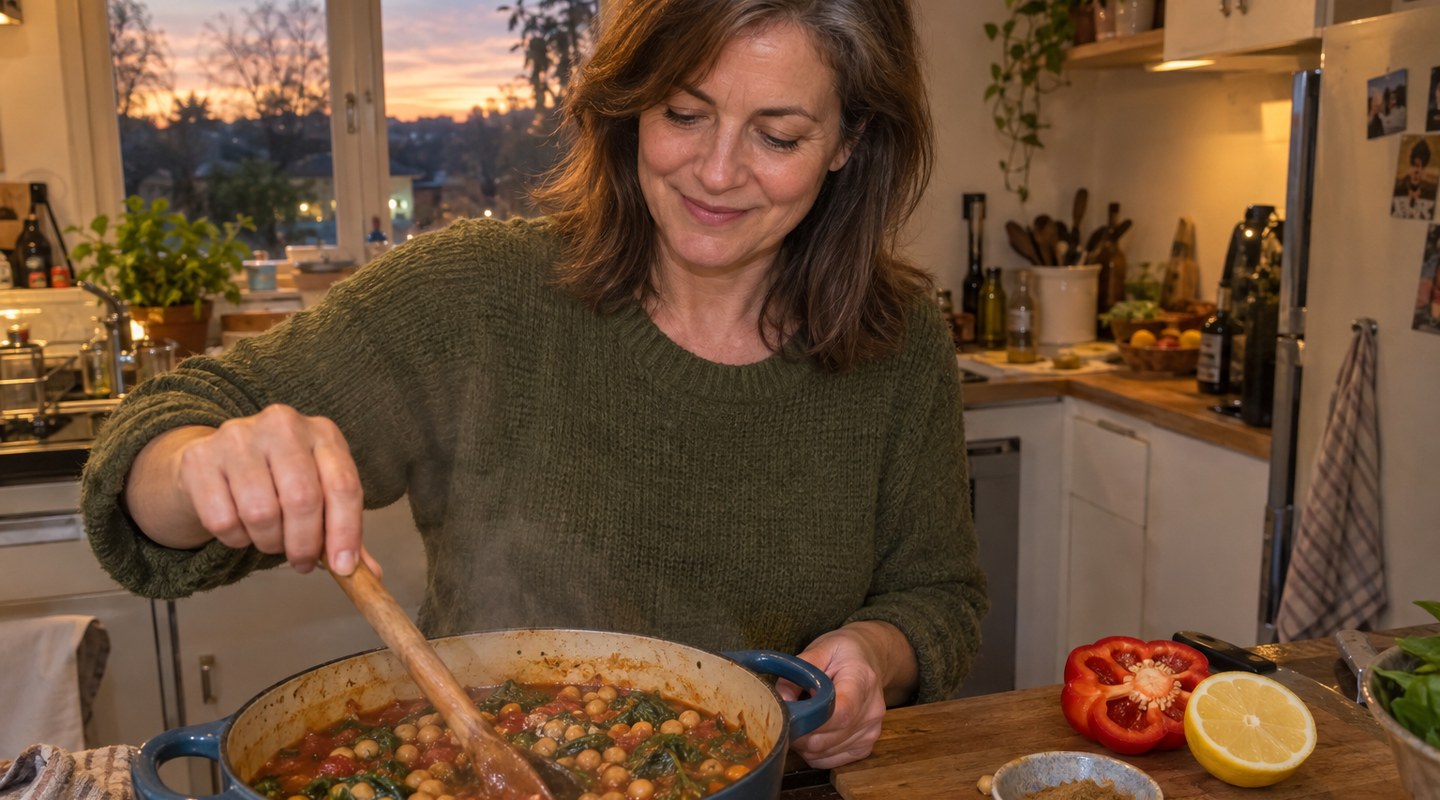
- Lunch: chickpea and spinach stew with cumin: chickpeas and spinach give protein and iron, the tomatoes and lemon help you absorb it, and it reheats well.
- Dinner: lemon thyme baked salmon with asparagus: the first of your two oily fish servings this week, with omega-3 fats and protein.
- Snack: raspberry almond chia pudding: fiber and plant omega-3 fats, made ahead for the afternoon.
Day 2
- Breakfast: blueberry walnut overnight oats: fiber from the oats, protein from the Greek yogurt and plant omega-3 fats from the walnuts, made the night before.
- Lunch: Mediterranean lentil and vegetable soup: lentils give iron and fiber, and the tomatoes add vitamin C.
- Dinner: ginger sesame tofu with bok choy: soy protein with leafy greens.
- Snack: strawberry pistachio yogurt parfait: protein from the yogurt and vitamin C from the strawberries.
Day 3
- Breakfast: turmeric tofu scramble with bell peppers: a protein breakfast without eggs, with vitamin C from the peppers.
- Lunch: sardine and arugula whole-grain toasts: your second oily fish serving, with fiber from the whole-grain bread.
- Dinner: quinoa-stuffed bell peppers with black beans: protein, fiber and iron from the quinoa and beans, with vitamin C from the red peppers.
- Snack: a small handful of almonds and an orange.
For a first step this week, add one legume meal with a vitamin C food and one serving of oily fish.
What helps also changes at other stages of life, and an anti-inflammatory diet for women puts more folate on the plate around pregnancy and more calcium after menopause.
Beyond food: exercise, sleep and your doctor
Food is only one part of the picture. Strength training, steady sleep and regular visits to your doctor also help in perimenopause.
In a trial in postmenopausal women with low bone density, supervised heavy strength and impact training twice a week raised spine bone density by 2.9%, while bone density dropped 1.2% in the group doing gentle exercise at home. The trial was done after menopause. Perimenopause is a good time to start, because bone loss speeds up from about a year before your final period.
Keep your bedtime consistent and the bedroom cool and dark. Ongoing stress is another cause of inflammation, and a daily walk is one of the small everyday habits that reduce inflammation.
See your doctor for very heavy periods, bleeding between periods or symptoms that disrupt daily life. Ask your doctor about hormone therapy too, because it’s the most effective treatment for hot flashes and night sweats.
Your doctor can also talk with you about birth control: if you don’t want to get pregnant, keep using it until 12 months after your final period.
Frequently asked questions
Is perimenopause inflammatory?
Falling and swinging estrogen in perimenopause is linked to more inflammatory signals in the blood, and belly fat and poor sleep can add to it. A diet built on vegetables, fish and legumes helps keep this low-grade inflammation in check while your hormones swing.
How long does perimenopause last?
Perimenopause usually starts between 45 and 55 and can last several years. Doctors confirm menopause only after 12 months without a period, and until then periods can still return, sometimes heavier than before. The length differs from woman to woman.
What supplements help in perimenopause?
Most of the nutrients you need in perimenopause can come from food, and iron pills only make sense if a blood test shows you’re low. In a trial, omega-3 supplements made no difference to hot flashes. Ask your doctor before starting anything, and skip products marketed as hormone-balancing.
Can an anti-inflammatory diet help with perimenopause belly fat?
An anti-inflammatory diet can help with perimenopause belly fat by filling you up with protein and fiber and by cutting added sugar. Food alone won’t stop the shift in body fat, though. Strength training to hold on to muscle helps too.
What should you not eat during perimenopause?
No food is completely off-limits during perimenopause. Cut back on:
- Added sugar
- Ultra-processed snacks
- Processed meat
- Alcohol
They take the place of foods with the protein, fiber and iron your body needs in this stage. Soda and bacon both have an inflammation score of 9, while blueberries and walnuts score 1.