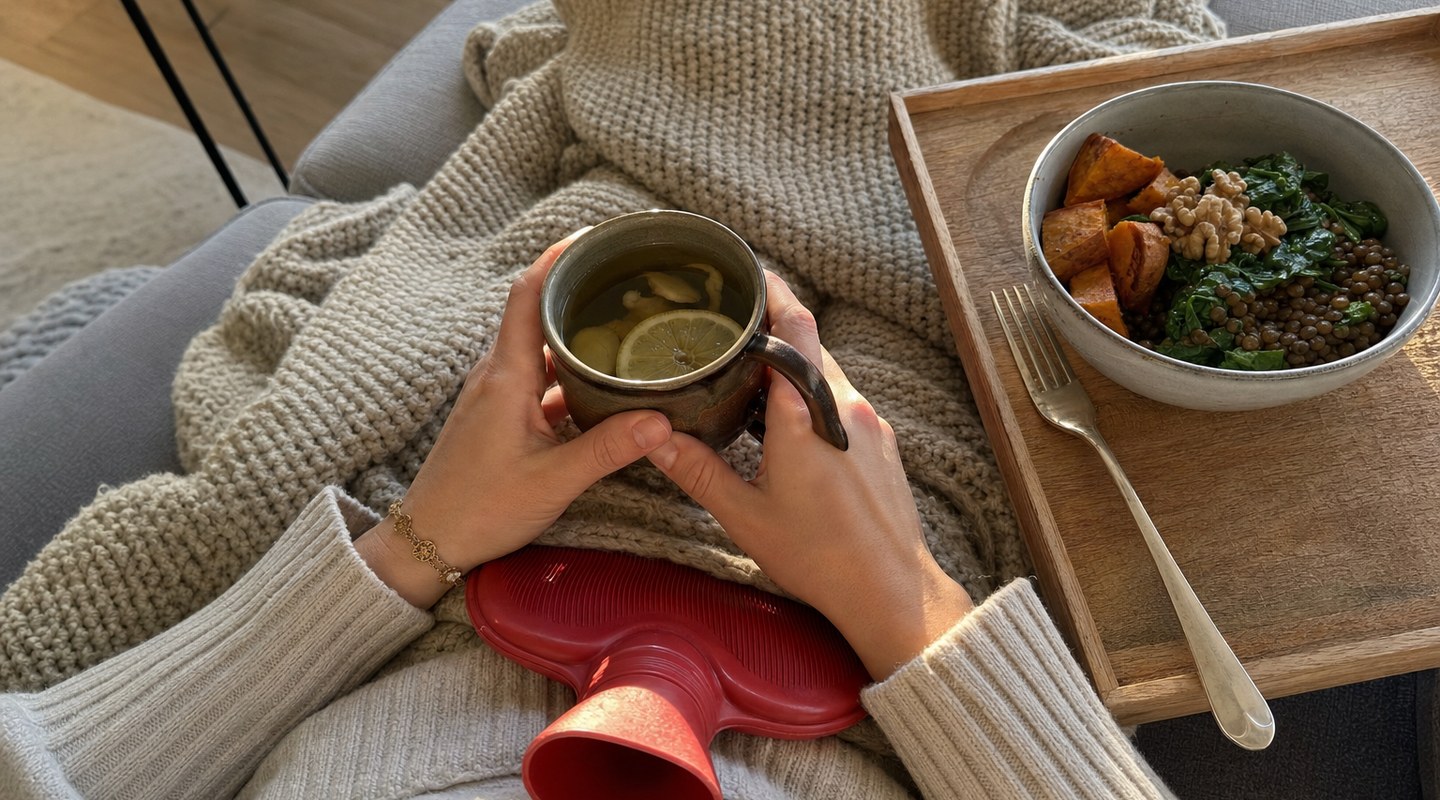
By three in the afternoon, your belly is so swollen you change into looser pants. Your pelvic pain started before your period and still hasn’t left.
You’ve tried everything the internet suggested. Gluten went first, then dairy. Turmeric capsules, a green smoothie every morning and an endometriosis diet plan from a social media post.
It all cost money and effort.
And the looser pants still come out every afternoon.
In this article, we review all the evidence on the anti-inflammatory diet for endometriosis and show you how well it actually works, what to eat and what you can stop worrying about.
Can an anti-inflammatory diet help endometriosis?
Yes, an anti-inflammatory diet can ease some endometriosis symptoms, alongside your medical treatment, but it doesn’t cure the disease.
Endometriosis is a long-term disease in which tissue similar to the lining of the uterus grows outside it, causing inflammation and pain. It affects about 10% of women of reproductive age, roughly 190 million worldwide.
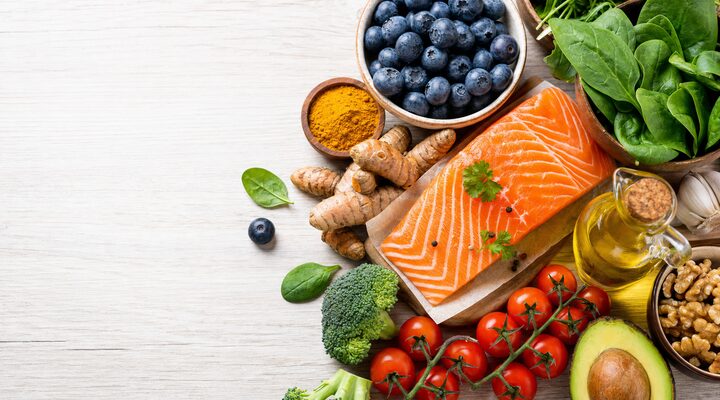
An anti-inflammatory diet for endometriosis is built on vegetables, fruit, legumes, whole grains, oily fish, nuts, seeds and olive oil, with less red and processed meat, fried and packaged food, sugar and alcohol. It works on inflammation and estrogen, the two things that drive endometriosis, and on the gut symptoms the disease often brings.
Among women already on hormonal treatment, those coached on the Mediterranean diet and exercise saw their everyday pelvic pain drop about twice as much as those on treatment alone. Because the coaching included exercise, the drop can’t be credited to food alone.
Why food can affect endometriosis
Endometriosis is driven by inflammation and estrogen and often upsets the gut, and what you eat reaches all three.
- Inflammation: endometriosis tissue releases prostaglandins, the inflammatory messengers behind much of the pain. Omega-3 fats from oily fish may ease that pain by shifting which prostaglandins your body makes. The same prostaglandins are behind ordinary period pain: see anti-inflammatory foods for period cramps.
- Estrogen: endometriosis grows in response to estrogen, and food and gut bacteria influence how your body processes it. Hormones are also at the center of PCOS, covered in the anti-inflammatory diet for PCOS.
- The gut: bloating and nausea are common endometriosis symptoms, and gut problems often overlap with irritable bowel syndrome. In one specialist clinic, 36% of women with irritable bowel syndrome also had endometriosis.
This is why the evidence below separates two questions: foods linked to getting endometriosis and diets tested on its symptoms.
What the research says about each food and diet
A handful of foods are linked to endometriosis in large studies, and only a few small trials have tested diets on its symptoms.
Most of the food evidence comes from the Nurses’ Health Study II, which has followed tens of thousands of US nurses for decades. It tracks who gets diagnosed, not whose pain eases.
| Food or diet | What studies found | Strength of evidence |
|---|---|---|
| Oily fish and omega-3 | Women who ate the most long-chain omega-3 fats were 22% less likely to be diagnosed | Some evidence: one large long-term study |
| Trans fats (fried and packaged foods) | The highest intake went with a 48% higher chance of diagnosis | Some evidence: one large long-term study |
| Red and processed meat | More than two servings of red meat a day: 56% higher risk. Processed red meat was also linked; poultry, fish and eggs weren’t linked | Some evidence: one large long-term study |
| Fruit, especially citrus | One or more servings of citrus a day went with a 22% lower risk | Some evidence: one large long-term study |
| Vegetables | Total vegetables weren’t linked. Daily cruciferous vegetables like broccoli and cabbage went with a slightly higher risk, possibly through gut symptoms | Mixed |
| Dairy | Women who ate more than three servings a day were 18% less likely to be diagnosed | Some evidence: one large long-term study |
| Soy | Each extra serving a week went with an 8% lower risk | Some evidence: one large long-term study |
| Caffeine | No overall link across 10 studies. More than 300 mg a day, about three cups of coffee, went with a higher risk | Mixed |
| Alcohol | Moderate drinking went with 22% higher odds of endometriosis | Some evidence: pooled studies |
| Gluten-free diet | 75% of 207 women reported less pain after 12 months, but nobody was compared with women who kept eating gluten | Weak: no comparison group |
| Low-FODMAP diet (carbs that ferment in the gut) |
72% of women with endometriosis and irritable bowel syndrome cut their gut symptoms by more than half in 4 weeks | Some evidence, for gut symptoms |
| Mediterranean diet | Coaching on the diet plus exercise eased pelvic pain more than treatment alone over 12 months | Promising: one randomized trial |
| Ketogenic diet | One small 12-week trial found less pain during sex and bowel movements | Early: one small trial |
| AIP (autoimmune protocol) diet | Never tested in people with endometriosis | No studies |
“Linked” isn’t “caused”: these studies show patterns in large groups of women.
A review of diet studies in people found most reported a benefit. The moderate or high risk of bias in most of them means the way the studies were run could have skewed the results. The safest bet is the overall eating pattern, not one miracle food.
Foods to eat on an anti-inflammatory diet for endometriosis
Build your meals on oily fish, fruit and vegetables, legumes and whole grains, nuts, seeds, olive oil and soy foods. To make choosing easier, each food has an inflammation score from 1 (most anti-inflammatory) to 10 (most inflammatory).

- Oily fish, twice a week: salmon and sardines score 1 out of 10 and are the best food source of omega-3. Mackerel works too.
- Fruit, with citrus most days: oranges and other citrus fruits are the fruit most linked to a lower risk of endometriosis. Blueberries score 1.
- Vegetables at every meal: leafy greens like spinach and cruciferous vegetables like broccoli both score 1. If broccoli or cabbage bloat you, eat smaller, cooked portions.
- Legumes and whole grains: lentils and oats score 2 and bring fiber. Women need about 25 grams of fiber a day, and the average American gets 17 grams. Fiber feeds your gut bacteria, and legumes are an easy way to reach those 25 grams.
- Nuts, seeds and olive oil: walnuts and olive oil score 1; flaxseed and chia seeds score 2 and add plant omega-3.
- Soy foods: tofu and edamame score 2. Soy is linked to a lower risk of endometriosis, not a higher one.
Heavy periods are common with endometriosis, and they drain iron: women with heavy periods are more likely to run low. Women 19 to 50 need 18 mg of iron a day. Pair plant iron from lentils or spinach with vitamin C foods such as citrus, strawberries, peppers, tomatoes or broccoli to absorb more of it.
These are the same foods behind a general anti-inflammatory diet plan. For the longer list, see the guide to anti-inflammatory foods.
Foods to limit, and two you may not need to cut
Cut back most on red and processed meat, fried and packaged foods, sugar and alcohol.
- Red and processed meat: beef has an inflammation score of 7 and bacon 9, both toward the inflammatory end.
- Fried and packaged foods: the ones made with trans fats, plus refined flour like white bread, which scores 7. Most sit on the list of foods that cause inflammation.
- Sugar and sugary drinks: worth limiting for inflammation in general; see how sugar affects inflammation.
- Alcohol: if you drink, the guide to the least inflammatory alcohol shows which options do the least harm.
Two foods you may not need to cut are gluten and dairy, because the evidence for cutting them is thin.
Should you cut gluten?
Cut gluten only if it clearly makes your symptoms worse or you have celiac disease. The only study of a gluten-free diet for endometriosis had no comparison group, so the women who felt better may have improved for other reasons.
Going gluten-free also removes many whole grains, an easy source of fiber, unless you replace them. A review warns that cutting foods just in case can lead to nutrient gaps, so tolerance has to be checked woman by woman.
Test it like any trigger: a few weeks with a food diary, then bring gluten back and see what happens.
What about dairy?
You probably don’t need to give up dairy. In the Nurses’ Health Study II, women who had more than three servings a day were 18% less likely to be diagnosed with endometriosis. That study tracked who got diagnosed, so it doesn’t promise pain relief.
Milk and cheese have an inflammation score of 5 out of 10, in the middle: they’re not top anti-inflammatory foods either. If milk bloats you, lactose-free milk or plain yogurt may sit better.
Endo belly: how to ease bloating with food
“Endo belly” is the hard, swollen bloating many women with endometriosis get, often worse around their period, and a short low-FODMAP diet with a dietitian has the best evidence for it.
FODMAPs are a group of carbs that ferment in your gut. They’re found in wheat, onions, garlic, beans, some fruits and some dairy foods.
The low-FODMAP diet, first studied at Monash University, runs in three steps:
- 2 to 6 weeks of strict restriction.
- Bringing food groups back one at a time.
- Keeping only the limits you need.
In women with both endometriosis and irritable bowel syndrome, 72% cut their gut symptoms by more than half in four weeks, compared with 49% of women with irritable bowel syndrome alone. It’s restrictive and isn’t meant for life, so do it with a registered dietitian.
A few everyday habits also help with bloating:
- Add fiber gradually.
- Eat smaller meals more often.
- Cook cruciferous vegetables instead of eating them raw.
How to find your own trigger foods
Tracking is the most reliable way to find which foods affect your endometriosis, because triggers differ from woman to woman.
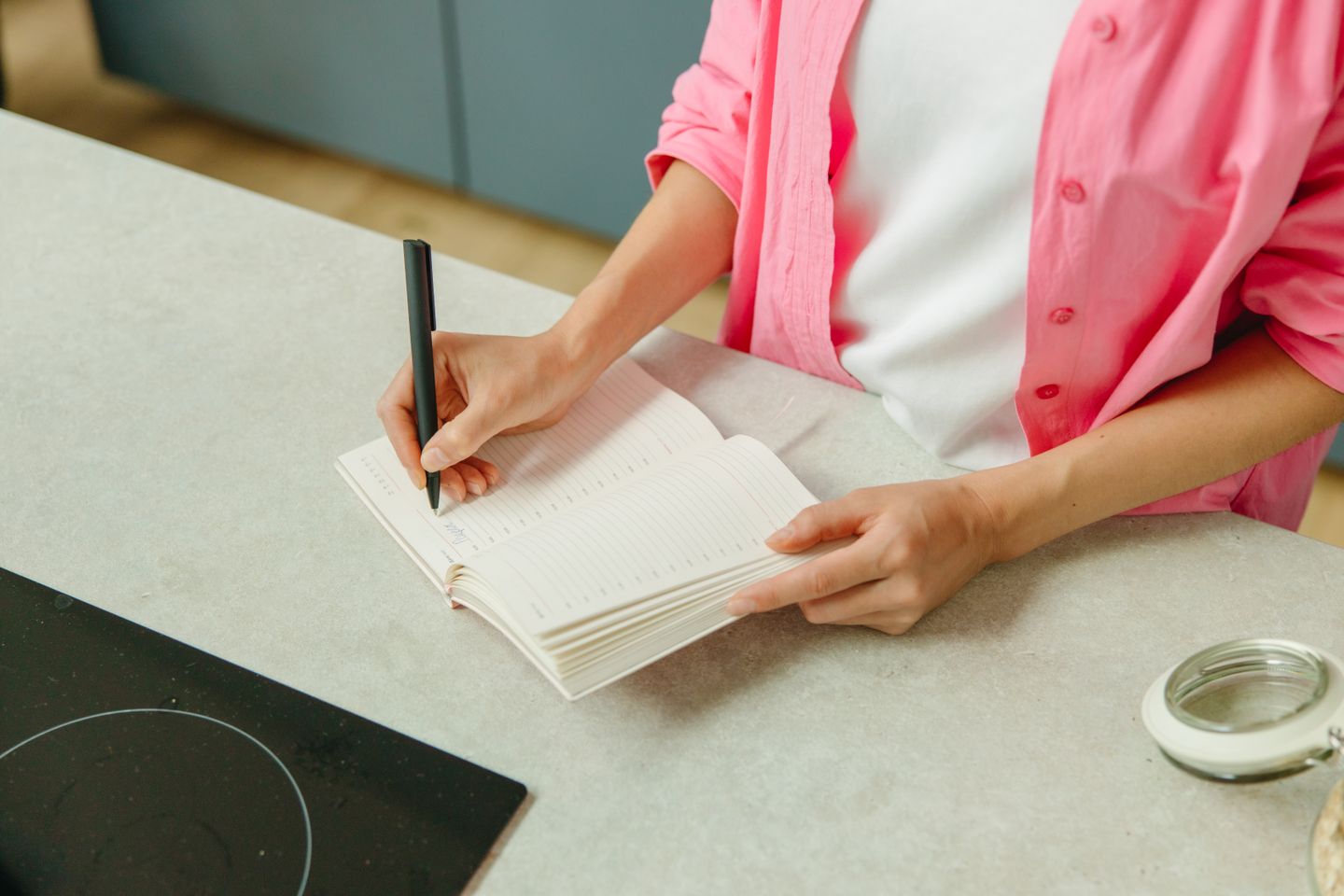
- For at least two cycles, log what you eat, your cycle day and your pain and bloating from 0 to 10.
- Change one thing at a time, so you know what caused any difference.
- Give each change at least four weeks before you judge it, because symptoms shift across your cycle.
- Bring the food back. If your symptoms return, you’ve found a trigger.
Don’t cut several food groups at once: you can end up short on nutrients. A registered dietitian can help you plan the tests and keep your meals balanced while you run them.
A day of anti-inflammatory eating for endometriosis
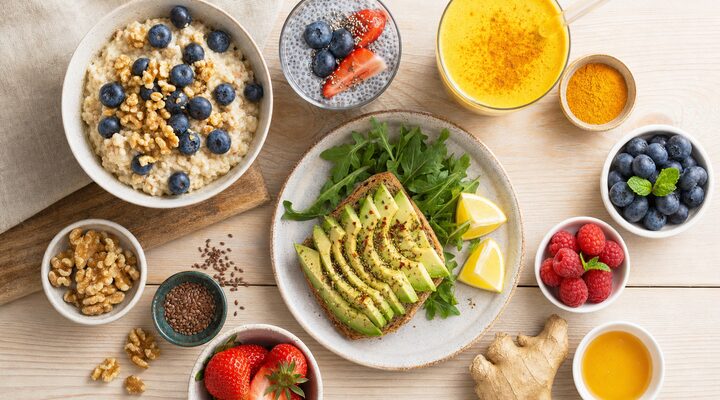
A sample day of anti-inflammatory eating for endometriosis can come together from easy recipes that you repeat and rearrange.
- Breakfast: raspberry almond chia pudding with an orange.
- Lunch: roasted beet, lentil and walnut salad.
- Dinner: brown rice sushi bowls with salmon and cucumber. On another night, sweet potato and red lentil soup.
- Snack: a small handful of walnuts and a piece of fruit, or edamame.
For more ideas, browse the anti-inflammatory dinner recipes. A good first step: swap one red-meat dinner a week for fish or lentils, and build from there when it feels easy.
The foods that help also change at other stages of life: an anti-inflammatory diet for women adds more iron while periods are heavy and more calcium after menopause.
Frequently asked questions
Does caffeine make endometriosis worse?
Studies found no overall link between caffeine and endometriosis at the amounts most people drink. But intake above 300 mg a day, about three cups of coffee, went with a higher risk of endometriosis. Coffee has an inflammation score of 3 out of 10, and the guide to anti-inflammatory drinks shows more options.
What are the worst foods for endometriosis?
Red and processed meat, alcohol and the trans fats in fried and packaged foods have the strongest links to endometriosis in large studies. Sugar and refined flour are worth limiting for inflammation in general. Replace them with:
- Fish
- Legumes
- Fruit
- Vegetables
- Olive oil
Is the AIP diet good for endometriosis?
The AIP diet has never been tested in people with endometriosis. It’s the autoimmune protocol, a strict elimination diet designed for autoimmune diseases, and cutting so many foods can leave you short on nutrients. If bloating is your main problem, a low-FODMAP diet done with a dietitian has more evidence behind it.
Can diet cure endometriosis?
No, diet can’t cure endometriosis: there is currently no cure for the disease. Diet can ease symptoms alongside your medical treatment, whether that’s hormonal treatment, pain relief or surgery. Don’t stop or change any treatment on your own; bring food questions to your doctor.
How long does an anti-inflammatory diet take to help endometriosis?
Gut symptoms can improve within about four weeks on a low-FODMAP diet. For pain, judging the whole diet takes longer than testing any single food: the trials that found a benefit ran for months, the longest for 12 months. Plan on two to three months before you decide what the diet is doing for you.
Does soy make endometriosis worse?
Soy wasn’t linked to a higher risk of endometriosis: in a study of more than 82,000 US nurses, each extra serving of soy a week went with an 8% lower risk of being diagnosed. Tofu and edamame have an inflammation score of 2 out of 10. Whole soy foods are a good protein swap for red meat.