
Your joints ache on some days and not others. Your skin flares after a meal you can’t quite pinpoint. You’ve read that food and autoimmune symptoms are connected, but nobody’s told you which food is the problem for you, specifically.
That’s the appeal of AIP. It’s built to answer exactly that question: which foods make your body react, and which ones don’t.
But it’s not a diet you slide into gently. It asks you to cut entire food groups at once and track everything you eat and feel, sticking with it for weeks before you get an answer.
It’s also meant to be temporary, not a life sentence.
The AIP diet (autoimmune protocol) is an elimination diet built for people managing autoimmune conditions. It’s a stricter version of paleo that removes suspected trigger foods for 30 to 90 days, then reintroduces them one at a time to identify which ones affect your symptoms.
It runs through three AIP diet phases:
- Elimination: cut all suspected trigger foods at once, typically for 30 to 90 days.
- Reintroduction: add foods back one at a time, watching for reactions.
- Maintenance: settle into a personalized, more flexible pattern.
The evidence behind it is still early. A handful of small studies show real symptom improvement, but no large randomized controlled trial has tested AIP yet.
- What is the AIP diet?
- How the AIP diet works: the 3 phases
- AIP food list: what you eat and what you eliminate
- Why does AIP ban eggs, coffee and quinoa?
- What the evidence shows (and what it doesn’t)
- The first weeks: what to expect
- Who should not try the AIP diet
- AIP vs paleo vs the anti-inflammatory diet
- How to start (and why tracking is the whole game)
- Frequently asked questions
What is the AIP diet?
AIP stands for autoimmune protocol, a stricter branch of the paleo diet designed specifically for people managing autoimmune disease. It’s the most restrictive elimination diet built for this purpose, and it’s meant to be run in phases, not as a permanent way of eating.
The framework comes from research and advocacy work by Sarah Ballantyne, who laid out the full elimination-and-reintroduction structure in her 2013 book, The Paleo Approach.
The protocol’s working theory is that certain foods increase intestinal permeability, sometimes called “leaky gut,” letting undigested particles trigger an immune response. That’s a hypothesis the protocol is built around, not a mechanism confirmed by large human trials.
People typically try AIP alongside standard medical treatment for conditions such as:
- Hashimoto’s thyroiditis
- Rheumatoid arthritis
- Inflammatory bowel disease (Crohn’s disease and ulcerative colitis)
- Psoriasis
- Celiac disease
- Type 1 diabetes
- Lupus
- Multiple sclerosis
It sits under the broader umbrella of autoimmune wellness: using diet, sleep, stress and movement as levers alongside medical care, not instead of it.
How the AIP diet works: the 3 phases
The AIP diet phases move through three distinct stages, and most of the work (and most of the discomfort) happens in the first one.
Phase 1: Elimination
Elimination means cutting every suspected trigger food from your plate on day one, not phasing them out gradually. Alongside food, the protocol also asks you to drop NSAIDs, tobacco and alcohol for the same window.
How long that lasts varies more than most guides admit. A 2025 review of the protocol found published elimination phases ranging from 6 weeks to 6 months, though 30 to 90 days is the range most people plan around.
Phase 2: Reintroduction
Reintroduction starts once your symptoms have clearly settled, not on a fixed calendar date. You bring back one food at a time, waiting 5 to 7 days between each before adding the next.
Each test follows the same pattern on its own trial day: a teaspoon of the food, a 15-minute wait, a larger portion, a 2 to 3 hour wait, then a normal-sized serving if nothing happens. The review groups the foods you test in a specific order:
| Group | Foods to test |
|---|---|
| Group 1 | Egg yolks, legumes, seed oils and nut oils |
| Group 2 | Nuts and seeds, cocoa and egg whites |
| Group 3 | Cashews and pistachios, eggplant, coffee and fermented dairy |
| Group 4 | All dairy, nightshades, white rice and gluten-free grains |
This is a summary of the order, not a full walkthrough: the point is that easier, less reactive foods come first, and the foods most linked to gut irritation or immune activity come last.
Phase 3: Maintenance
Maintenance is the eating pattern you land on once you know your triggers, built from what reintroduction taught you rather than a fixed list. It’s meant to be flexible: some foods stay out, most come back, and the plan keeps evolving as your health changes.
It is not the elimination phase extended indefinitely. Staying in strict elimination long-term is one of the more common mistakes people make with AIP, and it’s part of why nutrient deficiencies show up in some of the research.
AIP food list: what you eat and what you eliminate
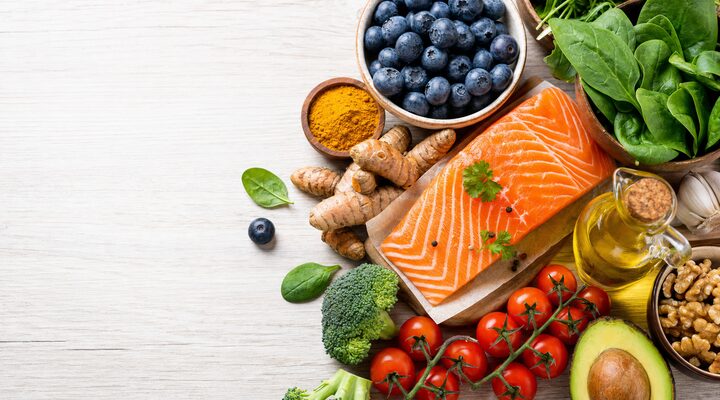
On the AIP diet you eat quality meat, fish, non-starchy vegetables, fruit and root vegetables, while eliminating grains, legumes, nightshades, dairy, eggs, nuts, seeds, coffee, alcohol and refined sugar.
| Eat | Eliminate |
|---|---|
| Quality meat, fish and organ meats | All grains |
| Non-nightshade vegetables | Legumes and peanuts |
| Fruit | Nightshades (tomato, potato, peppers and eggplant) and their spices (paprika and cayenne) |
| Sweet potato and other root vegetables | Dairy |
| Olive, avocado and coconut oil | Eggs |
| Non-dairy fermented foods | Nuts, seeds and their spices (cumin, coriander, mustard and nutmeg) |
| Non-seed herbs | Coffee and alcohol |
| Herbal teas | Refined sugar and sweeteners, additives and processed seed oils |
That’s the short version. The full AIP diet food list names every food in each column, including the herbs and spices that split by whether they come from a seed. The why behind several of these exclusions is worth its own look, since it’s not arbitrary.
Why does AIP ban eggs, coffee and quinoa?
Each exclusion targets a specific compound the protocol treats as a possible gut irritant or immune trigger, not a food group cut just for the sake of restriction.
- Eggs: egg whites contain lysozyme, an enzyme the protocol flags for its potential to cross a compromised gut lining and carry other proteins with it.
- Gluten-containing grains: the review implicates gliadin, a gluten protein, in triggering autoimmune activity in susceptible people.
- Quinoa and other pseudocereals: removed for their saponin content, compounds thought to irritate the gut lining.
- Nightshades: tomatoes, potatoes, peppers and eggplant contain glycoalkaloids, another compound the protocol treats as a possible irritant.
- Coffee and alcohol: both can irritate the gut directly, and both make it harder to tell whether a symptom came from food or from your morning cup.
None of these mechanisms are settled science. They’re the rationale the protocol is designed around, and part of what phase 2 reintroduction is meant to test against your own body.
What the evidence shows (and what it doesn’t)
Four small clinical trials have tested AIP directly, and all four reported meaningful symptom improvement, though none used a control group large enough to rule out the placebo effect.
| Condition | Participants | Duration | What improved | What didn’t |
|---|---|---|---|---|
| IBD (Crohn’s and ulcerative colitis) | 15 | 6 weeks elimination + 5 weeks maintenance | 73% reached clinical remission by week 6, sustained through maintenance | CRP and fecal calprotectin didn’t change significantly |
| Hashimoto’s thyroiditis | 16 women | 10 weeks | quality of life and symptom burden improved (MSQ score dropped from 92 to 29), hs-CRP fell modestly (1.6 to 1.2 mg/dL) | thyroid function (TSH, fT3, fT4 and antibody levels) didn’t change |
| Hashimoto’s thyroiditis (second trial) | 28 | 12 weeks | fewer malaise symptoms and reduced thyroid volume | fT3 and fT4 dropped (within normal range) and antibodies didn’t improve; researchers flagged a possible risk to thyroid function |
| Rheumatoid arthritis | 9 | 12 weeks (crossover) | 7 of 9 participants improved: RAPID3 scores fell from 2.7 to 1.0, with better fatigue, sleep and pain and high adherence | no control group; patient-reported outcomes only |
These are small groups recruited to test whether the approach deserves larger studies. None had a control group eating their normal diet, so part of the improvement could come from the attention and structure of a study rather than the food itself. What stands out is the consistency: four different conditions, four trials, and improvement in all of them.
The strongest results were self-reported: quality of life scores, symptom questionnaires, pain and fatigue ratings. In the IBD trial, quality of life improved and patients showed visible healing of the gut lining, with a companion study finding changes in inflammatory gene expression in gut tissue. Blood markers moved less: inflammatory markers like CRP barely budged in the Hashimoto’s trial, and thyroid antibody levels didn’t improve in either thyroid study.
The summary: AIP research is young, but it’s being taken seriously. The American College of Gastroenterology’s journal already includes AIP among the diets formally reviewed for IBD, and the authors of the 2025 review are explicit that the next step is larger randomized controlled trials. Until those exist, the results so far are a reason to try AIP carefully and with support.
The first weeks: what to expect
Most people feel worse before they feel better. The review documents headaches, fatigue, irritability and skin flares as common in the first few days to a week of elimination.
Some of that comes from the diet’s design. Dropping several food groups and cutting out coffee all at once tends to produce a rougher few days than a gradual change would.
Improvement doesn’t follow a fixed schedule. Some people notice a shift within 3 weeks, though the more typical window, based on how long elimination phases run in practice, is 30 to 90 days before you have a clear read on whether it’s working.
Tracking inflammation symptoms day by day, not just how you feel in general, is what turns the elimination phase into something you can interpret later.
Who should not try the AIP diet
AIP isn’t appropriate for everyone, and the review flags several groups who should avoid it or only attempt it under close supervision.
- Pregnancy and breastfeeding: nutrient needs are too high to risk an elimination diet without guidance.
- Children: growing bodies need a broader nutrient base than the elimination phase allows.
- History of disordered eating or orthorexia: a diet built around strict rules and food elimination can reinforce unhealthy patterns.
- Ileal strictures or malabsorption issues: in the IBD study, one participant developed a partial small bowel obstruction, linked to eating large amounts of raw vegetables without dietitian guidance.
- Existing nutrient deficiencies: removing whole food groups can widen a gap that’s already there.
That last point isn’t theoretical. In the Hashimoto’s trial, about half of the participants showed deficiencies in folate, vitamin B12 or riboflavin, which is the core argument for doing AIP with a dietitian or physician rather than alone.
AIP vs paleo vs the anti-inflammatory diet
Paleo, AIP and an anti-inflammatory diet sound like variations on the same theme, but they solve different problems.
| Approach | What it is |
|---|---|
| Paleo | A fixed eating pattern built around whole foods, meat, vegetables and fruit, without a phased elimination structure. |
| AIP | A stricter, personalized version of paleo, built around timed elimination and reintroduction phases. |
| Anti-inflammatory diet | A permanent pattern focused on adding more of certain foods, not eliminating in phases. |
An anti-inflammatory diet plan works as a long-term default: more produce, fish and olive oil, less ultra-processed food, no end date. AIP is the opposite kind of tool, short-term and diagnostic, meant to answer a specific question about your own triggers before you settle into something more sustainable.
How to start (and why tracking is the whole game)
Starting well means preparing before day one, not improvising once you’ve already cut out half your usual meals. If you’re putting together an AIP diet plan, the prep work matters as much as the elimination phase itself.
Talk to your doctor or a registered dietitian first, especially if you take medication or manage a chronic condition. Pick a realistic start date, ideally not the week of a holiday or a work deadline. Plan your first week of meals and batch-cook what you can, since a bare pantry is when most people quit.

Diet is one lever, not the only one. If you want the fuller picture, other evidence-ranked ways to reduce inflammation like sleep, movement and stress management work alongside whatever you eat, not instead of it.
The part that decides whether AIP works for you is tracking. Without a record of what you ate and what symptoms showed up each day, the reintroduction phase has nothing to compare against, and you’re left guessing which food caused which flare.
The InflammaScan app lets you check whether a specific food fits the elimination phase and log symptoms as you go, and a meal planner takes some of the planning load off the first, hardest week.
Frequently asked questions
How long does the AIP diet take to work?
Most people plan for 30 to 90 days of elimination before drawing conclusions, though published studies documented working periods as short as 6 weeks and as long as 6 months. A few people notice symptom changes within the first 3 weeks, but a clear read usually takes the full elimination window before reintroduction even starts.
Can you drink coffee on the AIP diet?
No, coffee is eliminated during the elimination phase because it can irritate the gut and makes it harder to tell whether a symptom came from food or caffeine. It’s one of the later foods tested in reintroduction, grouped with cashews, pistachios, eggplant and fermented dairy, so most people wait weeks before trying it again.
Can you eat eggs or rice on the AIP diet?
Neither is allowed during elimination. Eggs are removed because egg whites contain lysozyme, an enzyme thought to cross a compromised gut lining, and white rice sits in the final reintroduction group alongside dairy, nightshades and gluten-free grains. Both can be tested again once elimination symptoms have settled.
Does the AIP diet work for weight loss?
Weight loss isn’t the goal of AIP, but two Hashimoto’s studies recorded it as a side effect over 10 to 12 weeks of following the protocol. In at least one of those studies, some of that loss was muscle mass rather than fat, which is a reason to treat weight loss as a byproduct rather than a target.
What does AIP stand for?
AIP stands for autoimmune protocol, a stricter, more personalized branch of the paleo diet built specifically for people managing autoimmune conditions such as Hashimoto’s thyroiditis, rheumatoid arthritis or inflammatory bowel disease. It removes suspected trigger foods for a defined period, then reintroduces them one at a time to identify individual triggers.
Is the AIP diet meant to be permanent?
No, AIP is designed as a temporary, three-phase process rather than a permanent way of eating. The strict elimination phase typically lasts 30 to 90 days, after which most people move into a personalized maintenance pattern that reintroduces any food that didn’t trigger symptoms, keeping the diet only as restrictive as it needs to be long-term.