| Prep Time | 15 minutes |
|---|---|
| Cook Time | 45 minutes |
| Total Time | 1 hour |
| Servings | 4 |
What Is Brown Rice Sushi Bowls with Salmon and Cucumber?
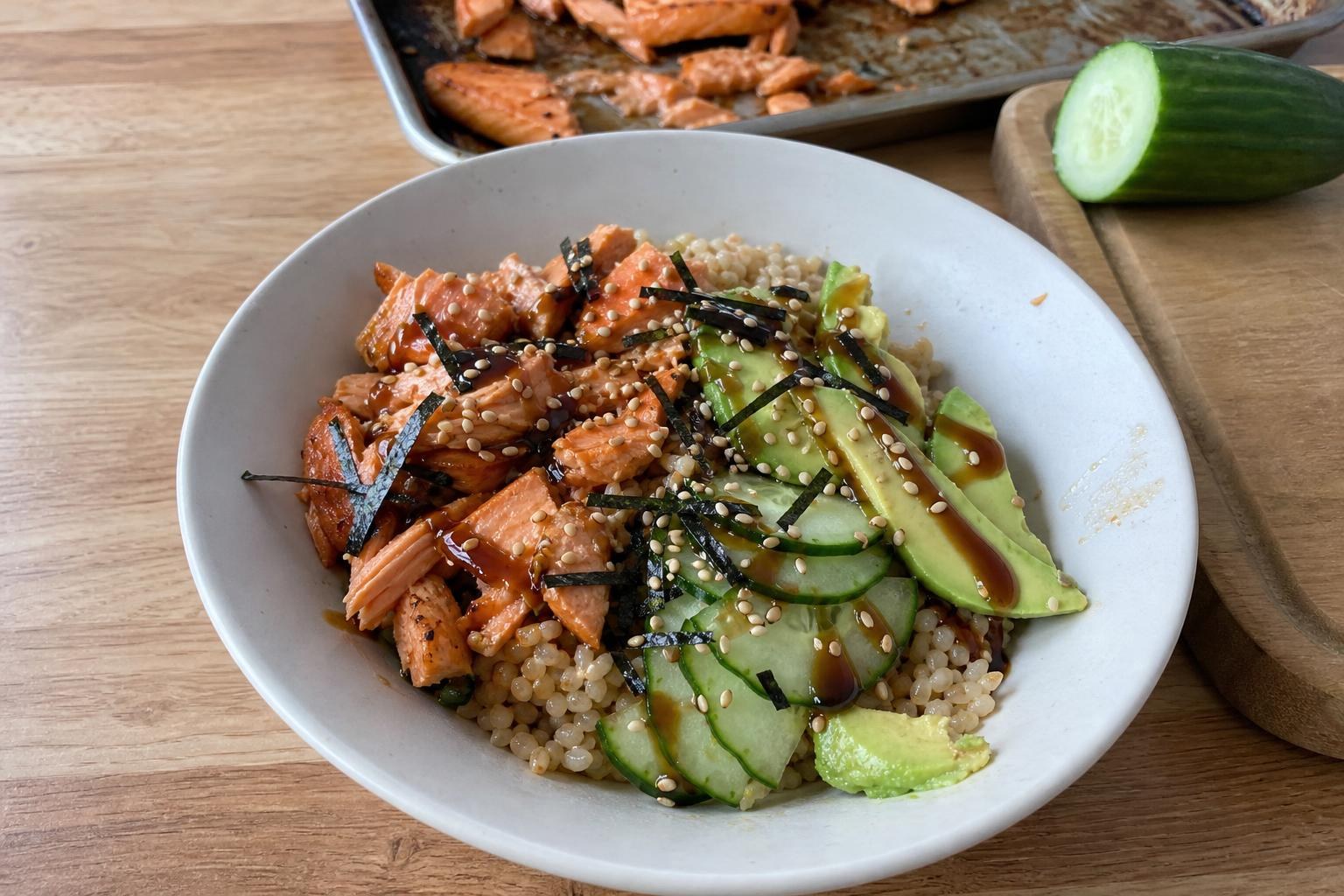
This bowl takes the fillings of a maki roll and serves them loose in a dish: short-grain brown rice seasoned with rice vinegar, roasted salmon broken into large flakes, cucumber, avocado and strips of nori, finished with a sauce of coconut aminos, toasted sesame oil and fresh ginger. The brown rice stays looser and chewier than white sushi rice, the cucumber and nori bring the cold, salty contrast, and the whole thing builds in bowls for a weekday lunch or dinner.
What Makes This Recipe Anti-Inflammatory?
Salmon supplies EPA and DHA, the long-chain omega-3 fatty acids that studies have linked to lower levels of inflammatory markers in the blood. Extra-virgin olive oil adds oleocanthal, a phenolic compound studied for its effect on inflammatory pathways.
Avocado brings oleic acid, a monounsaturated fat, along with lutein and vitamin E. Fresh ginger contributes gingerol. Brown rice adds gamma-oryzanol from its intact bran, plus fiber and magnesium. Nori brings carotenoids, notably zeaxanthin, and sesame provides the lignans sesamin and sesamol. There is no refined white rice, no refined seed oil, no bottled sushi sauce and no mayonnaise-based spicy sauce. The only sweetener is 2 teaspoons of honey divided across four servings, half a teaspoon each.
Ingredients
- 1 1/2 cups short-grain brown rice
- 2 3/4 cups water
- 3 tablespoons unseasoned rice vinegar
- 2 teaspoons raw honey
- 1/2 teaspoon fine sea salt
- 1 1/4 pounds skinless salmon fillet, cut into 4 pieces
- 1 tablespoon extra-virgin olive oil
- 2 tablespoons coconut aminos
- 2 teaspoons toasted sesame oil
- 1 teaspoon grated fresh ginger
- 1 large English cucumber, halved lengthwise and sliced into thin half-moons
- 1 large ripe avocado, pitted and sliced
- 2 sheets toasted nori, cut into thin strips
- 1 tablespoon toasted sesame seeds
Directions
Step 1
Rinse the 1 1/2 cups short-grain brown rice until the water runs clear. Add it to a saucepan with the 2 3/4 cups water and bring to a boil. Lower the heat, cover, and cook at the lowest setting for 40 minutes. The grains give to the bite when done, with no water left. Keep the lid on.
Step 2
Whisk the 3 tablespoons unseasoned rice vinegar with the 2 teaspoons raw honey and the 1/2 teaspoon fine sea salt in a small bowl for about 30 seconds. The mixture is ready when the honey dissolves completely and nothing granular sits at the bottom. Set it aside.
Step 3
Heat the oven to 425°F while the rice cooks. Rub the 4 salmon pieces with the 1 tablespoon extra-virgin olive oil on all sides and place them apart on a parchment-lined sheet pan. Roast for 12 minutes. The salmon is done when the thickest part turns opaque and the flesh flakes under a fork.
Step 4
Whisk the 2 tablespoons coconut aminos with the 2 teaspoons toasted sesame oil and the 1 teaspoon grated fresh ginger in a small bowl for about 15 seconds. The sauce is ready when the oil stops floating as a separate layer on top. Set it aside.
Step 5
Leave the saucepan covered, off the heat, for 5 minutes. Fluff the grains with a fork, pour the vinegar mixture over the hot rice, and fold with cutting motions, not circular stirring, until each grain looks glossy and the rice loosens instead of clumping. Warm rice absorbs the seasoning; cold rice does not.
Step 6
Divide the rice among four shallow bowls. Break the salmon into large flakes with a fork and lay it over the rice. Arrange the cucumber half-moons and avocado slices to one side of each bowl, scatter the nori strips and the 1 tablespoon toasted sesame seeds on top, and spoon the sauce over right before serving.
Nutrition Facts (per serving)
| Calories | 725 |
|---|---|
| Fat | 35g |
| Carbs | 66g |
| Protein | 37g |
InflammaScore
1 Good! Very low inflammation potential
Q&A
Q1: Can I use raw salmon?
A1: This version roasts the salmon, so the timing and nutrition match roasted fish. Raw salmon must come from fish sold for raw consumption, frozen beforehand to destroy parasites, sliced thin and kept cold until serving.
Q2: Can I use cooked rice or leftover rice?
A2: Use 4 1/2 cups cooked brown rice, warmed before seasoning in Step 5. That leaves only the 12 minutes of salmon to cook. Short-grain rice takes the seasoning better, because its starch keeps it stickier.
Q3: Why did my rice turn out gummy and clumped?
A3: Skipping the rinse leaves surface starch, lifting the lid before the 40 minutes are up interrupts the cook, and circular stirring breaks the grains.
Q4: Can I make this ahead, and how do I store it?
A4: Store the rice and salmon in closed containers up to 3 days, the cucumber 1 day. Cut the avocado and add the nori when serving; nori softens in minutes on moist rice.
Q5: What can I use instead of salmon?
A5: Arctic char and steelhead trout have a similar fat content and roast in the same 12 minutes. Cod and other lean fish dry out, so pull them out at 9 minutes.
This is sushi without rolling anything. Cook the rice and the salmon ahead, then build the bowls in five minutes.