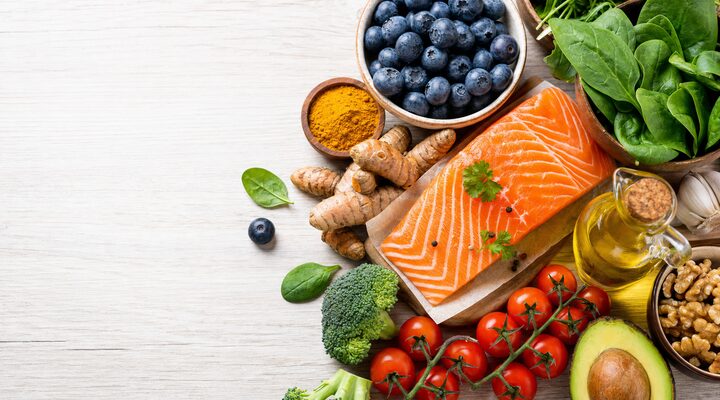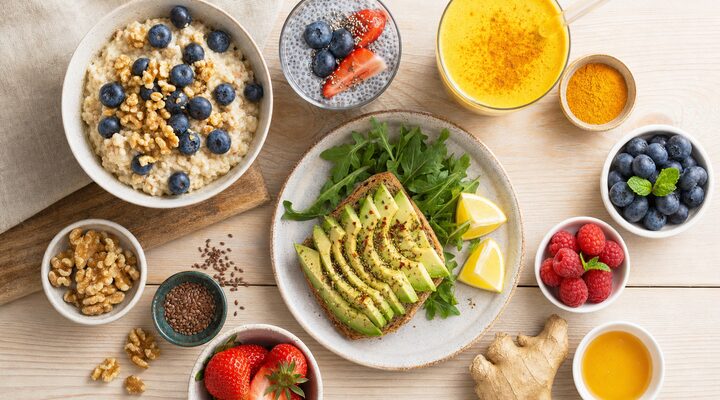
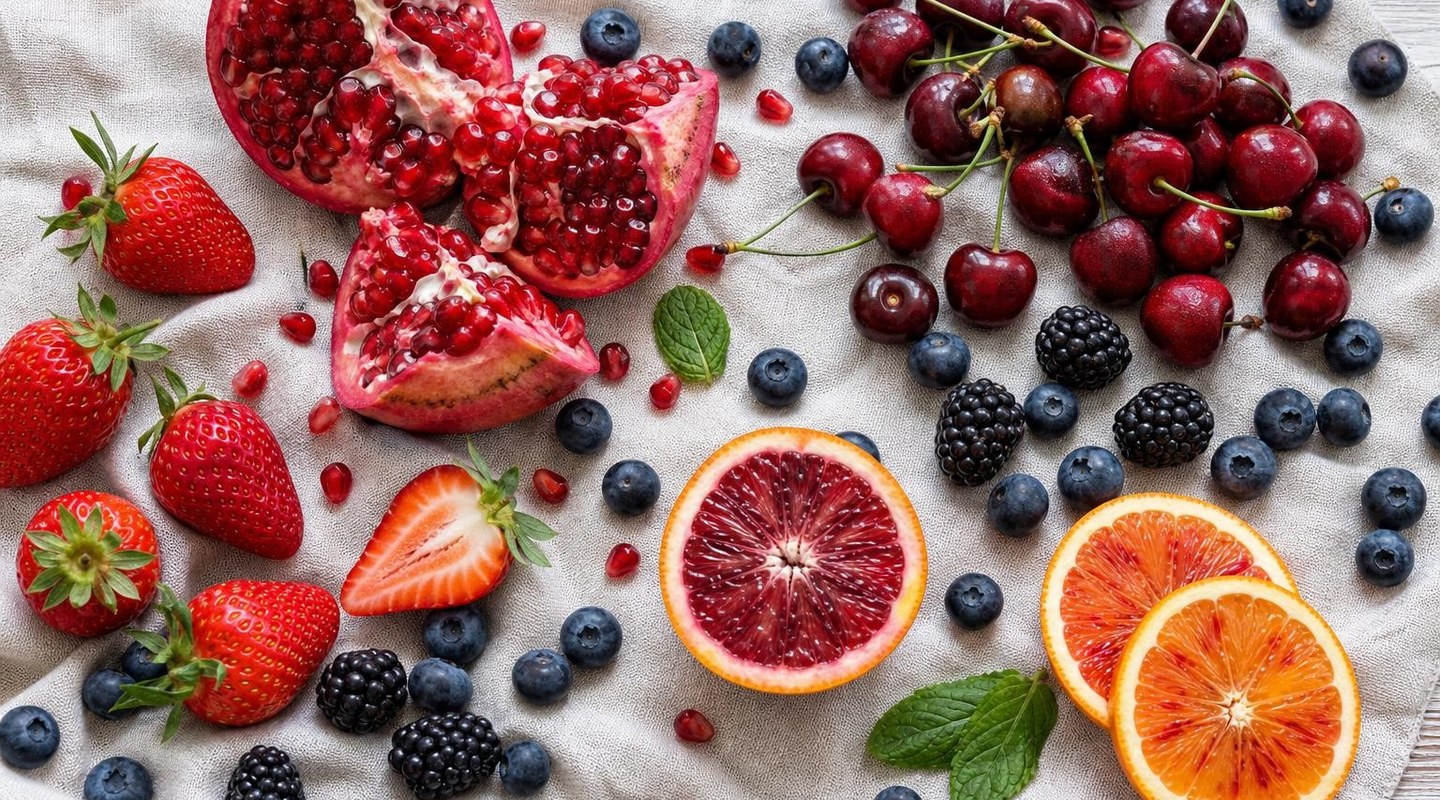
While some fruits measurably lower inflammation in your blood, others are mostly sugar with good marketing, and the difference isn’t what the price tag says.
That difference matters when you’re eating fruit every day with chronic inflammation or a raised CRP result. Picture walking the produce aisle and knowing exactly which basket to fill. That’s what’s ahead: which anti-inflammatory fruits earn their place and how much of each to eat.
The most anti-inflammatory fruits are the deeply colored ones, led by tart cherries, berries and pomegranate. Nearly all fruits score in the low band, and US guidelines set 1.5 to 2 cups a day.
- Tart cherries: best for gout and recovery after hard exercise.
- Blueberries, blackberries and strawberries: best for daily eating and joint pain.
- Pomegranate: best for lowering blood inflammation markers with juice.
- Red and purple grapes: best as a dessert stand-in; the marker evidence is weak.
- Oranges, grapefruit and lemons: best for everyday vitamin C, with a drug warning.
- Apples: best for lowering blood inflammation markers in a trial.
- Pineapple: best for vitamin C; the pain result is from bromelain supplements.
- Watermelon and mango: best for blood vessels and a big bowl with little sugar.
- Avocado and tomatoes: best for lunch and dinner.
What makes a fruit anti-inflammatory?
The compounds that give fruit its red, purple and blue pigments calm inflammation, and the fruit’s fiber and vitamin C add to the effect. Anthocyanins sit in berries, cherries and grapes. Flavonoids like hesperidin sit in citrus, and carotenoids such as lycopene sit in watermelon and tomatoes.
Fiber feeds the bacteria in your gut, and vitamin C works as an antioxidant. You can see these compounds at work in blood markers. The main one is C-reactive protein (CRP), the inflammation marker on a standard blood test.
A review of 83 studies found that fruit and vegetable intake lowered CRP and TNF-α, another inflammation signal in the blood, and the effect came from ordinary food.
The best anti-inflammatory fruits
Tart cherries, berries and pomegranate lead the evidence; each fruit comes with how much to eat and when to hold back.
Tart cherries
Tart cherries carry several times more of the red anthocyanin pigment than sweet ones. They stand out for gout and recovery after hard exercise.
In a study that followed 633 people with gout, eating cherries over two days came with a 35% lower risk of an attack. With the gout drug allopurinol, the drop reached 75%.
Tart cherry juice lowered blood uric acid in adults with overweight. Lower uric acid isn’t the same as fewer attacks, though. Gout decisions belong with your doctor.
In older adults, 480 ml a day for 12 weeks lowered CRP compared with a control drink. In a trial with 20 recreational marathon runners, drinking it for 5 days before the race, on race day and for 2 days after helped muscle strength come back faster, though soreness was no different.
The anti-inflammatory drinks guide covers where juice fits in. Eat tart cherries fresh in season, frozen the rest of the year.
Good pick if: you have gout, or you want muscles that recover faster after hard training.
Limit it if: you’re counting sugar, since juice concentrate holds a big bowl’s sugar without the fiber.
Blueberries, blackberries and strawberries
Berries carry anthocyanins, the compounds behind their blue and red colors. Across 16 randomized trials, anthocyanins produced a modest drop in CRP and IL-6, another immune signal in the blood. The drop was clearest in people with overweight or high cholesterol after 8 to 12 weeks.
Eating the amount in about 178 g of fresh wild blueberries a day improved blood vessel function and lowered systolic pressure by about 3.6 mmHg in older adults. And 50 g of freeze-dried strawberries a day for 12 weeks reduced knee pain and IL-6 in adults with knee osteoarthritis, though CRP didn’t change.
Blackberries carry the most fiber of these berries, and a cup of strawberries covers a full day of vitamin C. Eat a cup a day, fresh or frozen.
Good pick if: you want a fruit you can eat every day, sweet enough for dessert.
Limit it if: you buy dried versions, usually sweetened, or juice, which drops the fiber.
Pomegranate
Pomegranate carries punicalagins, tannins that few other foods hold in the same amount. Gut bacteria turn them into urolithins, the form that reaches your blood, though some people make few.
Across 11 studies with 696 people, pomegranate juice lowered CRP by about 2.5 mg/L. Most of that research used juice in people who already had raised inflammation.
Eat half a cup of arils in season, seed and all, since the seed holds the fiber. The rest of the year, a small glass of pure juice works. Many bottles are blends cut with apple or grape juice, so check the label.
Good pick if: your CRP came back raised.
Limit it if: you’re watching sugar, since juice drops the fiber the arils keep.
Red and purple grapes
Grapes carry the same anthocyanin family as berries, concentrated in the skin. Darker skins hold more pigment, so black and red beat green.
The evidence for grapes is weak: a review of trials found grape polyphenols showed no clear effect on CRP, IL-6 or TNF-α. Grapes still make a good whole fruit, and a cup covers about a fifth of your day’s vitamin K.
Eat the darkest bunch you can find, a cup at a time. Raisins are the same fruit with the water gone, so a small box holds the sugar of a big bunch.
Good pick if: you want something sweet after dinner that isn’t a sweet.
Limit it if: you tend to finish the bag, because nothing in a grape makes you stop.
Oranges, grapefruit and lemons
Citrus carries hesperidin, a flavonoid that sits mostly in the white pith, along with plenty of vitamin C. In pooled trials, 100% orange juice lowered IL-6, though the evidence is rated very low quality. Grapefruit eaten twice a day for 6 weeks did not significantly lower inflammation in adults with overweight.
Citrus is a good whole fruit for fiber and vitamin C; its effect on inflammation isn’t proven. Grapefruit blocks an enzyme in the gut that breaks down many medicines, including some statins such as simvastatin and atorvastatin and the blood pressure drug nifedipine. If you take regular medication, ask a pharmacist.
Eat oranges whole, white strings and all. Squeeze lemon juice over food for flavor without sugar. Grapefruit works as half a fruit most days.
Good pick if: you want cheap, everyday fruit with no preparation.
Limit it if: you’re on medication grapefruit interacts with, or reflux makes citrus uncomfortable.
Apples
Apples carry quercetin, which sits almost entirely in the skin, along with a good share of the fiber. In adults with overweight, eating whole Gala apples daily for 6 weeks lowered CRP by 17% and IL-6 by 12%, with no weight loss. Larger studies point to the heart: people who eat more apples, pears and citrus have less cardiovascular disease.
Eat apples daily, with the skin on. Peeling removes most of the polyphenols. Shop-bought sauce and dried rings are usually peeled, cooked or sweetened, so they’re a different food.
Good pick if: you want a trial result in people, with CRP down.
Limit it if: you have a sensitive gut, since apples are high in fermentable sugars that can bloat.
Pineapple
Pineapple carries bromelain, an enzyme that interferes with the chemical messengers inflamed immune cells send out. The evidence comes from bromelain supplements, not the fruit: after wisdom tooth surgery, the supplement reduced pain at 48 to 72 hours but didn’t affect swelling.
The fruit still earns its place. A cup of pineapple covers most of a day’s vitamin C and nearly all of the manganese.
Eat it fresh, a cup of chunks. Canned pineapple is cooked in the tin, so the bromelain is gone, and much of it sits in syrup.
Good pick if: you want a sweet fruit with vitamin C to spare.
Limit it if: you take blood thinners, since bromelain may add to them; ask your doctor first.
Watermelon and mango
Watermelon’s red color is lycopene, and gram for gram it beats a raw tomato at it. It’s also the best food source of citrulline, which your body uses to relax blood vessels. In a review that pooled several trials, watermelon eaten over weeks left arteries a little less stiff.
More than nine tenths of watermelon is water, so a big bowl brings very little sugar. Mango carries gallotannins, which your gut bacteria break into compounds your blood can absorb. Eating a large bowl a day for 4 weeks lowered inflammation markers in adults with chronic constipation.
Eat watermelon in season, a cup or two, and mango fresh, keeping portions to a cup, since a whole mango holds 30 to 45 grams of sugar.
Good pick if: you want maximum volume for minimum sugar.
Limit it if: your gut bloats easily, since these fruits carry fermentable sugars, or you drink mango juice, which drops the fiber.
Avocado and tomatoes
Avocado is mostly oleic acid, the same monounsaturated fat that gives olive oil its reputation, and tomatoes are the main source of lycopene in most diets. They’re the fruits people eat as vegetables.
Swapping part of the day’s carbohydrate for avocado for 12 weeks left CRP lower than the control diet in adults with overweight. Adding 100 g of tomato puree to a fatty meal lowered TNF-α and IL-6 after the meal in a trial with 39 men. Cooking with olive oil makes lycopene easier to absorb, so sauce counts as much as fresh.
Eat half to one avocado a day and tomatoes daily, cooked with olive oil as often as raw.
Good pick if: you want fruit that fits lunch and dinner.
Limit it if: you follow the autoimmune protocol (AIP) diet, since tomatoes are a nightshade that comes off the list, or reflux makes tomato acidity a problem.
Anti-inflammatory fruits at a glance
Every food in InflammaScan carries an inflammation score from 1 to 10, where 1 is the least inflammatory, set from what’s known about each food: its plant compounds, sugar, fiber and how it’s processed. Bands run 1-3 Low, 4-6 Medium and 7-10 High.
| Fruit | Score | Main compounds | Best form and how often |
|---|---|---|---|
| Tart cherries | 1 · Low | Anthocyanins, melatonin | Fresh in season, frozen otherwise; a cup a day |
| Blackberries | 1 · Low | Anthocyanins, fiber | A cup fresh or frozen, seeds and all |
| Blueberries | 1 · Low | Anthocyanins, fiber | A cup a day, fresh or frozen |
| Strawberries | 1 · Low | Anthocyanins, vitamin C | A cup halved, daily |
| Pomegranate | 1 · Low | Punicalagins, ellagic acid | Half a cup of arils, or a small pure juice |
| Grapes | 2 · Low | Anthocyanins, resveratrol | A cup, the darkest bunch, daily |
| Apple | 2 · Low | Quercetin, pectin | One medium, with the skin on |
| Oranges | 2 · Low | Hesperidin, vitamin C | One whole, daily, not juiced |
| Grapefruit | 2 · Low | Naringin, lycopene (pink and red) | Half a fruit most days, medicines permitting |
| Lemon juice | 2 · Low | Eriocitrin, vitamin C | Two tablespoons over food, daily |
| Mango | 2 · Low | Gallotannins, beta-carotene | A cup sliced, fresh |
| Pineapple | 2 · Low | Bromelain, vitamin C | A cup fresh, not canned |
| Watermelon | 2 · Low | Lycopene, citrulline | A cup or two, in season |
| Avocado | 2 · Low | Oleic acid, fiber | Half to one a day |
| Tomatoes | 2 · Low | Lycopene, vitamin C | Daily, cooked with olive oil as often as raw |
| Banana | 3 · Low | Resistant starch, potassium | One medium, on the firmer side |
| Dates | 3 · Low | Fiber, polyphenols | Two or three in place of dessert |
| Coconut | 4 · Medium | Saturated fat, lauric acid | An ounce of fresh flesh, unsweetened flakes |
No common fruit lands in the high band. What changes the picture is the form it comes in.
How much fruit a day helps?
US guidelines say adults should eat 1.5 to 2 cups of fruit a day, and in 2015 only about 12% met that target.
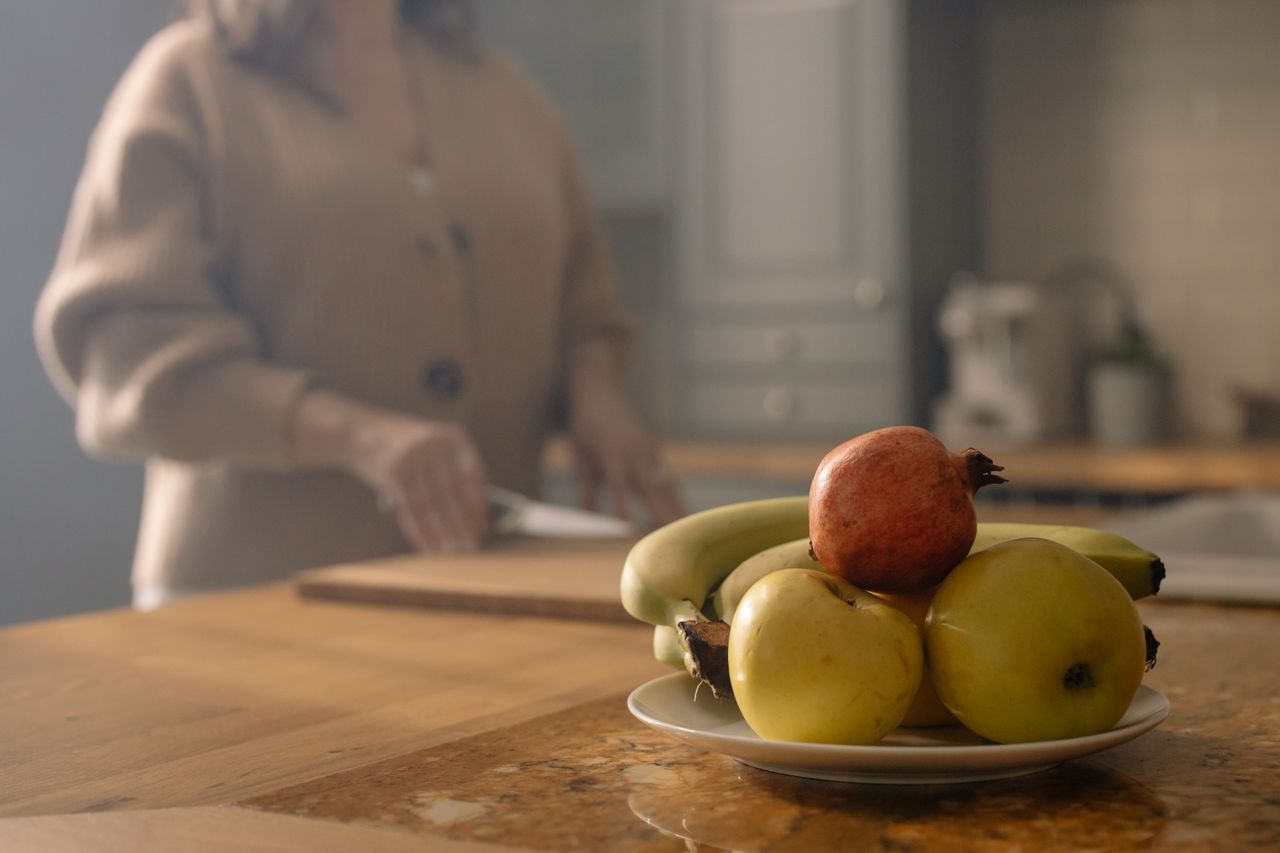
Large studies found the benefit of fruit and vegetables combined kept growing up to about 800 g a day, a little under 2 pounds. You don’t need to get there. Every cup toward it counts.
A cup is smaller than it sounds: a cup of berries, a medium apple, a large orange or half a grapefruit. One practical rule: pick one color a day and rotate. Blue on Monday, red on Tuesday, orange on Wednesday.
Fruit works best as one part of a pattern. An anti-inflammatory diet plan shows how it fits with the rest of the plate.
Can fruit cause inflammation?
Whole fruit doesn’t raise inflammation markers; sugary drinks do. In controlled trials, adding whole fruit lowered CRP and TNF-α, while mixed sugar sources including sugar-sweetened drinks raised CRP. 100% fruit juice didn’t raise CRP.
Some forms are worth limiting because of their sugar:
- Juice drops the fiber and keeps the sugar.
- Dried fruit and fruit in syrup concentrate sugar into a small portion, and syrup adds more on top.
- Fruit drinks and fruit-flavored snacks are mostly sugar with little or no fruit.
Bananas and dates score 3 for their sugar. A firmer banana keeps more resistant starch.
Dates carry fiber and a low glycemic index, meaning they raise blood sugar slowly, but they’re mostly sugar. Coconut scores 4 because a third of its flesh is fat, nearly all saturated, and sweetened flakes are close to half sugar.
A sensitive gut can bloat on apples, mango, watermelon and avocado, because of their fermentable sugars. Bloating isn’t inflammation, and it doesn’t mean the fruit is working against your blood markers.
For the other side of the shopping list, see foods that cause inflammation.
Fresh, frozen, juice or dried?
Frozen fruit keeps its vitamins as well as fresh, sometimes better. Frozen strawberries and blueberries kept vitamin levels comparable to fresh, sometimes higher.
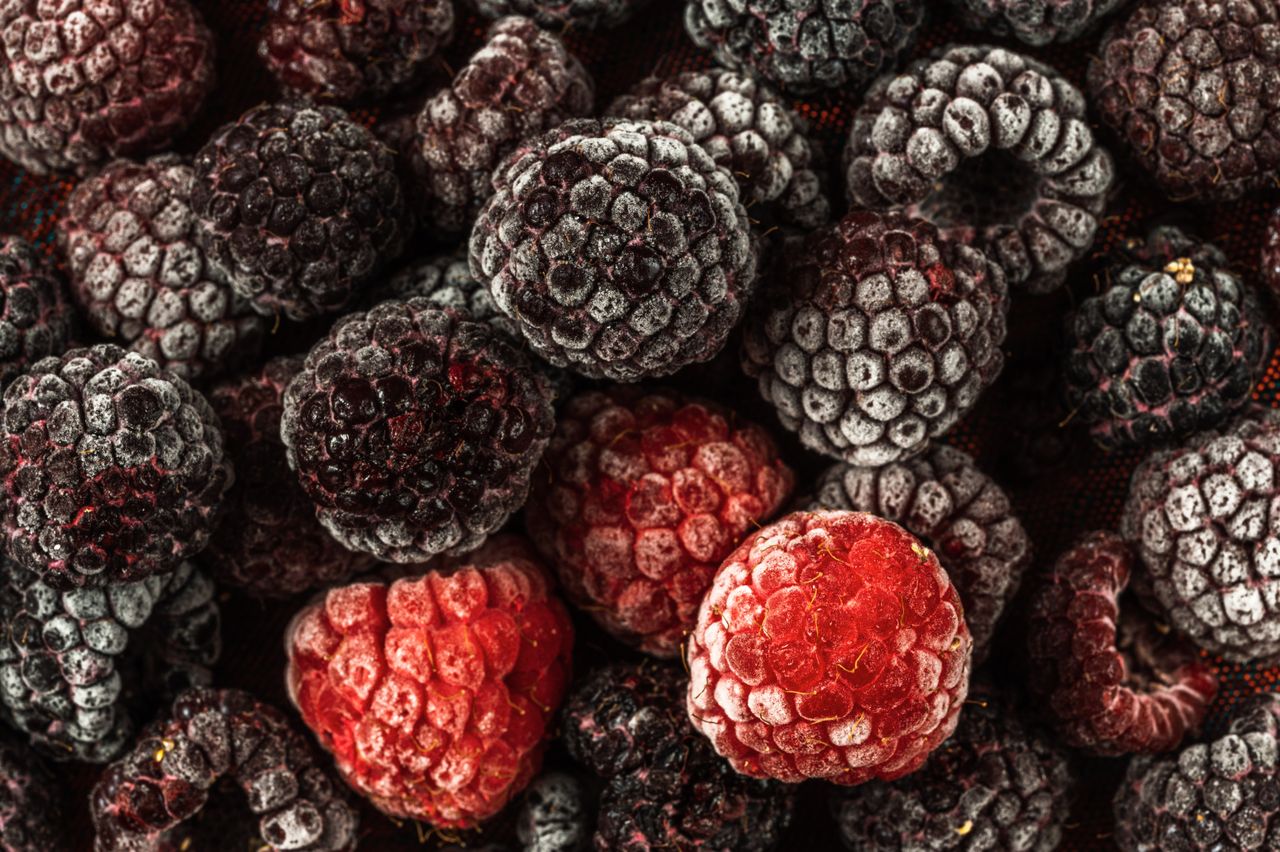
Your options, in order of preference:
- Fresh: ideal in season, though often picked hard to survive the trip.
- Frozen: no added sugar and cheaper out of season.
- 100% juice: a small glass is fine, but not a daily habit.
- Dried: unsweetened only, and a small handful, since the sugar is concentrated.
- Canned: in juice, not syrup. Canned pineapple has lost its bromelain to the heat.
Easy ways to eat more anti-inflammatory fruit
Keeping fruit visible and pairing it with what you already eat makes the daily cup easier to reach:
- Drop frozen berries into oatmeal, yogurt or a mixed berry breakfast smoothie, with no prep.
- Pair fruit with protein or fat, like an apple with peanut butter, to slow the sugar down.
- Leave a bowl on the counter; wash the grapes and they’re gone by Wednesday.
- Use tart cherries around training, in a cherry almond breakfast smoothie.
- Cook tomatoes with olive oil so the lycopene is easier to absorb.
When you want to go beyond fruit, the anti-inflammatory foods list covers the rest of the plate.
Frequently asked questions
Are bananas anti-inflammatory?
Bananas are mildly anti-inflammatory: they score 3 out of 10, in the low band of the inflammation scale. Their strength is resistant starch, which is higher in firmer bananas. Ripening turns most of that starch into sugar, so a spotted banana offers less. A banana also contributes potassium and vitamin B6.
What is the most anti-inflammatory fruit?
The most anti-inflammatory fruits by the evidence are tart cherries, berries and pomegranate. Cherries came with a 35% lower risk of gout attacks in a study of 633 people.
Berries show modest drops in CRP and IL-6 across trials. Pomegranate juice lowered CRP by about 2.5 mg/L across 11 studies. No single fruit works alone; your overall pattern matters.
Are cherries good for arthritis inflammation?
Cherries’ evidence for arthritis is strongest for gout. In a study that followed 633 people, eating cherries over two days came with a 35% lower risk of an attack, 75% lower with the gout drug allopurinol.
For knee osteoarthritis, a strawberry trial reduced knee pain. Tart cherry juice helped strength return after a marathon, though soreness was no different than with placebo. Gout treatment decisions belong with your doctor.
Is pineapple anti-inflammatory?
Pineapple contains an anti-inflammatory enzyme, bromelain, but the evidence comes from supplements, not the fruit. In studies after wisdom tooth surgery, the supplement reduced pain at 48 to 72 hours without affecting swelling.
The fruit still provides vitamin C and manganese, and a cup covers most of a day’s vitamin C. Canned pineapple has lost its bromelain to heat.
What fruits should you avoid with inflammation?
No whole fruit needs avoiding for most people; even bananas and dates sit in the low band. Limit juice, dried fruit, fruit in syrup and fruit-flavored snacks, which concentrate the sugar.
Grapefruit interacts with some statins and blood pressure medicines, so check with a pharmacist. Tomatoes are a nightshade, so they come off the plate on the autoimmune protocol (AIP) diet.