Pomegranate
Why pomegranate is anti-inflammatory
Pomegranate is anti-inflammatory thanks to punicalagins, a group of tannins packed into the rind and the pale membranes that hold the seeds. Your body absorbs very little of them on their own. Bacteria in your gut break them down into smaller compounds called urolithins, which are small enough to pass into your blood.
Trials that gave people pomegranate juice every day ended with lower inflammation markers in a blood test. Most of that research was done in people who already had raised inflammation, so a healthy person may notice less. The gut step matters too: some people carry bacteria that make plenty of urolithins, and others make almost none.
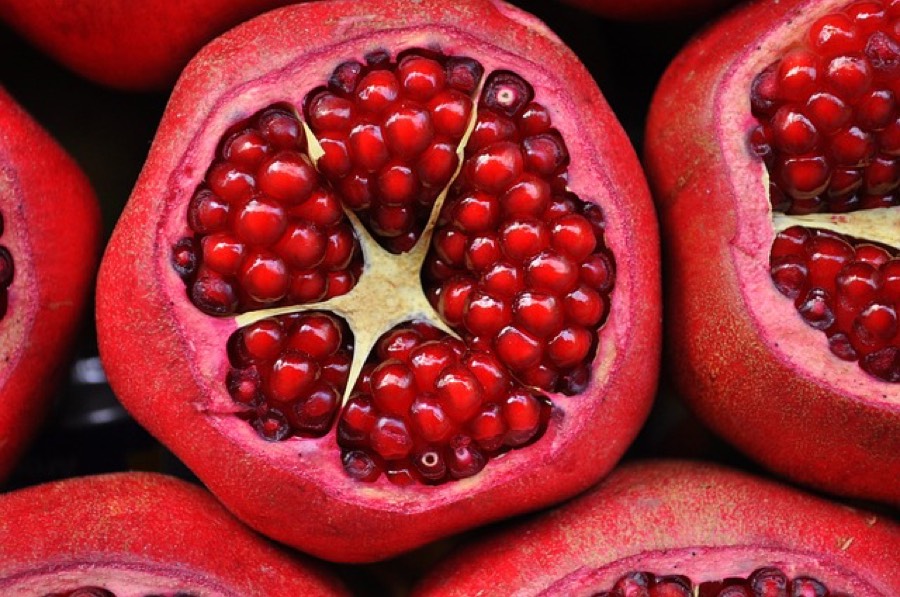
The deep red of the arils comes from anthocyanins, the same plant pigments that make cherries and blueberries anti-inflammatory. Inside each aril there is a small crunchy seed, and that is where the fibre is. The fibre slows the fruit sugar down, which is the main difference between eating a bowl of arils and drinking a glass of juice.
If you buy juice, read the ingredients. Many bottles are blends cut with cheaper apple or grape juice, and some have sugar added on top. Pomegranate molasses is juice boiled down to a syrup, so it belongs with the sweeteners rather than with the fruit.
To open a whole fruit, cut the crown off, score the skin into sections and pull the halves apart under water. The arils sink and the bitter white membrane floats. Eat them seed and all.

Pomegranate on the AIP diet
Pomegranate is allowed on the Autoimmune Protocol in every phase, elimination included. It is a fruit, so it clears the grains, legumes, nuts, seeds, nightshades and dairy that elimination removes. The small seed inside each aril is part of the fruit and is not one of the seeds the protocol asks you to drop. Juice is where to look twice: blends and added sugar are common.
Benefits
- Carries punicalagins, tannins that few other foods hold in the same amount
- Gut bacteria turn those tannins into urolithins, the form that reaches your blood
- Drunk daily, pomegranate juice brought inflammation markers in the blood down
- The crunchy seed inside each aril is where the fibre is
Watch out for
- Most of the research used juice, in people who already had raised inflammation
- How many urolithins you make depends on your gut bacteria, and some people make few
- Many bottles are blends cut with cheaper apple or grape juice
- Pomegranate molasses is boiled down juice, closer to a sweetener than to fruit
Frequently asked
Is pomegranate inflammatory?
No, pomegranate is anti-inflammatory. It carries punicalagins, tannins that your gut bacteria break down into urolithins, and those pass into your blood. In trials where people drank pomegranate juice every day, the inflammation markers in a blood test came down.
Is pomegranate juice as good as eating the arils?
Juice is pressed from the whole fruit, rind included, so it holds plenty of the tannins. What it leaves behind is the fibre, which sits in the small seed inside each aril. Buy the pure kind rather than a blend, and treat a glass as a portion of fruit.
Are you supposed to eat pomegranate seeds?
Yes. The crunchy seed inside each red aril is where the fibre is, so spitting it out leaves most of it behind. The part worth removing is the white membrane around the arils, which is bitter.
Is pomegranate allowed on the AIP diet?
Yes, in every phase including elimination. It is a fruit, so it avoids the grains, legumes, nuts, seeds, nightshades and dairy that AIP removes. The seed inside the aril is part of the fruit, not one of the seeds the protocol drops.