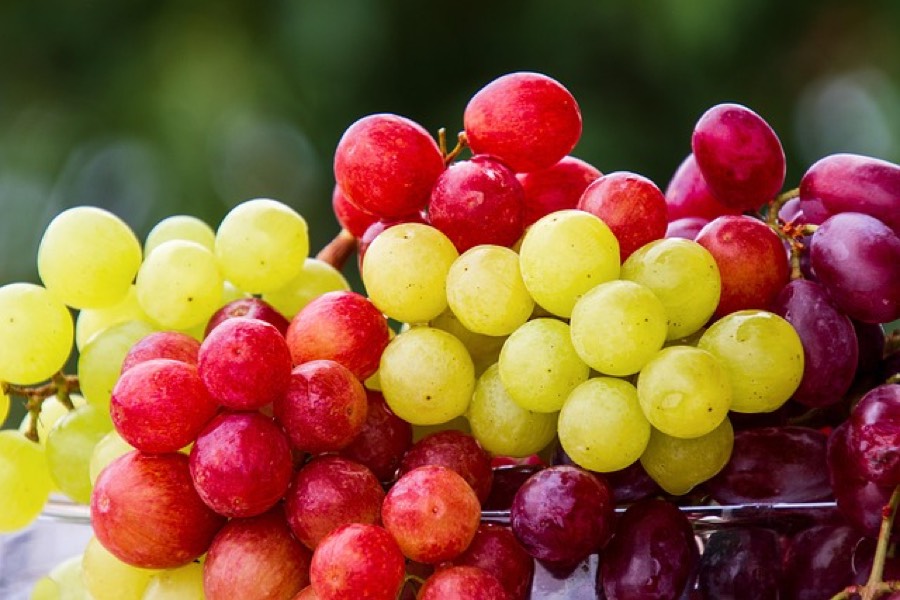
Bunches of green, red and black table grapes side by side

Grapes

Anti-InflammatoryFruits
Low
Inflammation Score
2/10
Anti-inflammatoryInflammatory
Serving size
1 cup (151 g)
Key nutrients
AnthocyaninsProanthocyanidinsResveratrolVitamin K
How often
Daily, the darkest bunch you can find

Why grapes are anti-inflammatory

Grapes are anti-inflammatory, and the colour of the bunch decides how much. Almost everything protective in a grape lives in the skin: the dark pigments, the tannins, the compounds that help an artery wall stay relaxed. Black and red grapes carry several times more of that mix than pale green ones. Green grapes are still fruit and still worth eating. They are simply the quiet version of the same thing.

Resveratrol is the word attached to grapes, and it does less work than its reputation suggests. A cup of red grapes holds about a milligram of it at best. The capsules that built the name carry hundreds of times that, stripped out of skins and seeds by the kilo. The same goes for grape seed extract, which is the concentrated form that has actually been tested in people, and which does bring blood pressure down a little. Eating fruit is a different proposition. A grape gives you a small dose of a broad mix, repeated daily, which is how food has always worked.

That is why grapes land at 2 out of 10 on the inflammation scale rather than at the bottom of it. Nothing in a grape works against you. The problem is the format. No peel, no core, no stone, nothing to make you pause between one and the next, so a bowl in front of the television disappears without anyone deciding to eat it. For a fruit they are also low in fibre, so the sugar arrives fast. Raisins are the same grape with the water removed, which turns a small box into a large bunch.

Grapes on the AIP diet

Grapes pass the Autoimmune Protocol from day one, elimination included. Fruit is not on the list the protocol takes out, and a bowl of grapes is one of the few sweet things left standing once sugar and dessert are gone. Two things to check: keep the total fruit sugar across the day modest, and read the packet on raisins, which are often oiled and treated with sulphites.

Benefits

  • The skin carries the dark pigments and tannins, so black and red grapes beat green
  • Grape seed extract, the concentrated form, brings blood pressure down a little
  • Sweet enough to stand in for a dessert while still being whole fruit
  • A cup covers roughly a fifth of a day's vitamin K

Watch out for

  • Easy to overeat: no peel, no core, nothing that makes you stop
  • Low in fibre for a fruit, so the sugar arrives faster than it does from berries
  • Raisins are the same grape with the water gone, so a small box is a big bunch
  • Grape polyphenols do not reliably move the inflammation markers in a blood test

Get the inflammation score of any meal

Just snap a photo or describe your food to get its inflammation score and uncover hidden patterns that may be affecting your well-being.

Download on the App StoreGet it on Google Play
InflammaScan app

Frequently asked

Are grapes inflammatory?

No, grapes are anti-inflammatory. The skin carries the dark pigments and tannins that do the work, which is why black and red grapes count for more than pale green ones. What holds grapes back is not the fruit itself but how easy it is to eat a lot of it in one sitting.

Are red grapes better than green grapes?

Yes, and so are black ones. The protective compounds sit in the skin, and colour is a direct read on how much of them is there. Green grapes are still whole fruit with fibre and water, they simply bring a fraction of the pigment. If you have the choice, buy the darkest bunch on the shelf.

Are raisins as good as fresh grapes?

Not really. A raisin is a grape with the water taken out, so the sugar is concentrated into something you can eat by the handful without noticing. The polyphenols largely survive drying, but a small box holds as much sugar as a large bunch, and dried fruit sticks to teeth in a way fresh fruit does not.

Are grapes allowed on the AIP diet?

Yes, in every phase including elimination. Fruit is not on the list the protocol removes, so grapes clear it without a problem. Keep an eye on how much fruit sugar you get through in a day, and check the label on raisins, which are often coated in oil and treated with sulphites.

The easiest way to follow an anti-inflammatory diet.

Identify inflammatory foods in seconds, log your symptoms and discover what’s inflaming you. Includes hundreds of recipes.

Download on the App StoreGet it on Google Play
InflammaScan app



