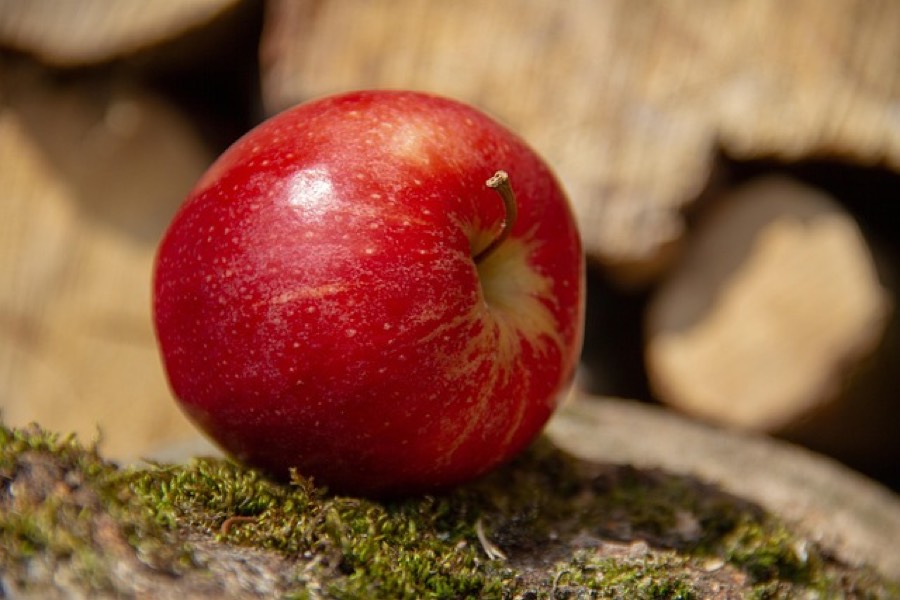
Fresh red apple with the skin on, resting on a mossy log

Apple

Anti-InflammatoryFruits
Low
Inflammation Score
2/10
Anti-inflammatoryInflammatory
Serving size
1 medium apple (182 g) with skin
Key nutrients
QuercetinPectinChlorogenic acidVitamin C
How often
Daily, with the skin on

Why apples are anti-inflammatory

Apples are anti-inflammatory largely because of quercetin, the main protective compound in an apple. Quercetin sits almost entirely in the skin. Peel it and you bin that along with a good share of the fibre. Leaving the skin on costs nothing and changes what you are eating.

The fibre is the second half of the answer. It is mostly pectin, the stuff that sets jam, and it behaves the same way inside you. It thickens what it travels with and slows the meal down. That turns out to matter for inflammation. A heavy, fatty meal lets more bacterial fragments cross from the gut into the blood, and those fragments are part of what sets off the flare that follows eating. An apple alongside that meal takes the edge off the spike. Eaten every day for six weeks, apples brought down the inflammation signals in the blood of adults carrying extra weight, and nobody lost any weight doing it.

You can watch those compounds working when you cut one. The brown that creeps across the cut face is the polyphenols reacting with air. It is also a fair summary of what processing does to an apple: juice keeps the sugar and drops the fibre and the skin, shop-bought sauce is peeled, cooked and usually sweetened, and a pie is a dessert with fruit in it.

So an apple lands at 2 out of 10 on the inflammation scale rather than 1. What keeps it off the floor is that the effect is quiet and slow, and the trials get it with three apples a day, which is more than most people eat in a week.

Apple on the AIP diet

Apples are allowed on the Autoimmune Protocol from day one, elimination included. Nothing in an apple is on the list the protocol takes out. Two things to watch: the total fruit sugar across the day, which AIP asks you to keep modest, and dried apple rings, which are usually sweetened and treated with sulphites. Cooked apple with cinnamon is one of the few desserts the elimination phase leaves you.

Benefits

  • Quercetin, the main protective compound, sits almost entirely in the skin
  • Eaten daily for six weeks, they brought down inflammation signals in the blood without any weight loss
  • Eaten with a fatty meal, they take the edge off the inflammatory spike that follows
  • Pectin, the fibre that sets jam, thickens and slows down whatever it travels with

Watch out for

  • Peeling one removes most of the polyphenols and a good share of the fibre
  • Juice throws away the fibre and the skin and keeps the sugar
  • High in fermentable sugars, so a sensitive gut can bloat on them
  • Shop-bought sauce and dried rings are usually peeled, cooked or sweetened

Get the inflammation score of any meal

Just snap a photo or describe your food to get its inflammation score and uncover hidden patterns that may be affecting your well-being.

Download on the App StoreGet it on Google Play
InflammaScan app

Frequently asked

Are apples inflammatory?

No, apples are anti-inflammatory. The skin carries quercetin and the flesh carries pectin, a fibre that slows a meal down. Eaten every day, apples bring the inflammation signals in the blood down a little. Peeled, juiced or baked into a pudding, they do a lot less.

Should you eat apple skin?

Yes. Almost all of the quercetin in an apple is in the peel, along with a good part of the fibre. A peeled apple is closer to sweetened water with fibre in it. Rinse it under the tap and eat it whole.

Is apple juice as good as a whole apple?

No. Juicing removes the skin and the fibre and leaves the sugar, so what arrives is fast sugar without the two things doing the work. A glass of it also uses three or four apples, which nobody would eat in one sitting.

Can you eat apples on the AIP diet?

Yes, right through elimination. There is nothing in an apple that the protocol takes out. Keep an eye on how much fruit sugar you have across the day, and read the label on dried apple, which is usually sweetened.

The easiest way to follow an anti-inflammatory diet.

Identify inflammatory foods in seconds, log your symptoms and discover what’s inflaming you. Includes hundreds of recipes.

Download on the App StoreGet it on Google Play
InflammaScan app