Your fingers are swollen on a busy morning, and the coffee jar won’t open. You took your methotrexate, as your doctor asked.
Still, stiffness lasts past lunch, and a flare can wipe out a whole weekend.
You’ve tried the elimination diet, the turmeric capsules, the green juices. Some cost real money, some cost months, and your joints felt the same after all of them.
Maybe you’ve started to believe nothing you eat will ever make a difference.
This article reviews all the evidence on the Mediterranean diet for rheumatoid arthritis and shows you how well it actually works, how to use it and what to eat.
The diet works alongside your medication, not instead of it.
Does the Mediterranean diet help rheumatoid arthritis?
Yes, modestly, as an add-on to your treatment.
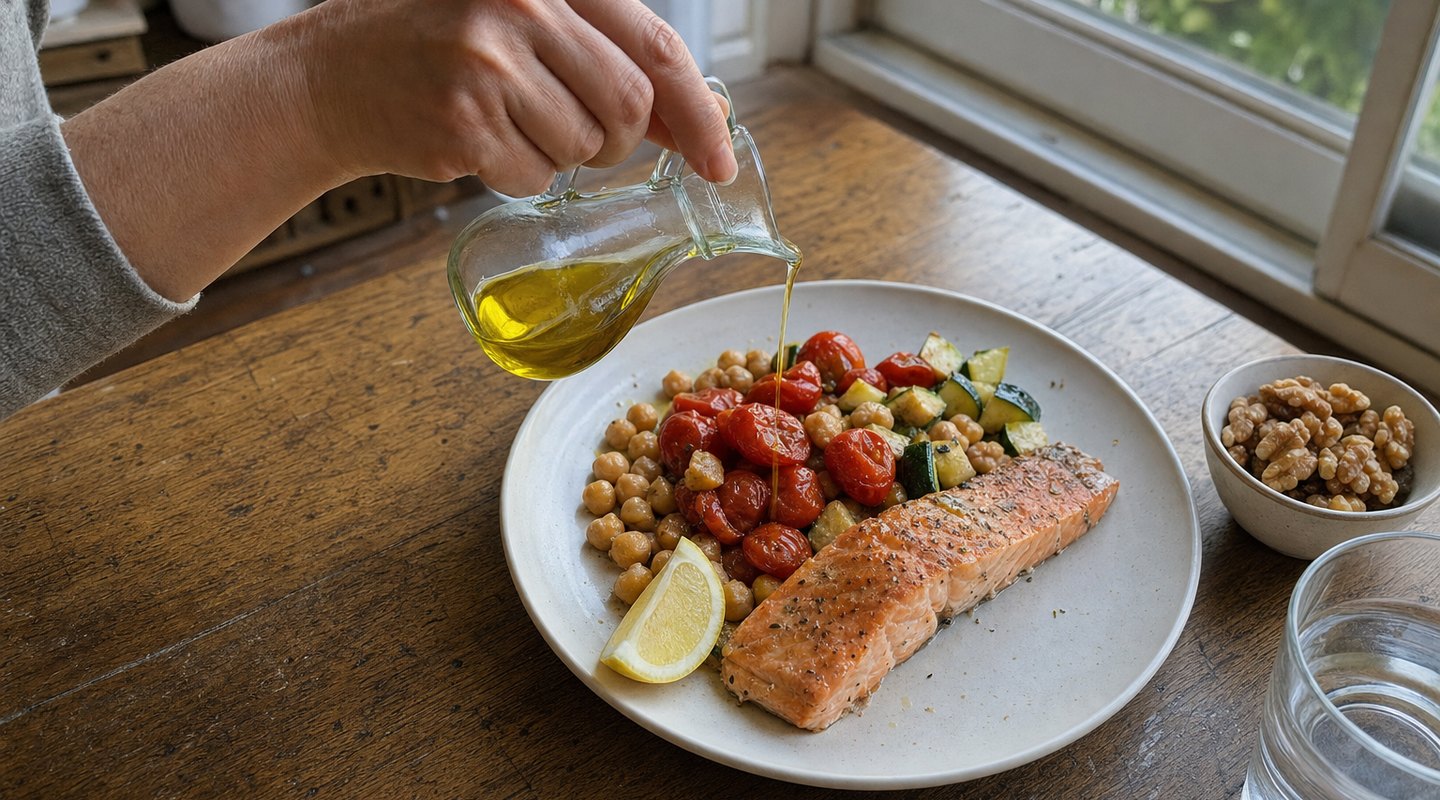
The Mediterranean diet is the traditional way of eating around the Mediterranean Sea: vegetables, fruit, legumes, whole grains, nuts, fish and extra-virgin olive oil at the center, with little red meat and few processed foods.
For daily life, modestly means a real drop in disease activity and better day-to-day function in the trial of people with active rheumatoid arthritis. The disease itself stays, and it still needs treatment.
The number behind that drop is DAS28, the score your rheumatologist uses to measure disease activity from swollen and tender joints plus a blood test. Everyone in that trial kept taking their usual medication, so the improvement came on top of the treatment they were already on.
What the research shows
The evidence splits into two questions: whether the diet helps if you already have rheumatoid arthritis, and whether it lowers the risk of getting it.
In people who already have rheumatoid arthritis
In a trial, people with active disease stayed on their usual medication and followed the Mediterranean diet or the usual Western-style diet for 12 weeks. On the Mediterranean diet, DAS28 fell by 0.56 points, and physical function and vitality improved. On the usual Western-style diet, nothing changed significantly.
The gap only showed in the second half of the trial.
A Swedish trial asked every patient to try an anti-inflammatory diet and a control diet. The anti-inflammatory diet was built on salmon three to four times a week, legumes, whole grains and fruit. Its main analysis found no significant difference in disease activity between the two diets; only among those who finished both diets was disease activity lower after the anti-inflammatory one.
In women in remission, a personalized Mediterranean plan plus more physical activity ended with lower disease activity than in women on usual care. Because the plan mixed diet and exercise, the result can’t be credited to food alone.
Among 1,510 people newly diagnosed with rheumatoid arthritis in Sweden, those who ate most like the Mediterranean diet before diagnosis were more likely to be in remission six months later, 59% compared with 49%. The link showed up only in autoantibody-positive disease, where the immune system makes proteins that attack the body’s own tissue; about three in four people in that study had them.
Lowering the risk of getting rheumatoid arthritis
In a Spanish study that followed 15,874 university graduates for about 15 years, those who stuck closest to the Mediterranean diet had about half the risk of developing the disease. Eating little meat was the habit with the strongest link. A larger analysis found about a 16% lower risk among the closest followers.
This matters for close relatives of people with rheumatoid arthritis, your children or siblings. These studies are observational: they show a link, not proof.
What it won’t do
It won’t replace your medication: each of these trials kept patients on their usual disease-modifying antirheumatic drugs or biologics. In the newly diagnosed study, closer followers were no more likely to reach almost no swollen joints and a low C-reactive protein (CRP), an inflammation marker on a standard blood test. So your blood test may not move much even when you feel better.
Don’t stop or change any medication without talking to your rheumatologist, no matter how well you eat.
Why the Mediterranean diet may calm inflammation in rheumatoid arthritis
Several of its foods work on the same inflammation that drives the disease, and the diet also protects your heart and can help with weight.
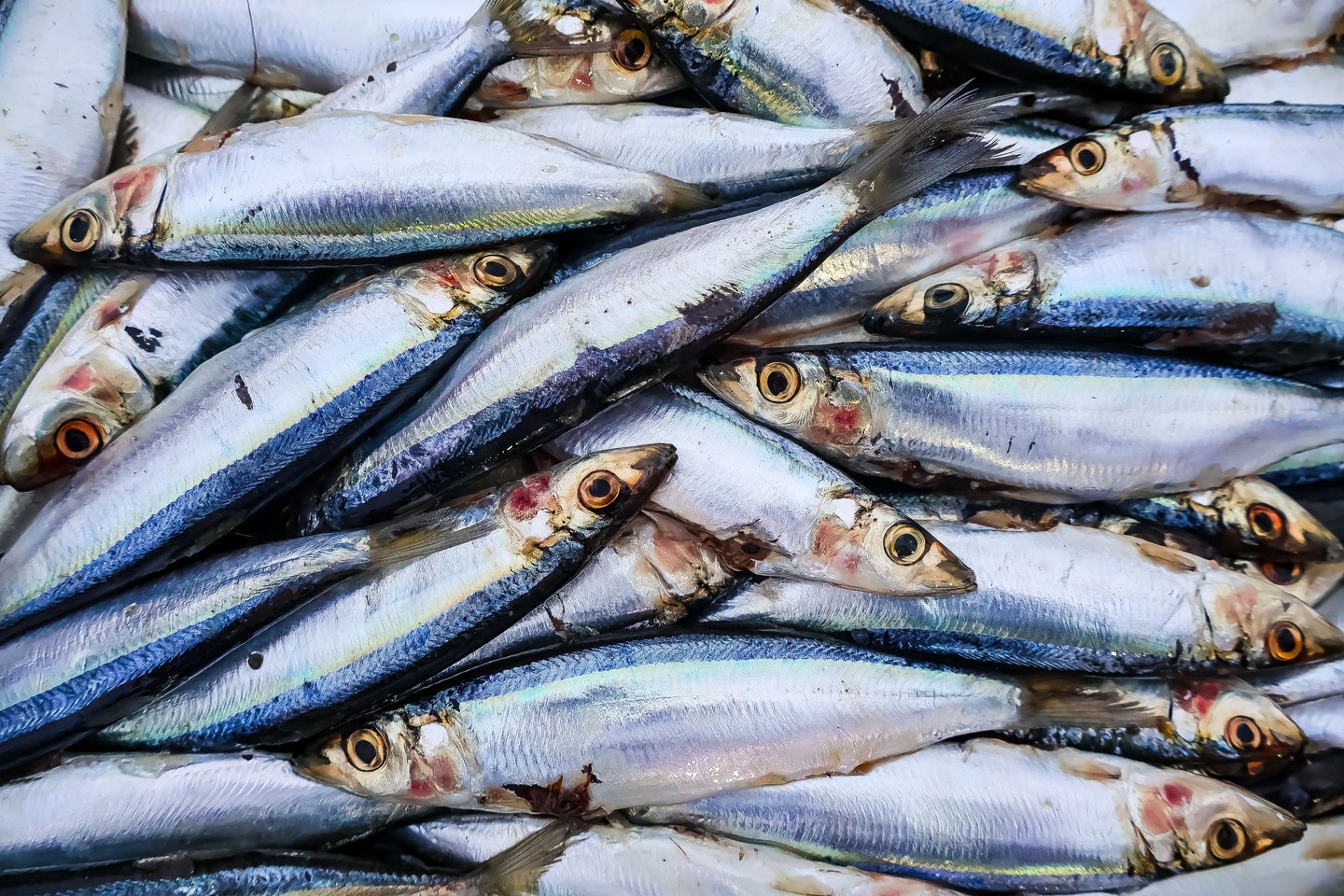
- Omega-3 fats from fish: they help the body make fewer inflammatory messengers, the signals that keep joint inflammation going.
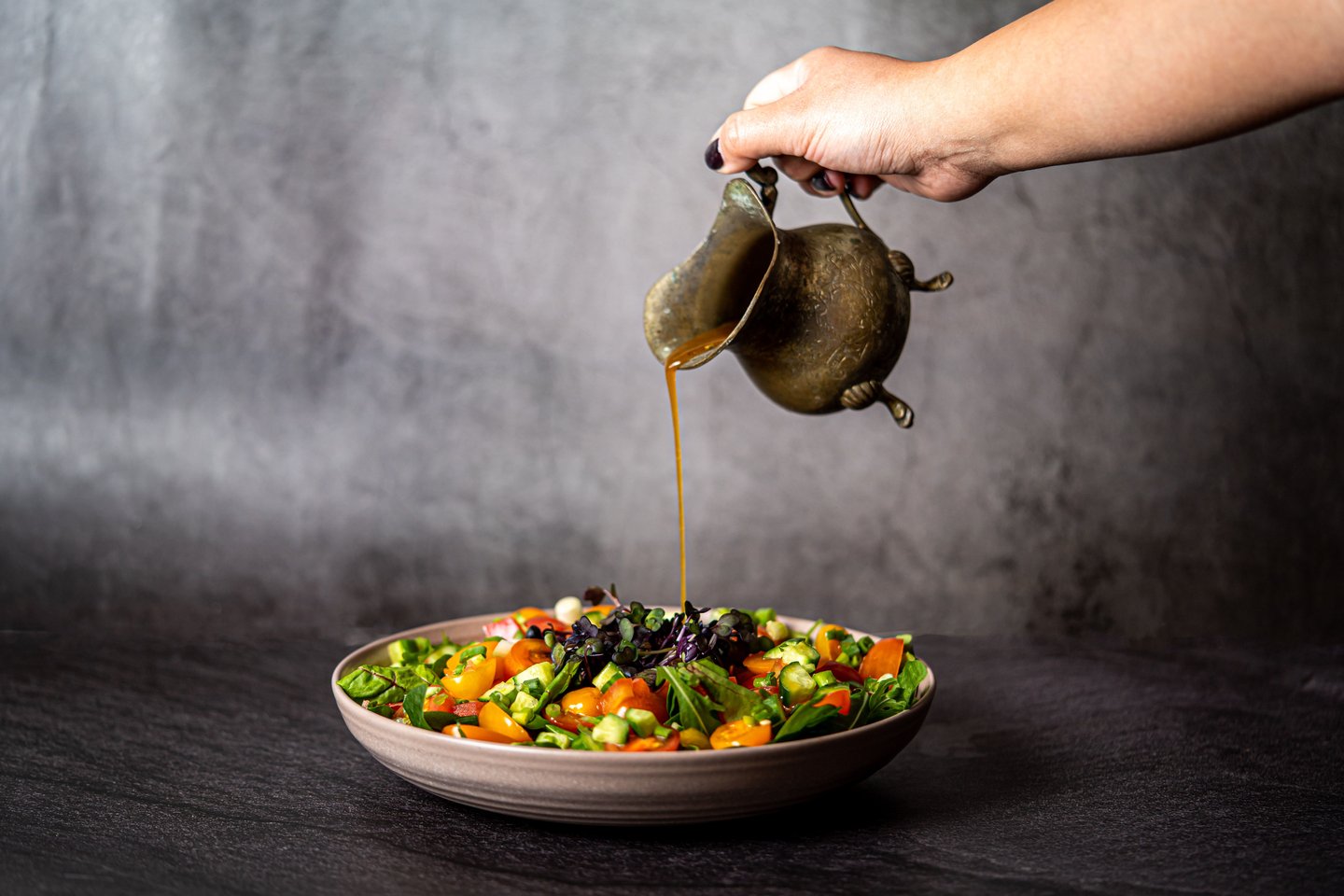
- Oleocanthal in extra-virgin olive oil: in the lab it blocks the same enzymes as ibuprofen. It isn’t a dose of ibuprofen: a drizzle of oil doesn’t replace a pill.
- Fiber for your gut bacteria: legumes, vegetables and whole grains feed gut bacteria that help keep your immune system in check.
- Less load on your joints and heart: losing extra weight takes pressure off your joints, and the heart protection matters because rheumatoid arthritis raises your heart risk.
The diets in the trials ran for weeks before any difference showed up.
What to eat on a Mediterranean diet for rheumatoid arthritis
The base is plants and olive oil, with fish as the main protein. Olive oil, salmon, sardines and walnuts have an inflammation score of 1 out of 10, where 1 is the most anti-inflammatory and 10 the most inflammatory. The table shows how often to eat each group.
| Food group | How often | Why it matters with rheumatoid arthritis |
|---|---|---|
| Extra-virgin olive oil | Your main fat, every day | Oleocanthal and healthy fats |
| Fatty fish: salmon, sardines, mackerel | At least twice a week | The best food source of omega-3 |
| Vegetables and fruit | At every meal | Polyphenols and fiber |
| Legumes: beans, lentils, chickpeas | Several times a week | Fiber and protein that replace red meat |
| Whole grains | Most days | Fiber that feeds gut bacteria |
| Nuts and seeds | A small handful most days | Healthy fats; walnuts add plant omega-3 |
| Herbs and spices | Every day | Flavor without extra salt |
| Poultry, eggs, yogurt and cheese | In moderation, weekly | Protein without the downsides of red meat |
| Red meat | A few times a month at most | Low meat intake had the strongest link to lower rheumatoid arthritis risk |
These are the same foods that anchor a general anti-inflammatory diet plan. For the longer list, see the guide to anti-inflammatory foods.
What to limit
Cut back most on red and processed meat, then on ultra-processed foods, sugary drinks and refined flour. You don’t have to cut these to zero; the Mediterranean pattern is about what you eat most days.
- Red and processed meat: bacon, sausages and deli meat. This is the habit most linked to rheumatoid arthritis risk.
- Sugary drinks and sweets.
- Refined flour: white bread and pastries.
- Fried and packaged snacks.
Most of these sit on the list of foods that cause inflammation.
How to adapt it when you have rheumatoid arthritis
The classic Mediterranean diet wasn’t designed with your arthritis in mind, so some points need adjusting.
Wine and methotrexate
Red wine is part of the traditional diet, but methotrexate changes that. Methotrexate can damage the liver, and heavy drinking raises that risk; its US label asks you to tell your doctor about any change in how much you drink.
In 11,839 people with rheumatoid arthritis taking methotrexate, drinking under 14 UK units a week (about six medium glasses of wine) wasn’t linked to liver damage. More than 21 units was linked to nearly double the risk. People taking methotrexate are usually advised to limit alcohol, and some doctors advise none, so agree on your own limit with your rheumatologist.
Skipping the wine doesn’t undo the diet. The guide to least inflammatory alcohol shows which drinks do the least harm. Red wine has an inflammation score of 5 out of 10.
Protect your heart
People with rheumatoid arthritis have about a 48% higher risk of cardiovascular (heart and blood vessel) disease and a 68% higher risk of heart attack than the general population. In a trial of 7,447 Spanish adults at high cardiovascular risk followed for about five years, a Mediterranean diet with extra-virgin olive oil or nuts led to about 30% fewer heart attacks, strokes and cardiovascular deaths than a low-fat control diet. It also helps with metabolic syndrome, the cluster of risk factors behind heart disease: see how a Mediterranean diet affects metabolic syndrome.
Nightshades and gluten
One Mediterranean diet modified for rheumatoid arthritis removes tomatoes, potatoes and eggplant, which are nightshades, along with refined wheat, dairy, red meat, alcohol and coffee. The nightshade rule rests on a hypothesis about solanine, a compound in those plants that was suggested to make the gut lining leakier. No trial has tested it.
A small two-week pilot of that diet, with no comparison group, found 7 of 20 patients cut their pain by half or more. And the Swedish trial included potatoes, and disease activity was still lower in those who finished both diets.
So keep nightshades unless you notice your symptoms flaring after eating them. Tomatoes have an inflammation score of 2 out of 10. To spot a personal trigger, log meals and symptoms for a few weeks; the InflammaScan app can do that.
Gluten is different: cutting it only makes sense with celiac disease or a diagnosed sensitivity. If you suspect either, get tested before cutting gluten out.
Fish oil
If you don’t eat fish twice a week, ask your doctor about fish oil. Omega-3 supplements taken for three to four months eased joint pain and morning stiffness and let people use fewer anti-inflammatory painkillers such as ibuprofen. Fish oil can interact with blood thinners, so mention it at your next appointment.
A day of Mediterranean eating for rheumatoid arthritis
A sample day built from easy, quick recipes. You can repeat and rearrange it as it suits you.
- Breakfast: Mediterranean hummus breakfast toast with a piece of fruit.
- Lunch: Mediterranean lentil and vegetable soup, with a slice of whole-grain bread.
- Dinner: lemon thyme baked salmon with asparagus. On another night, swap in grilled mackerel with tomato cucumber salad or baked cod with olives, lemon and parsley.
- Snack: a small handful of walnuts and an apple, or plain yogurt with berries when you want something cold.
Swapping one meat dinner a week for fish or legumes is a good first step; the rest can follow when it feels easy.
Frequently asked questions
Is the Mediterranean diet good for psoriatic arthritis?
It looks helpful, with weaker evidence than for rheumatoid arthritis. In people with psoriatic disease, closer adherence went with milder skin disease. After accounting for weight, adherence was linked only to less enthesitis, inflammation where tendons attach to bone.
Exercise was linked to lower disease activity.
Can I drink wine on the Mediterranean diet if I take methotrexate?
Only with your rheumatologist’s OK. In people taking methotrexate, light drinking, under about 14 UK units a week, wasn’t linked to liver damage, while heavier drinking was. Many doctors still ask their patients to drink less or skip alcohol entirely, so bring it up at your next visit.
Do tomatoes make rheumatoid arthritis worse?
There’s no good evidence that tomatoes make rheumatoid arthritis worse for most people. Some arthritis diets drop nightshades like tomatoes, potatoes and eggplant because of an untested idea about a plant compound. Keep eating them until your own symptoms tell you otherwise.
How long does the Mediterranean diet take to help rheumatoid arthritis?
In one trial, the difference between the diets showed only in the second half of the 12 weeks, so benefits took six weeks or more to appear. Plan a review with your rheumatologist at three months to see what has changed.
Is the Mediterranean diet or the AIP diet better for rheumatoid arthritis?
The Mediterranean diet has more trials behind it and is easier to keep long term. The AIP diet is a short, strict elimination diet used to find personal triggers. You can run it briefly to find what sets your symptoms off, then rebuild on a Mediterranean base.