Butter vs Coconut Oil: Which Is Less Inflammatory?
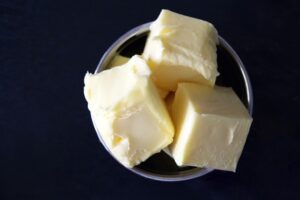
Butter
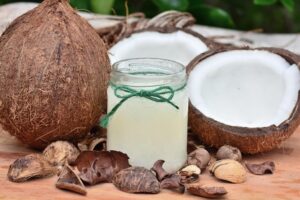
Coconut Oil
Coconut oil is less inflammatory than butter, by a single point, and neither is a fat to build your cooking around. Both are solid at room temperature, which already tells you most of their fat is saturated.
The numbers look upside down at first. Butter is about two thirds saturated fat and coconut oil is closer to 85%, so on that one measure coconut oil is worse. It still scores better, because its fat is the medium-chain kind the liver burns quickly, and because butter rarely arrives on its own: bread, pastry and cake are the usual vehicle. Whichever you keep in the house, measure it. A serving is a level tablespoon, and the layer most people cut is nearer three.
Side by side
| Butter | Coconut Oil | |
|---|---|---|
| Inflammation Score | Medium · 6/10 | Medium · 5/10 |
| Category | Oils & Fats | Oils & Fats |
| Serving size | 1 tbsp (14 g) | 1 tbsp (14 g) virgin |
| Key nutrients | Palmitic and myristic acid (saturated fat), Butyrate, Vitamin K2 (grass-fed), Vitamin A (retinol) | Lauric acid, Medium-chain triglycerides (MCTs), Saturated fat (~85%), Polyphenols (virgin only) |
| How often | — | — |
On the AIP diet
Butter
Butter is not allowed on the Autoimmune Protocol. The elimination phase takes out all dairy, and butter goes with it even though churning has removed most of the milk protein. Ghee is the grey area: clarifying strains off the milk solids, so some versions of the protocol allow it during the elimination and it is usually the first dairy tested. If you would rather not gamble, coconut oil covers everything butter does.
Coconut Oil
Coconut oil is allowed during the elimination phase of AIP, and it is one of the fats the protocol leans on hardest. Nothing in it comes from dairy, grains, nuts, seeds or nightshades, so there is nothing to remove. It is the usual stand-in for butter in AIP baking. Keep it as one fat among several rather than the only one in the cupboard, and choose virgin if you can.
What each one brings
Butter
- Churning removes almost all the lactose, so people who cannot digest milk usually handle butter
- It carries butyrate, the short-chain fat that the cells lining the colon burn as fuel
- Butter from grass-fed cows brings more vitamin K2 and more vitamin A
- A little fat on vegetables helps you take up the vitamins that need fat to be absorbed
Coconut Oil
- Very stable in a hot pan, so it does not break down the way delicate oils do
- Its main fat is burned for quick energy rather than stored
- No dairy, gluten, nuts or nightshades, so it fits the most restrictive diets
- Virgin versions keep a small share of the coconut's own plant compounds
Watch out for
Butter
- Around two thirds of its fat is saturated, more than almost anything else you cook with
- Eaten as butter, that fat raises artery cholesterol more than the same amount eaten as cheese
- It rarely arrives alone: bread, pastry and cake are the usual vehicle
- A serving is a level tablespoon and the layer most people cut is closer to three
Coconut Oil
- Around 85% saturated fat, more than butter and more than lard
- Used in place of olive oil, it moves your blood cholesterol the wrong way
- Refined coconut oil is bleached and deodorised, which strips the plant compounds out
- Easy to overdo once you treat it as a supplement instead of a cooking fat
Get the inflammation score of any meal
Just snap a photo or describe your food to get its inflammation score and uncover hidden patterns that may be affecting your well-being.