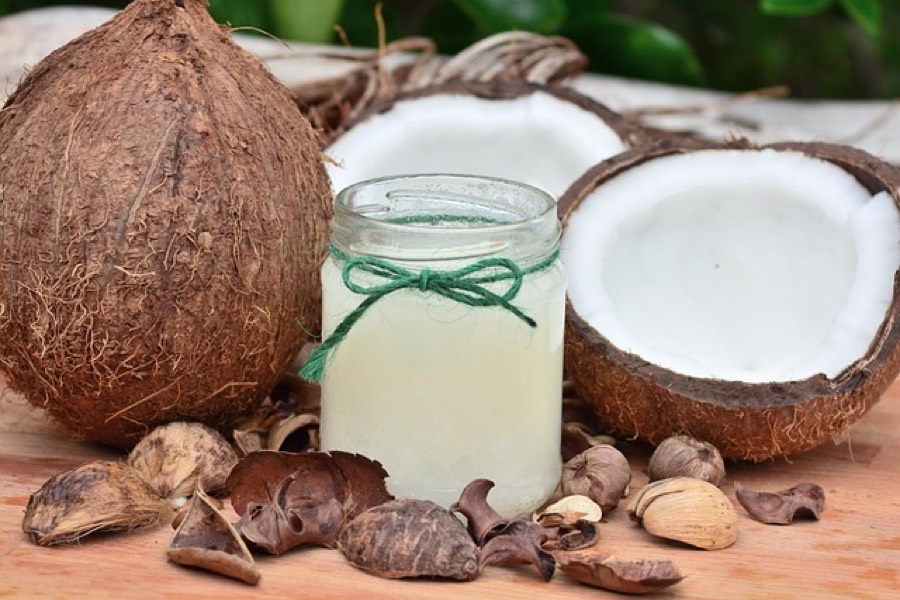
Jar of virgin coconut oil next to a whole coconut and a halved coconut

Coconut Oil

ModerateOils & Fats
Medium
Inflammation Score
5/10
Anti-inflammatoryInflammatory
Serving size
1 tbsp (14 g) virgin
Key nutrients
Lauric acidMedium-chain triglycerides (MCTs)Saturated fat (~85%)Polyphenols (virgin only)
Better swap

Where coconut oil sits on the inflammation scale

Coconut oil is not anti-inflammatory, though it is not doing much harm either. It scores 5 out of 10 on the inflammation scale, and the split is easy to see once you know what is in the jar. Around 85% of coconut oil is saturated fat. That is more than butter and more than lard, and no amount of marketing changes it.

What keeps it off the top of that scale is the kind of saturated fat it carries. Most of it is lauric acid, a medium-chain fat that goes almost straight to the liver to be burned for energy instead of stored as fat. It is not quite the same thing as the MCT oil sold in bottles, but it does behave differently from the fat in a steak. Coconut oil is also very hard to damage with heat, so it holds together in a hot pan while more delicate oils are already falling apart.

The trouble starts when it is sold as medicine rather than as a fat. Swapping olive oil for coconut oil moves your blood cholesterol the wrong way, by about as much as swapping in butter would. And coconut oil brings nothing back in exchange: no omega-3 fats, and in the refined version almost no plant compounds either, because bleaching and deodorising strip out what little the coconut had. Virgin coconut oil is pressed from fresh flesh and keeps some of it. That is the version to buy, though it will never be olive oil.

So use it as a fat, not as a supplement. It is a good choice for high-heat cooking, for curries, for anything where the flavour belongs. It is a poor choice as the default oil in your kitchen, and a worse one by the spoonful in your coffee.

Coconut Oil on the AIP diet

Coconut oil is allowed during the elimination phase of AIP, and it is one of the fats the protocol leans on hardest. Nothing in it comes from dairy, grains, nuts, seeds or nightshades, so there is nothing to remove. It is the usual stand-in for butter in AIP baking. Keep it as one fat among several rather than the only one in the cupboard, and choose virgin if you can.

Benefits

  • Very stable in a hot pan, so it does not break down the way delicate oils do
  • Its main fat is burned for quick energy rather than stored
  • No dairy, gluten, nuts or nightshades, so it fits the most restrictive diets
  • Virgin versions keep a small share of the coconut's own plant compounds

Watch out for

  • Around 85% saturated fat, more than butter and more than lard
  • Used in place of olive oil, it moves your blood cholesterol the wrong way
  • Refined coconut oil is bleached and deodorised, which strips the plant compounds out
  • Easy to overdo once you treat it as a supplement instead of a cooking fat

Get the inflammation score of any meal

Just snap a photo or describe your food to get its inflammation score and uncover hidden patterns that may be affecting your well-being.

Download on the App StoreGet it on Google Play
InflammaScan app

Frequently asked

Is coconut oil anti-inflammatory?

Not really. It is a neutral cooking fat rather than an anti-inflammatory one. It carries none of the omega-3 fats and almost none of the plant compounds that earn olive oil and oily fish their reputation, and most of what it does carry is saturated fat. It is not inflammatory the way fried food or processed meat is, but nothing in it actively settles inflammation down.

Is coconut oil better than butter?

On the dairy side, yes. There is no lactose and no milk protein in it, which is why it works for people cutting out dairy and why the Autoimmune Protocol allows it. On the fat side the two are close, and coconut oil is the more saturated of the pair. If you are switching for your heart rather than for your gut, it is not the upgrade it looks like.

Is virgin coconut oil better than refined?

Yes, though the gap is smaller than the price difference suggests. Virgin oil is pressed from fresh coconut flesh and keeps a little of the fruit's own plant compounds. Refined oil is bleached and deodorised, which takes those out and leaves the fat behind. Both are still mostly saturated fat.

Can I cook with coconut oil at high heat?

Yes, and that is where it earns its place. Saturated fat is hard to damage, so coconut oil holds together in a hot pan while more delicate oils are already breaking down. Use it for frying and roasting, and keep extra virgin olive oil for dressings and gentle heat.

The easiest way to follow an anti-inflammatory diet.

Identify inflammatory foods in seconds, log your symptoms and discover what’s inflaming you. Includes hundreds of recipes.

Download on the App StoreGet it on Google Play
InflammaScan app