Coconut Oil vs Vegetable Oil: Which Is Less Inflammatory?
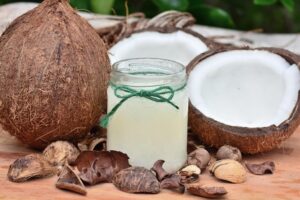
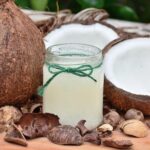
Coconut Oil

Vegetable Oil
Coconut oil is less inflammatory than vegetable oil, by two points: coconut oil sits in the middle of the inflammation scale and vegetable oil near the top. Both go into a hot pan for roasting and frying, so the comparison is a fair one, and neither belongs in your cooking every day.
Coconut oil is around 85% saturated fat, more than butter and more than lard, and used in place of olive oil it pushes up the cholesterol that collects in artery walls. It earns its middle score on stability: its fat holds together at high temperature instead of breaking apart the way delicate oils do, so frying with it creates far fewer of the harmful by-products. Virgin coconut oil also keeps a small share of the coconut’s own plant compounds, which the refined, bleached kind has lost.
On paper, vegetable oil looks like the better bottle of the two: mostly unsaturated fat, a little vitamin E, and rapeseed blends bring some alpha-linolenic acid, a plant omega-3. The score follows what happens to it in practice. Refining cuts those plant compounds down to a trace before the bottle reaches the shelf, and nearly all of this oil is eaten as fried food, the form most clearly tied to higher inflammation. Keep coconut oil for the few dishes whose flavour suits it, cook the rest in olive oil, and if you do buy coconut oil, buy the virgin one.
Side by side
| Coconut Oil | Vegetable Oil | |
|---|---|---|
| Inflammation Score | Medium · 5/10 | High · 7/10 |
| Category | Oils & Fats | Oils & Fats |
| Serving size | 1 tbsp (14 g) virgin | 1 tbsp (14 g) |
| Key nutrients | Lauric acid, Medium-chain triglycerides (MCTs), Saturated fat (~85%), Polyphenols (virgin only) | Linoleic acid (omega-6), Oleic acid, Vitamin E (tocopherols), Alpha-linolenic acid |
| How often | — | — |
On the AIP diet
Coconut Oil
Coconut oil is allowed during the elimination phase of AIP, and it is one of the fats the protocol leans on hardest. Nothing in it comes from dairy, grains, nuts, seeds or nightshades, so there is nothing to remove. It is the usual stand-in for butter in AIP baking. Keep it as one fat among several rather than the only one in the cupboard, and choose virgin if you can.
Vegetable Oil
Vegetable oil is not allowed during the elimination phase of the Autoimmune Protocol. The protocol removes every seed and every seed oil, and soybean, rapeseed, sunflower and corn are all seeds. Refining leaves almost none of the seed protein in the bottle, so these oils are often reintroduced without trouble later on. Until then, olive oil and avocado oil cover the same jobs in a kitchen.
What each one brings
Coconut Oil
- Very stable in a hot pan, so it does not break down the way delicate oils do
- Its main fat is burned for quick energy rather than stored
- No dairy, gluten, nuts or nightshades, so it fits the most restrictive diets
- Virgin versions keep a small share of the coconut's own plant compounds
Vegetable Oil
- Neutral in flavour and stable enough for high-heat cooking
- Mostly unsaturated fat, unlike butter, lard and the other solid fats
- Carries vitamin E, which protects fats in the body from oxidising
- Rapeseed-based blends bring some alpha-linolenic acid, a plant omega-3
Watch out for
Coconut Oil
- Around 85% saturated fat, more than butter and more than lard
- Used in place of olive oil, it moves your blood cholesterol the wrong way
- Refined coconut oil is bleached and deodorised, which strips the plant compounds out
- Easy to overdo once you treat it as a supplement instead of a cooking fat
Vegetable Oil
- Refining strips out most of the plant compounds an unrefined oil carries
- Reaches most people as fried food, which does raise inflammation markers
- Breaks down into aldehydes when heated, and reusing the oil concentrates them
- The label names no single oil, so the blend can change between batches
Get the inflammation score of any meal
Just snap a photo or describe your food to get its inflammation score and uncover hidden patterns that may be affecting your well-being.