Avocado vs Coconut Oil: Which Is Less Inflammatory?
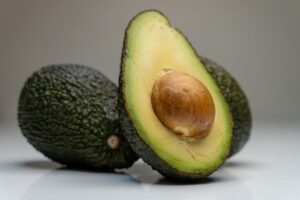
Avocado
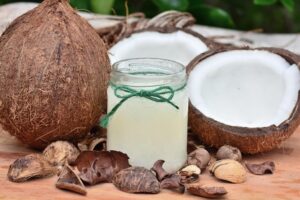
Coconut Oil
Avocado is less inflammatory than coconut oil. They are not really swaps for each other, since one is food and the other is a cooking fat, but they often end up filling the same slot: the source of fat on your plate.
An avocado brings close to ten grams of fibre, plenty of potassium and almost no sugar, and eating one in place of some of the day’s carbohydrate lowered an inflammation marker over twelve weeks. Coconut oil brings fat and very little else, and about 85% of that fat is the saturated kind. Put half an avocado on your toast tomorrow instead of frying it in coconut oil.
Side by side
| Avocado | Coconut Oil | |
|---|---|---|
| Inflammation Score | Low · 2/10 | Medium · 5/10 |
| Category | Fruits | Oils & Fats |
| Serving size | 1/2 medium avocado (68 g) | 1 tbsp (14 g) virgin |
| Key nutrients | Oleic acid, Fiber, Lutein, Potassium | Lauric acid, Medium-chain triglycerides (MCTs), Saturated fat (~85%), Polyphenols (virgin only) |
| How often | Daily, half to one avocado | — |
On the AIP diet
Avocado
Avocado is allowed on the Autoimmune Protocol in every phase, elimination included. It is a fruit, so it stays clear of the grains, legumes, nuts, seeds, nightshades and dairy that come out. With dairy gone it also earns its place for texture: mashed avocado stands in for sour cream, for butter and for the creamy part of a dressing. Watch the quantity if you run a low-FODMAP overlay, because it can bloat.
Coconut Oil
Coconut oil is allowed during the elimination phase of AIP, and it is one of the fats the protocol leans on hardest. Nothing in it comes from dairy, grains, nuts, seeds or nightshades, so there is nothing to remove. It is the usual stand-in for butter in AIP baking. Keep it as one fat among several rather than the only one in the cupboard, and choose virgin if you can.
What each one brings
Avocado
- Mostly oleic acid, the same monounsaturated fat that gives olive oil its reputation
- The fat in it multiplies how much of the protective compounds in a salad you absorb
- Close to ten grams of fibre in a whole one, with almost no sugar
- Swapping part of the day's carbohydrate for avocado lowered an inflammation marker after twelve weeks
Coconut Oil
- Very stable in a hot pan, so it does not break down the way delicate oils do
- Its main fat is burned for quick energy rather than stored
- No dairy, gluten, nuts or nightshades, so it fits the most restrictive diets
- Virgin versions keep a small share of the coconut's own plant compounds
Watch out for
Avocado
- Around 230 calories in a whole one, a lot for something treated as a topping
- Most of it gets eaten as guacamole next to fried chips, and the chips undo the bowl
- High in the fermentable sugars that cause bloating, so a big portion can leave a sensitive gut uncomfortable
- Ready-made guacamole is often cut with cheap oil and thickeners
Coconut Oil
- Around 85% saturated fat, more than butter and more than lard
- Used in place of olive oil, it moves your blood cholesterol the wrong way
- Refined coconut oil is bleached and deodorised, which strips the plant compounds out
- Easy to overdo once you treat it as a supplement instead of a cooking fat
Get the inflammation score of any meal
Just snap a photo or describe your food to get its inflammation score and uncover hidden patterns that may be affecting your well-being.