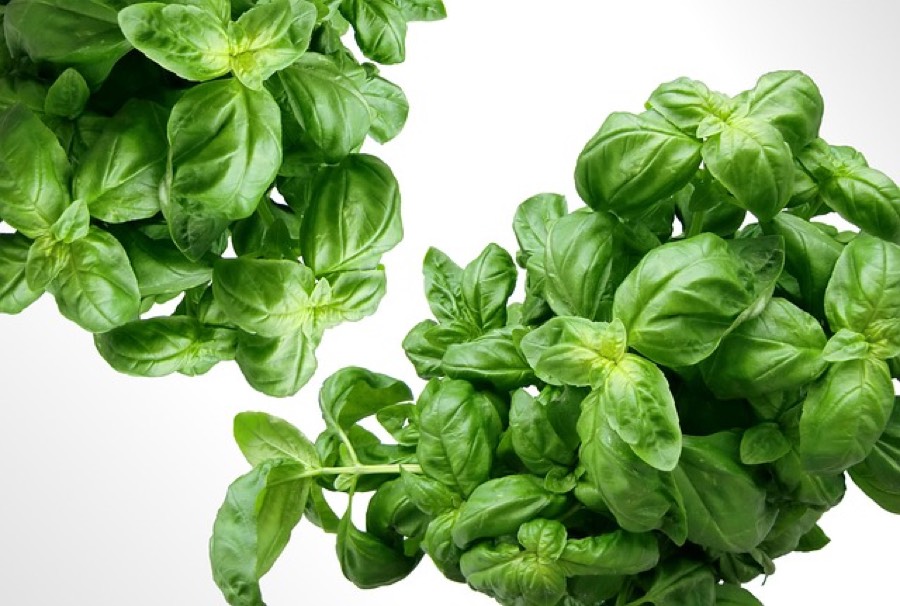
Two bunches of fresh green sweet basil leaves on a white background

Basil

Anti-InflammatorySpices & Herbs
Low
Inflammation Score
2/10
Anti-inflammatoryInflammatory
Serving size
1/4 cup fresh leaves (6 g)
Key nutrients
Rosmarinic acidEugenolBeta-carotene
How often
Daily, torn over food at the end

Why basil is anti-inflammatory

Basil is anti-inflammatory largely because of rosmarinic acid, an antioxidant it shares with mint and oregano. Antioxidants slow the damage that reactive molecules do inside cells. That damage keeps the immune system active when there is nothing to fight off, so less of it means less inflammation.

Almost all of the work on rosmarinic acid was done on cells and animals, using the purified compound at doses far above what a plate of leaves carries. Nobody has measured what happens in the blood of a person who eats basil.

Basil also contains eugenol, the compound behind the smell of cloves and part of basil’s own. In laboratory tests, eugenol reduces the inflammatory response of immune cells that have been provoked. Again, that was the compound on its own, not the leaf.

Two different plants are sold as basil. Sweet basil is the herb sold in bunches and pots. Holy basil, or tulsi, is a relative sold mainly as tea and capsules, and most of the human research published under the word basil was done on that one. For cooking, pick leaves that are firm and green, with no black patches.

Keep the bunch or the pot out of the fridge, because a few cold days turn the leaves black. Heat drives off the oils that carry basil’s smell, so tear the leaves over the food at the end rather than cooking them in. Pesto is the one everyday dish that uses basil by the bunch instead of the leaf.

Basil on the AIP diet

Basil is allowed from the first day of the AIP elimination phase. The Autoimmune Protocol takes out spices made from seeds and every nightshade, but leaf herbs stay in, so basil is fine alongside parsley, oregano and mint, fresh or dried. Shop-bought pesto is the thing to check: most jars carry cheese, cashews or sunflower seeds, and all three come out during elimination.

Benefits

  • Rich in rosmarinic acid, an antioxidant that limits the cell damage that keeps inflammation going
  • Eugenol, its other active compound, calms provoked immune cells in laboratory tests
  • Adds flavour to a dish without salt, sugar or fat
  • Allowed from day one of the AIP elimination phase

Watch out for

  • The evidence comes from isolated compounds in cells and animals, not from people eating basil
  • Pesto aside, most dishes use only a few leaves at a time
  • Most human research on basil used holy basil, a different plant sold as a supplement
  • Cold blackens the leaves, so the fridge ruins a bunch in days

Get the inflammation score of any meal

Just snap a photo or describe your food to get its inflammation score and uncover hidden patterns that may be affecting your well-being.

Download on the App StoreGet it on Google Play
InflammaScan app

Frequently asked

Is basil inflammatory?

No, basil is anti-inflammatory. Its leaves are rich in rosmarinic acid, an antioxidant, and in eugenol, which reduces the inflammatory response of immune cells in laboratory tests. Neither has been measured in people eating the herb.

Is sweet basil the same as holy basil?

No. Sweet basil is the kitchen herb sold in bunches and pots. Holy basil, or tulsi, is a relative sold mainly as tea and capsules, and most of the human research published under the word basil was done on that one.

Is basil allowed on the AIP diet?

Yes, from the start of the elimination phase, because it is a leaf herb like parsley and oregano. Jarred pesto is the part to watch, since it usually contains cheese and nuts or seeds.

Is dried basil as good as fresh?

Dried basil holds on to its rosmarinic acid, which does not evaporate, but loses much of the aromatic oil that carries the eugenol. For flavour fresh wins, and for a sprinkle into a sauce dried is fine.

The easiest way to follow an anti-inflammatory diet.

Identify inflammatory foods in seconds, log your symptoms and discover what’s inflaming you. Includes hundreds of recipes.

Download on the App StoreGet it on Google Play
InflammaScan app