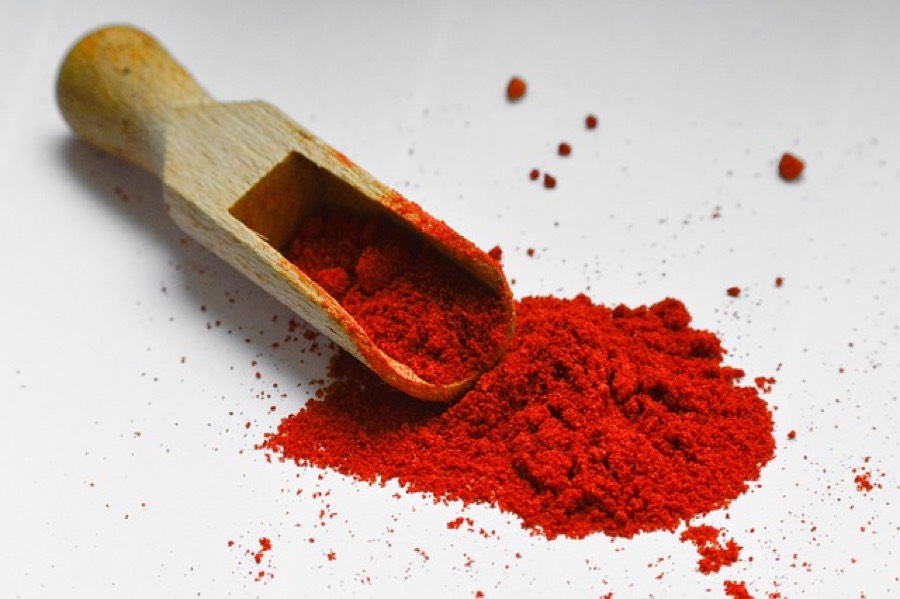
Ground red paprika spilling from a wooden scoop onto a white surface

Paprika

Anti-InflammatorySpices & Herbs
Low
Inflammation Score
2/10
Anti-inflammatoryInflammatory
Serving size
1 tsp (2.3 g) ground
Key nutrients
CapsanthinBeta-cryptoxanthinZeaxanthinVitamin E
How often
Daily, stirred into oil off the heat

Why paprika is anti-inflammatory

Paprika is anti-inflammatory because of its carotenoids, the pigments that make it red, and capsanthin is the most abundant of them. Paprika is ripe red peppers dried and ground, so it concentrates the pigment the ripening fruit built up. Carotenoids are antioxidants: they neutralise reactive forms of oxygen that damage cells and set off inflammation.

What has been tested in people is a concentrated extract, not the jar of spice. In a placebo-controlled trial, healthy volunteers took capsules of paprika carotenoids daily for five weeks, and their skin then took more ultraviolet light before it reddened. That reddening is an inflammatory response, so the result matters, but it says nothing about inflammation elsewhere.

A second trial followed what reaches the blood. Over twelve weeks of paprika extract capsules, capsanthin never appeared at any dose, while beta-cryptoxanthin, another paprika carotenoid, built up steadily. Your body turns beta-cryptoxanthin into vitamin A, which the immune system needs to work properly.

Colour is the information at the shelf. The carotenoids are the colour, and light and warmth break them down, so a deep red powder holds more of them than a dull brownish one. Sweet, hot and smoked paprika are the same fruit handled differently, the heat from hotter varieties of the pepper and the smoke from drying it over an oak fire.

Carotenoids dissolve in fat, so stir paprika into oil and more of the pigment reaches your blood. Add it off the heat, because it burns within seconds in a hot pan and turns bitter.

Paprika on the AIP diet

Paprika is out during the elimination phase of the Autoimmune Protocol. It is ground red pepper, and peppers are nightshades, the family AIP removes whole: peppers, tomatoes, aubergine, white potatoes and every spice made from them. Smoked and hot paprika go the same way. Nightshade spices tend to be among the last foods reintroduced, so expect months without it. Turmeric and garlic cover the colour and depth in the meantime.

Benefits

  • The red carotenoids are antioxidants, and dried paprika is a concentrated source of them
  • In a placebo-controlled trial, extract capsules made skin slower to redden under ultraviolet light
  • Beta-cryptoxanthin from paprika builds up in the blood and becomes vitamin A
  • Adds deep colour and flavour to a dish with no salt, sugar or fat

Watch out for

  • The human evidence uses concentrated paprika extract in capsules, not the spice in your rack
  • It is a nightshade, so it is out during the AIP elimination phase
  • Capsanthin, its main pigment, did not show up in blood even after twelve weeks
  • Light and warmth fade the colour, and the carotenoids go with it

Get the inflammation score of any meal

Just snap a photo or describe your food to get its inflammation score and uncover hidden patterns that may be affecting your well-being.

Download on the App StoreGet it on Google Play
InflammaScan app

Frequently asked

Is paprika inflammatory?

No, paprika is anti-inflammatory, and it scores 2 out of 10 on our inflammation scale. It is ripe red peppers dried and ground, so it concentrates the carotenoids that give the fruit its colour, and carotenoids are antioxidants. The trials in people used concentrated paprika extract in capsules rather than the spice itself.

Is smoked paprika different from sweet paprika?

Only in how the pepper is handled. Sweet paprika is dried with warm air, smoked paprika over an oak fire, and hot paprika comes from hotter varieties of the same pepper. All three are dried red pepper, so choose the one that suits the dish.

Is paprika allowed on the AIP diet?

Not during the elimination phase. Paprika is ground red pepper, and peppers are nightshades, the family AIP cuts along with tomatoes, aubergine and white potatoes. Cayenne and chilli powder go with it. Nightshade spices are usually among the last foods brought back.

How should I store paprika?

In a closed tin, away from light and away from the hob. The carotenoids are the colour, and light and warmth break them down, so a jar that has turned brownish has lost much of what you bought it for. Small amounts bought often beat one big jar.

The easiest way to follow an anti-inflammatory diet.

Identify inflammatory foods in seconds, log your symptoms and discover what’s inflaming you. Includes hundreds of recipes.

Download on the App StoreGet it on Google Play
InflammaScan app