| Prep Time | Cook Time | Total Time | Servings |
|---|---|---|---|
| 15 minutes | 10 minutes | 25 minutes | 4 |
What Is Garlic Shrimp with Zucchini Noodles and Basil?
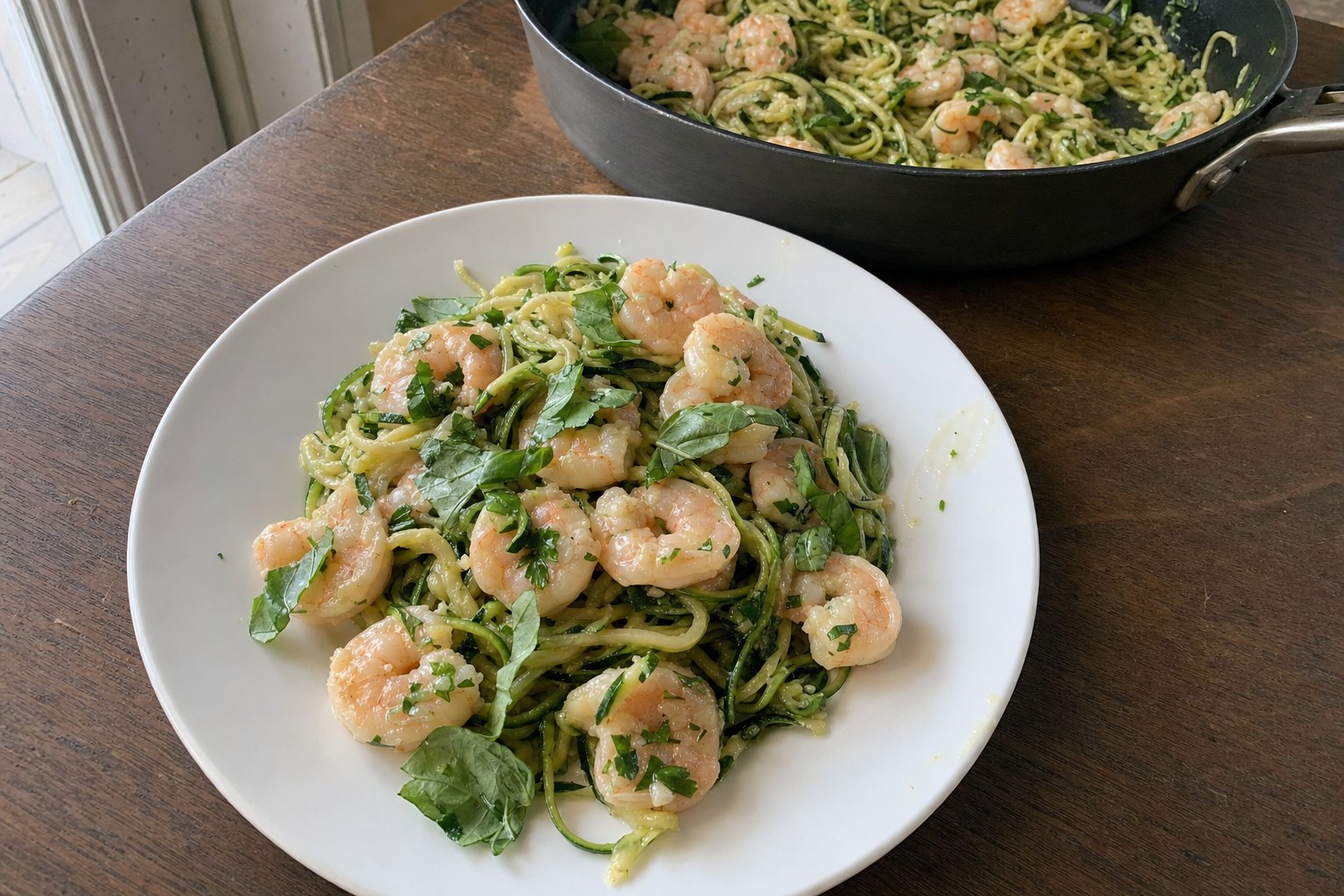
Garlic shrimp is a classic coastal skillet dish built on a hot pan, good olive oil and a handful of aromatics, cooked in minutes so the seafood stays tender. This version swaps the usual noodles for spiralized zucchini and finishes with torn basil, parsley and fresh lemon. The shellfish, oil and herbs bring natural anti-inflammatory compounds to a fast weeknight dinner.
What Makes This Recipe Anti-Inflammatory?
Shrimp gets its pink-orange color from astaxanthin, an antioxidant tied to lower inflammatory markers. The olive oil adds oleocanthal, which behaves like ibuprofen, while the garlic contributes organosulfur compounds released as it cooks, both supporting a calmer inflammatory response.
Basil brings rosmarinic acid, an antioxidant polyphenol, and the lemon zest supplies limonene, linked to reduced inflammation. This dinner leans on real anti-inflammatory compounds instead of the seed oils and refined carbs in most garlic shrimp pasta.
Every ingredient is compliant with the AIP elimination phase. There are no grains, legumes, nightshades, dairy, eggs, nuts, seeds or seed-based spices, and the noodles here are spiralized zucchini rather than wheat pasta, with the usual chili heat swapped out for garlic and bright lemon zest instead.
Ingredients
- 1 1/2 pounds large shrimp, peeled and deveined
- 4 medium zucchini, spiralized into noodles
- 6 garlic cloves, thinly sliced
- 3 tablespoons extra virgin olive oil, divided
- 1 cup fresh basil leaves, torn
- 1 lemon, zested and juiced
- 2 tablespoons fresh parsley, finely chopped
- 3/4 teaspoon sea salt, divided
Directions
Step 1
Pat the shrimp dry with paper towels and season with 1/4 teaspoon of the sea salt. Toss the zucchini noodles with the remaining 1/2 teaspoon salt in a colander and let them sit; salting draws out water they would otherwise release in the pan.
Step 2
Warm 2 tablespoons of the olive oil in a large skillet over medium heat. Add the garlic and cook, stirring, about 1 minute, just until fragrant and barely golden. Pull it off the heat as soon as it colors; garlic that browns too far turns bitter.
Step 3
Push the garlic aside or transfer it to a plate, then add the shrimp in a single layer. Sear about 1 minute per side, 2 to 3 minutes total, until the shrimp curl into a C shape and turn opaque, and move them to a plate right away.
Step 4
Squeeze the salted zucchini noodles in a towel to remove any last water, then add them to the skillet with the remaining tablespoon of oil. Toss for 60 to 90 seconds, just until glossy; do not let them sit or simmer like pasta or they will turn watery.
Step 5
Return the shrimp and garlic to the pan with the noodles, add the lemon zest and juice, and toss. Remove from the heat, then fold in the basil and parsley, adding the basil off the heat so it stays bright.
Step 6
Divide among four plates and serve immediately while everything is still warm.
Nutrition Facts (per serving)
| Calories | 310 |
| Fat | 14g |
| Carbs | 9g |
| Protein | 36g |
InflammaScore
1 Good! Very low inflammation potential
Q&A
Q1: Is this recipe suitable for the AIP elimination phase?
A1: Yes. Shrimp, zucchini, garlic, olive oil, basil, parsley and lemon are all permitted during elimination. There is no black pepper here, since peppercorns fall outside the herbs that come from leaves and roots, and no chili flakes or seed-based spices are used either.
Q2: Can I use frozen shrimp for this recipe?
A2: Yes. Thaw it overnight in the fridge or under cold running water, then drain and pat it very dry. Excess moisture is the real risk: wet shrimp steams instead of searing, so it will not turn golden or curl properly.
Q3: How do I keep the zucchini noodles from turning watery?
A3: Salt them first and let them sit in a colander for 10 to 15 minutes, then squeeze out the liquid before cooking. In the pan, toss for only 60 to 90 seconds over high heat; simmering them like pasta is what makes them soggy.
Q4: I do not have a spiralizer. What can I use instead?
A4: A julienne peeler or a box grater’s largest holes both turn zucchini into noodle strips, and a vegetable peeler works for wide ribbons. Store-bought spiralized zucchini works too. Salt and drain it the same way first, whichever method you choose.
Q5: Can I make this ahead for meal prep?
A5: The shrimp and garlic can be cooked a day ahead and reheated gently. Zucchini noodles are best cooked fresh, since they keep releasing water the longer they sit, even after salting. Spiralize and store the zucchini dry, then sauté it right before serving.