Butter vs Vegetable Oil: Which Is Less Inflammatory?
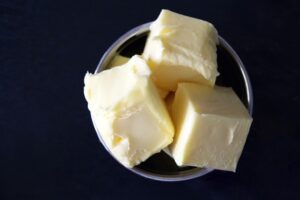
Butter
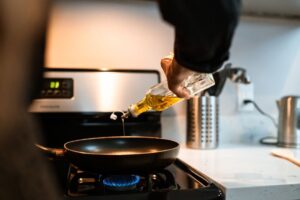
Vegetable Oil
Butter is less inflammatory than vegetable oil, though only by a point: butter sits in the middle of the inflammation scale and vegetable oil near the top. Neither one is a fat to build your cooking around. The question comes up at the frying pan and in baking, where one can stand in for the other.
Butter is about two thirds saturated fat, more than almost anything else in the cupboard, and eaten as butter that fat raises artery cholesterol more than the same amount eaten as cheese. It stays in the middle of the scale for two reasons. It is one ingredient, churned cream, so what is in the block does not change from batch to batch, and it carries butyrate, a short-chain fat that the cells lining your colon burn as fuel. The catch is the company butter keeps, since bread, pastry and cake are how most of it gets eaten, and a serving is a level tablespoon while the layer most people cut is closer to three.
Vegetable oil takes the higher score of the two for what happens to it in the pan. It is cheap, so it is the oil people deep-fry in and then keep for a second and a third round, and every round breaks more of it into aldehydes, the compounds fat turns into when it is heated hard. Fried food raises inflammation, and this is the fat doing most of the frying in home kitchens and restaurants alike. This week, cook with olive oil instead of the vegetable oil, and save the butter for spreading, in a layer a knife-tip thick.
Side by side
| Butter | Vegetable Oil | |
|---|---|---|
| Inflammation Score | Medium · 6/10 | High · 7/10 |
| Category | Oils & Fats | Oils & Fats |
| Serving size | 1 tbsp (14 g) | 1 tbsp (14 g) |
| Key nutrients | Palmitic and myristic acid (saturated fat), Butyrate, Vitamin K2 (grass-fed), Vitamin A (retinol) | Linoleic acid (omega-6), Oleic acid, Vitamin E (tocopherols), Alpha-linolenic acid |
| How often | — | — |
On the AIP diet
Butter
Butter is not allowed on the Autoimmune Protocol. The elimination phase takes out all dairy, and butter goes with it even though churning has removed most of the milk protein. Ghee is the grey area: clarifying strains off the milk solids, so some versions of the protocol allow it during the elimination and it is usually the first dairy tested. If you would rather not gamble, coconut oil covers everything butter does.
Vegetable Oil
Vegetable oil is not allowed during the elimination phase of the Autoimmune Protocol. The protocol removes every seed and every seed oil, and soybean, rapeseed, sunflower and corn are all seeds. Refining leaves almost none of the seed protein in the bottle, so these oils are often reintroduced without trouble later on. Until then, olive oil and avocado oil cover the same jobs in a kitchen.
What each one brings
Butter
- Churning removes almost all the lactose, so people who cannot digest milk usually handle butter
- It carries butyrate, the short-chain fat that the cells lining the colon burn as fuel
- Butter from grass-fed cows brings more vitamin K2 and more vitamin A
- A little fat on vegetables helps you take up the vitamins that need fat to be absorbed
Vegetable Oil
- Neutral in flavour and stable enough for high-heat cooking
- Mostly unsaturated fat, unlike butter, lard and the other solid fats
- Carries vitamin E, which protects fats in the body from oxidising
- Rapeseed-based blends bring some alpha-linolenic acid, a plant omega-3
Watch out for
Butter
- Around two thirds of its fat is saturated, more than almost anything else you cook with
- Eaten as butter, that fat raises artery cholesterol more than the same amount eaten as cheese
- It rarely arrives alone: bread, pastry and cake are the usual vehicle
- A serving is a level tablespoon and the layer most people cut is closer to three
Vegetable Oil
- Refining strips out most of the plant compounds an unrefined oil carries
- Reaches most people as fried food, which does raise inflammation markers
- Breaks down into aldehydes when heated, and reusing the oil concentrates them
- The label names no single oil, so the blend can change between batches
Get the inflammation score of any meal
Just snap a photo or describe your food to get its inflammation score and uncover hidden patterns that may be affecting your well-being.