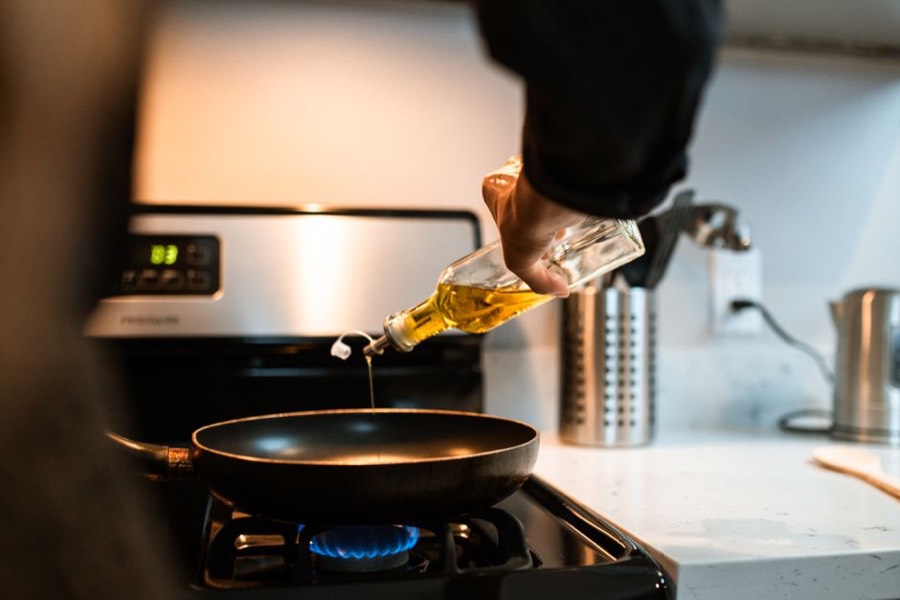
Pale golden vegetable oil being poured from a glass bottle into a frying pan on a gas hob

Vegetable Oil

InflammatoryOils & Fats
High
Inflammation Score
7/10
Anti-inflammatoryInflammatory
Serving size
1 tbsp (14 g)
Key nutrients
Linoleic acid (omega-6)Oleic acidVitamin E (tocopherols)Alpha-linolenic acid
Better swap

Why vegetable oil is inflammatory

Vegetable oil is inflammatory. The bottle sold under that name is a blend of soybean, rapeseed or sunflower oil, refined until it keeps for months and tastes of nothing. Refining strips out the plant compounds that give an unrefined oil its antioxidant effect, so what reaches your pan is fat and little else.

Most of that fat is linoleic acid, the omega-6 fat that seed oils get blamed for, and the blame is thinner than it sounds. In controlled trials, healthy adults given extra linoleic acid showed no change in their inflammation markers. Vegetable oil scores 7 out of 10 on our inflammation scale because of how it is made and how it is eaten, not because of its omega-6.

Frying is where most of this oil ends up, and the human evidence there is clearer. Overweight adults who ate fried meat four times a week for a month ended with higher inflammation markers in the blood than those on the same diet without it. Heat also breaks the oil down into aldehydes, reactive compounds that can damage cells and build up each time the oil is reused.

Vegetable oil is a category, not an ingredient, so the blend behind it can change between batches. A bottle that names one oil tells you what you are buying, and cold-pressed versions keep more antioxidants.

Keep vegetable oil for the jobs that need a neutral fat at high heat, and let olive oil be the default. Store it away from daylight, and pour frying oil away rather than straining it back into the bottle.

Vegetable Oil on the AIP diet

Vegetable oil is not allowed during the elimination phase of the Autoimmune Protocol. The protocol removes every seed and every seed oil, and soybean, rapeseed, sunflower and corn are all seeds. Refining leaves almost none of the seed protein in the bottle, so these oils are often reintroduced without trouble later on. Until then, olive oil and avocado oil cover the same jobs in a kitchen.

Benefits

  • Neutral in flavour and stable enough for high-heat cooking
  • Mostly unsaturated fat, unlike butter, lard and the other solid fats
  • Carries vitamin E, which protects fats in the body from oxidising
  • Rapeseed-based blends bring some alpha-linolenic acid, a plant omega-3

Watch out for

  • Refining strips out most of the plant compounds an unrefined oil carries
  • Reaches most people as fried food, which does raise inflammation markers
  • Breaks down into aldehydes when heated, and reusing the oil concentrates them
  • The label names no single oil, so the blend can change between batches

Get the inflammation score of any meal

Just snap a photo or describe your food to get its inflammation score and uncover hidden patterns that may be affecting your well-being.

Download on the App StoreGet it on Google Play
InflammaScan app

Frequently asked

Is vegetable oil inflammatory?

Yes, though not for the reason it usually gets blamed for. Controlled trials that gave healthy adults extra omega-6 found no change in their inflammation markers. It sits high on our scale because of what the product is: a fat refined until almost nothing is left but the fat itself, eaten mostly in fried food, and degrading further every time the same oil is heated again.

Is vegetable oil the same as seed oil?

In practice, yes. A bottle labelled vegetable oil is normally soybean, rapeseed, sunflower or corn oil, or a blend of them, and all four come from seeds. The word vegetable describes a category, not a plant, which is why two bottles of the same brand can hold different mixtures.

Is canola oil better than vegetable oil?

A little, and mostly because you know what is in it. Canola, which is rapeseed, has more monounsaturated fat and a small amount of plant omega-3 than a soybean or sunflower blend. It is refined the same way and it breaks down the same way in a hot pan.

What should I cook with instead?

Olive oil for almost everything, including frying at normal pan temperatures, where it holds up better than its reputation suggests. Avocado oil takes higher heat and tastes of little, if that is what a recipe needs. Whichever you use, keep the bottle out of the light and do not pour frying oil back in.

The easiest way to follow an anti-inflammatory diet.

Identify inflammatory foods in seconds, log your symptoms and discover what’s inflaming you. Includes hundreds of recipes.

Download on the App StoreGet it on Google Play
InflammaScan app



