Pistachios
Why pistachios are anti-inflammatory
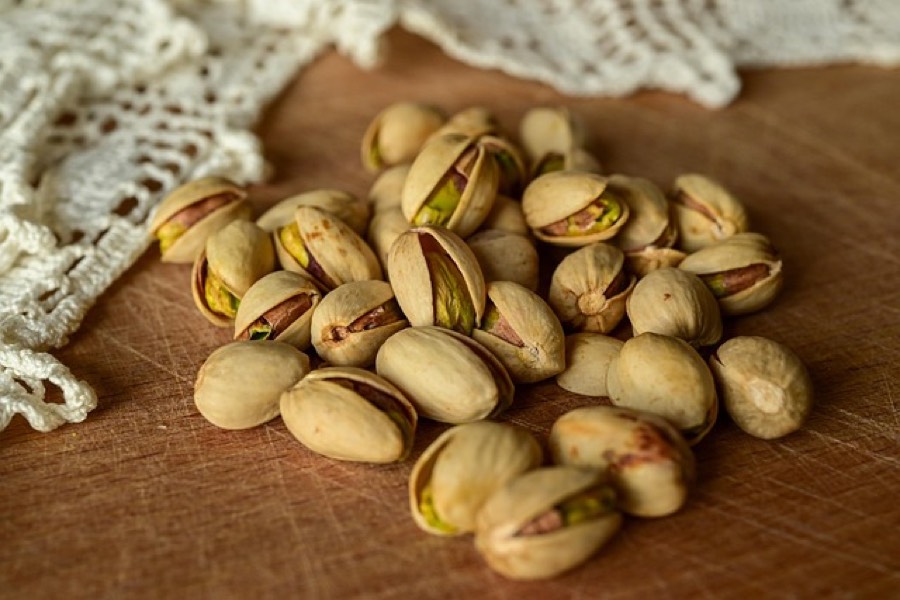
Pistachios are anti-inflammatory, and the first clue is the colour. Nothing else in the nut bowl is green and purple, and those colours are pigments doing a job. The green is lutein and zeaxanthin, the same pair that makes spinach dark. Your body parks them at the back of the eye, where they soak up the harshest light. The thin purple skin brings the compounds that colour a blueberry. No other common nut carries either one.
The rest is quieter. A pistachio holds more vitamin B6 than any other nut, and it comes with more protein and less fat than most of the bowl. A handful is also the lightest of any nut, around 160 calories for 49 kernels, which is a lot of chewing for the price.
Pistachios score 2 out of 10 on the inflammation scale, and the shell helps keep them there. You cannot eat one without opening it first, so the eating is slow. The empty shells pile up in front of you as you go, and that pile is the only honest count of how much you have had.
Salt is where it goes wrong. Pistachios reach the shelf saltier than almost any other nut. The salt sits on the outside of the shell, so you taste all of it before the kernel gets a chance. Get them in the shell and unsalted, and leave the honey roasted and chilli coated ones where they are.

Pistachios on the AIP diet
Pistachios are out during the elimination phase of the Autoimmune Protocol, like every nut and seed. They are a harder loss than most, because what a pistachio does best is give you something to pick at, and the protocol has few replacements for that. Plantain chips and coconut flakes are the usual stand-ins. Nuts come back early in the reintroduction, and a plain pistachio is a clean one to test.
Benefits
- The only nut that is green and purple, and both colours are antioxidant pigments
- Lutein and zeaxanthin, the pigments your body sends to the back of the eye
- More vitamin B6 than any other nut, plus more protein and less fat
- The shell slows you down, and the pile of empties shows what you ate
Watch out for
- Sold saltier than almost any other nut, with the salt on the outside of the shell
- Honey roasted and chilli coated versions are a snack food, not a nut
- Tree nut allergy is common, and pistachio often reacts alongside cashew
- Ready-shelled tubs empty fast, because nothing slows the eating down
Frequently asked
Are pistachios inflammatory?
No, pistachios are anti-inflammatory, and they are one of the better nuts for it. The green and purple of a pistachio are antioxidant pigments, and no other common nut carries either. What changes the answer is the salt: pistachios reach the shelf saltier than almost anything else in the nut aisle.
Are pistachios better than almonds?
They are close, and they win on different things. Almonds carry far more vitamin E and more fibre. Pistachios bring pigments no other nut has, along with more vitamin B6, more protein and fewer calories in a handful. There is no need to choose.
How many pistachios should you eat a day?
A small handful, around 49 kernels, which comes to about 160 calories. That is more nuts than any other handful gives you, because a pistachio is small and light. Buying them in the shell makes the portion look after itself.
Are pistachios allowed on the AIP diet?
No, not during the elimination phase, which takes out every nut and seed. Pistachios come back early in the reintroduction stage. Test them separately from cashews, because the two are close relatives and people who react to one often react to the other.