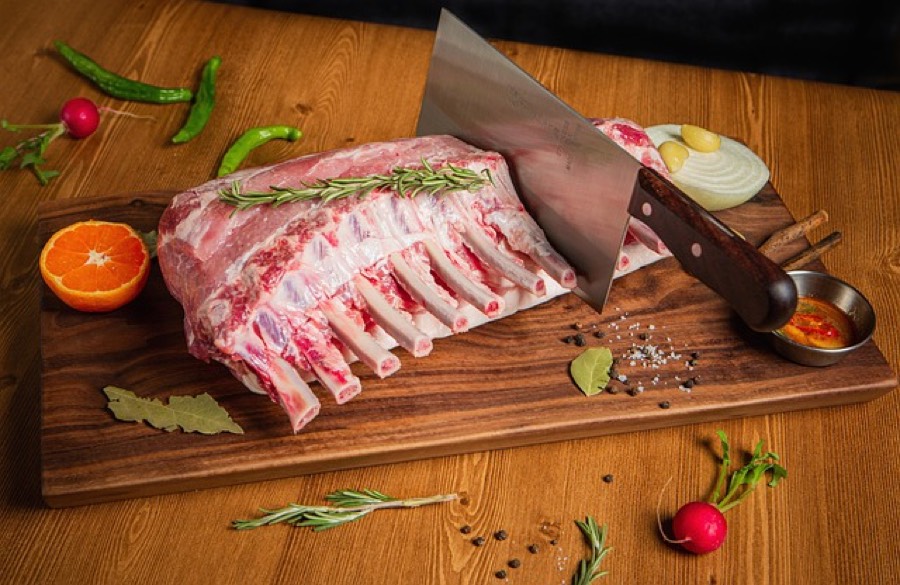
Raw rack of lamb with the fat cap on, resting on a wooden cutting board

Lamb

InflammatoryProteins
High
Inflammation Score
7/10
Anti-inflammatoryInflammatory
Serving size
3 oz (85 g) cooked
Key nutrients
ProteinSaturated fatZincVitamin B12
Better swap

Why lamb is inflammatory

Lamb is inflammatory, and the reason is its saturated fat, which makes up close to half the fat in a lamb chop. Some sits in the white rim around the meat, and the rest runs through the muscle. Saturated fat is the part of meat most closely tied to the inflammation signals a blood test picks up.

Lamb is usually studied as part of red meat, alongside beef and pork. In one study, people who ate more unprocessed red meat carried more of some inflammation markers in their blood, and no more of others. That is an association, not proof that the meat caused it.

Lamb fat is not quite the same as grain-fed beef fat. Lambs spend most of their lives grazing, and pasture leaves less saturated fat in the muscle and a little more omega-3, the fat linked to lower inflammation. The amount is far too small to replace oily fish.

Leg and loin are the lean cuts; shoulder, breast, ribs and ground lamb carry far more fat, and with it more of the saturated kind. Lamb is also sold almost entirely fresh, which keeps it clear of the cured meats, where the strongest link to inflammation sits. The exceptions are merguez, other lamb sausages and kebab meat.

Trim the white fat before the meat goes in the pan, and pour off what melts out. Twice a week is plenty, and one serving is about what fits in your palm. Let oily fish take some of the other nights.

Lamb on the AIP diet

Lamb is allowed during the elimination phase of the Autoimmune Protocol, and AIP leans on fresh red meat as a staple protein. What goes is anything mixed into it. Spice rubs usually bring seed spices, and merguez or lamb sausage can carry sugar, preservatives and gluten in the skin. Buy a plain cut, check the label lists meat and nothing else, and cook it at home.

Benefits

  • All the amino acids your body cannot make on its own
  • Heme iron, the form your body takes up most easily
  • One serving covers most of a day of vitamin B12, plus useful zinc
  • Grazing leaves a little omega-3 in the fat

Watch out for

  • Close to half the fat in lamb is the saturated kind
  • Shoulder, breast, ribs and ground lamb are the fattiest cuts
  • Too little omega-3 to count next to oily fish
  • Merguez, lamb sausage and kebab meat belong with the cured meats

Get the inflammation score of any meal

Just snap a photo or describe your food to get its inflammation score and uncover hidden patterns that may be affecting your well-being.

Download on the App StoreGet it on Google Play
InflammaScan app

Frequently asked

Is lamb inflammatory?

Yes. Close to half the fat in a lamb chop is saturated, and saturated fat is the part of meat most closely tied to the inflammation signals in a blood test. A trimmed leg steak in a normal portion sits well below a fatty shoulder chop.

Is lamb worse than beef?

Not by much, and the cut tells you more than the animal does. Lamb carries slightly more saturated fat than most beef, and slightly more omega-3 because lambs graze. Neither gap is big enough to swap one for the other and expect a difference.

Is grass-fed lamb better?

Most lamb is raised on grass already, so the label changes less than it does with beef. Grazing does leave less saturated fat and a little more omega-3 in the muscle, but the amounts are small next to oily fish.

Can I eat lamb on the AIP diet?

Yes. Fresh, unseasoned lamb is allowed from the elimination phase onwards. Spice rubs, merguez and lamb sausage are out, because of what is mixed in rather than the meat.

The easiest way to follow an anti-inflammatory diet.

Identify inflammatory foods in seconds, log your symptoms and discover what’s inflaming you. Includes hundreds of recipes.

Download on the App StoreGet it on Google Play
InflammaScan app