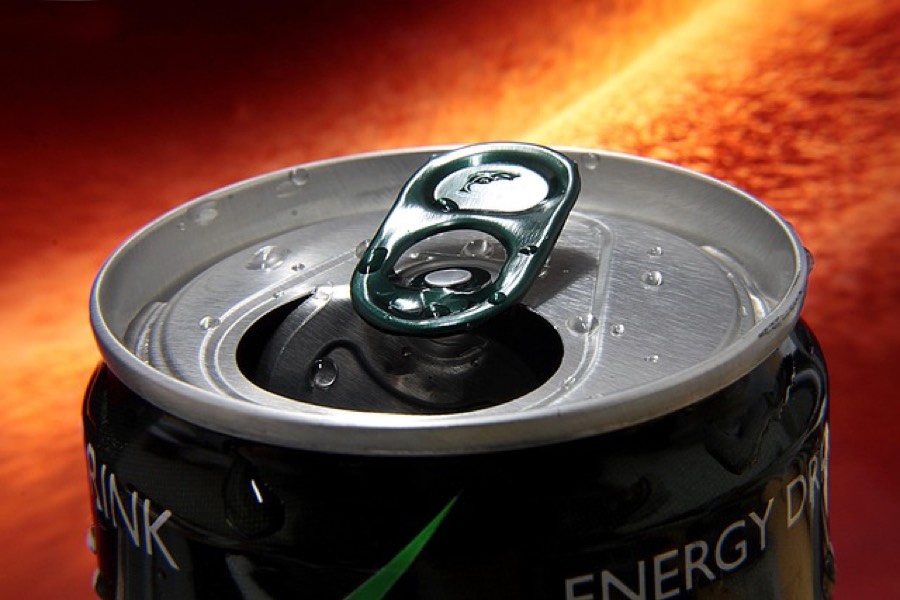
Energy Drinks
Why energy drinks are inflammatory
Energy drinks are inflammatory for two reasons packed into the same can, and the bigger one is added sugar. A 500 ml can holds around 13 teaspoons of it, more than a can of cola. Liquid sugar goes down in two minutes and does not fill you up.
Men who drank the most sugary drinks in a large study had more inflammation showing in their blood than men who drank almost none. The artificially sweetened versions showed no such link, which points at the sugar rather than the fizz or the flavourings.
Caffeine is the second reason. A 500 ml can carries about 160 mg, roughly two cups of coffee, and the biggest sizes reach 300 mg. Caffeine makes you take longer to fall asleep and cuts the hours you get, and disturbed sleep is itself linked to more inflammation in the blood. Sugar and caffeine pushing the same way are why energy drinks score 9 out of 10 on our inflammation scale.
Check whether the caffeine figure covers the whole can, because some of the larger sizes are sold as two servings. Sugar-free versions leave out the part tied to inflammation, though the caffeine dose stays the same. The taurine, ginseng and added B vitamins on the front of the can change none of this.
If you drink them, keep them for the morning and for the days you actually need one. They are not a drink for children, and one can gives a teenager as much caffeine as two cups of coffee.

Energy Drinks on the AIP diet
Energy drinks are out during the elimination phase of the Autoimmune Protocol, on several counts at once. Refined sugar goes, artificial sweeteners and colourings go, and AIP also removes caffeine, which is why coffee is dropped alongside them. Sugar-free cans are out for the same reasons. Coffee and tea are common reintroductions once the elimination phase ends; a can of this is not.
Benefits
- Caffeine improves alertness and reaction time for a few hours
- Useful in long endurance events, where sugar and caffeine both help
- The caffeine is printed on the label, so the dose is easy to count
- Zero-sugar versions give the same caffeine without the 13 teaspoons
Watch out for
- Around 13 teaspoons of sugar in a 500 ml can, drunk in minutes
- One can holds about as much caffeine as two cups of coffee
- A can raises blood pressure for a couple of hours afterwards
- The acid that gives the sour taste wears down tooth enamel
Frequently asked
Are energy drinks inflammatory?
Yes. A 500 ml can carries around 13 teaspoons of sugar, and people who drink the most sugary drinks show more inflammation in their blood than people who drink almost none.
Are sugar-free energy drinks better?
For inflammation, yes. The sugar is the part linked to it, and the artificially sweetened drinks did not show the same link in the research. The caffeine is unchanged, so the effect on sleep stays.
How much caffeine is in an energy drink?
Usually around 80 mg in a small 250 ml can and 160 mg in a 500 ml can, roughly two cups of coffee. The largest sizes and the small shot bottles reach 300 mg.
Is coffee a better choice?
Yes, if what you want is the caffeine. Black coffee brings the same alertness with no added sugar, and a cup is a smaller dose than a can.