| Prep Time | Cook Time | Total Time | Servings |
|---|---|---|---|
| 15 minutes | 12 minutes | 27 minutes | 4 |
What Is Ginger Pork and Bok Choy Stir-Fry?
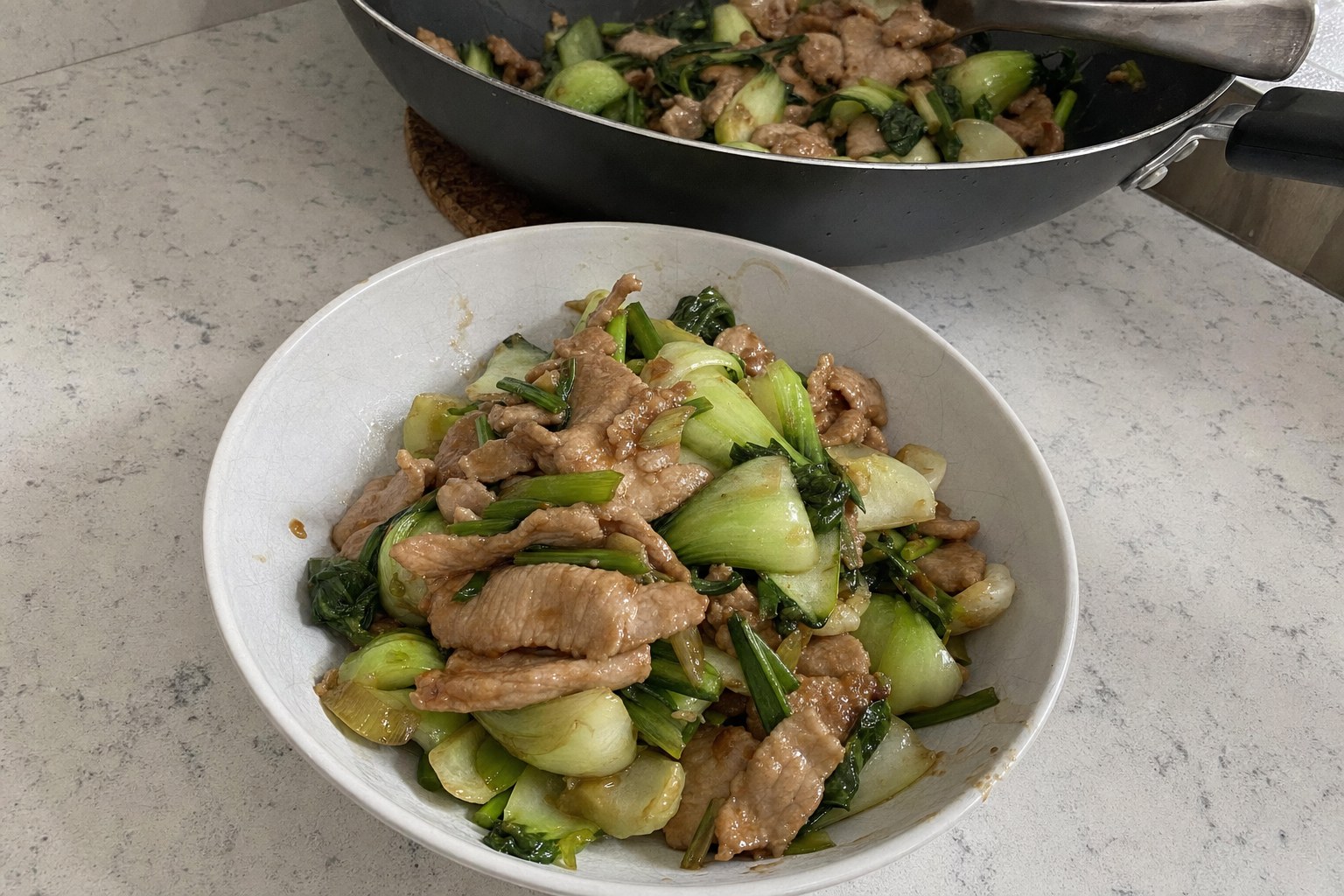
Stir-frying is a Chinese technique built on high heat and constant motion, searing food in minutes instead of stewing it. This version pairs thin-sliced pork tenderloin with quick-wilted bok choy in a glossy coconut aminos sauce that thickens in the pan. Ginger and garlic add warmth to a dish built almost entirely from lean protein and leafy greens.
What Makes This Recipe Anti-Inflammatory?
Fresh ginger contributes gingerols and shogaols, compounds studied for calming inflammatory signaling. Bok choy adds glucosinolates, which break down into sulfur-containing molecules linked to lower oxidative stress, while minced garlic releases organosulfur compounds like allicin in the hot pan. Pork tenderloin is one of the leanest cuts available.
Every ingredient is compliant with the AIP elimination phase. There are no grains, legumes, nightshades, dairy, eggs, nuts, seeds or seed-based spices, and the sauce is built from coconut aminos instead of soy sauce or tamari, thickened with arrowroot instead of cornstarch or flour.
Ingredients
- 1 1/2 pounds pork tenderloin, thinly sliced against the grain
- 1 1/2 pounds baby bok choy, halved lengthwise
- 2 tablespoons fresh ginger, peeled and grated
- 4 garlic cloves, minced
- 3 tablespoons coconut aminos
- 2 tablespoons coconut oil, divided
- 4 spring onions, cut into 1-inch lengths
- 1 teaspoon apple cider vinegar
- 1 teaspoon arrowroot starch
- 1/2 teaspoon sea salt
Directions
Step 1
Slice the pork thinly against the grain, cutting across the muscle fibers so it stays tender instead of chewy. If it is too soft to slice neatly, freeze it for 15 minutes first; the firmer texture makes thin, even slices much easier.
Step 2
Whisk the coconut aminos, vinegar, and arrowroot together while the liquid is still cold. Arrowroot clumps instantly in heat, so dissolving it cold first is what keeps the finished sauce smooth. Set aside.
Step 3
Separate the bok choy stems from the leafy tops and chop each into bite-sized pieces, keeping the piles separate. Season the pork with the sea salt.
Step 4
Heat 1 tablespoon coconut oil in a large skillet or wok over high heat until it shimmers. Sear the pork in two batches, not all at once. Crowded pork releases water and steams gray instead of browning, so give each batch space, about 1 to 2 minutes per side, then remove to a plate.
Step 5
Add the remaining oil and stir-fry the bok choy stems for 2 minutes until they soften. Add the leaves and spring onions and cook 1 more minute; the leaves wilt almost instantly, which is why they go in after the stems.
Step 6
Push the vegetables aside, add the ginger and garlic to the cleared space, and cook 30 seconds, stirring constantly so they do not scorch.
Step 7
Return the pork and its juices to the pan. Stir the sauce again and pour it in, tossing everything together; it turns glossy and thickens in under a minute. Remove from heat and serve.
Nutrition Facts (per serving)
| Calories | 340 |
| Fat | 14g |
| Carbs | 9g |
| Protein | 36g |
InflammaScore
1 Good! Very low inflammation potential
Q&A
Q1: Is this recipe suitable for the AIP elimination phase?
A1: Yes. Pork, bok choy, ginger, garlic, spring onions, coconut oil and coconut aminos are all permitted during elimination. Coconut aminos replaces soy sauce since soy is a legume, there is no black pepper or sesame oil here, and arrowroot is the thickener, not cornstarch.
Q2: Can I use a different cut of pork?
A2: Yes, pork loin or boneless chops work well, sliced thin against the grain just like the tenderloin. Avoid fattier cuts like shoulder for this dish; they need long, slow cooking to break down and will not sear properly in a stir-fry’s short cook time.
Q3: What can I use if I cannot find bok choy?
A3: Napa cabbage or regular green cabbage both work, sliced into similar bite-sized pieces. Kale or collard greens are good too, though they are tougher than bok choy, so give the leaves an extra minute or two in the pan to soften fully.
Q4: Why did my pork turn out gray instead of browned?
A4: The pan was likely overcrowded or not hot enough. Piled-up pork releases water and steams to a gray color instead of searing. Use a wide, very hot pan and cook the pork in batches so each piece has room to properly brown.
Q5: Can I prep this ahead for meal prep?
A5: Yes. Slice the pork and chop the bok choy up to a day ahead, storing them separately in the fridge. Mix the sauce fresh right before cooking, since arrowroot can settle out if it sits too long. The dish keeps well for up to three days.