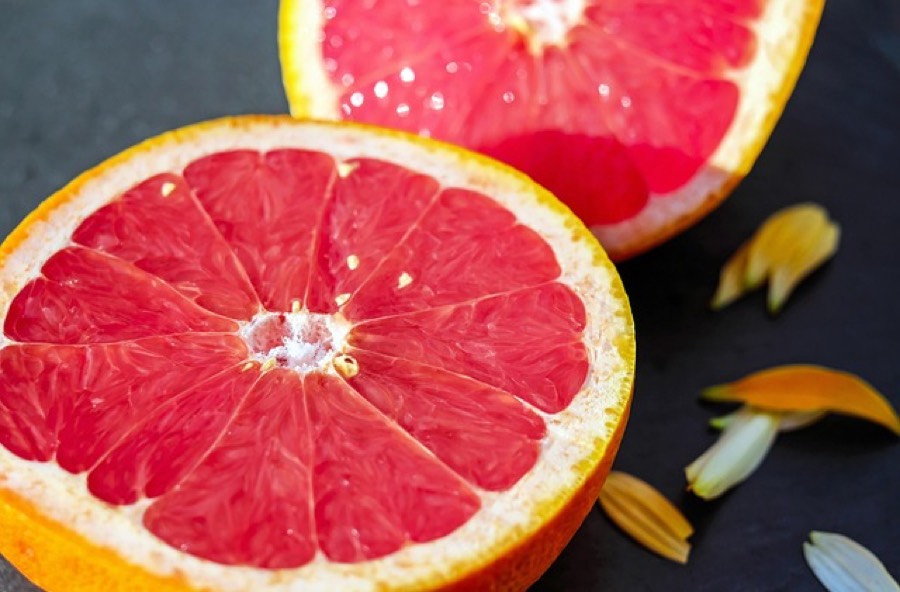
Grapefruit
Why grapefruit is anti-inflammatory
Grapefruit is anti-inflammatory thanks to naringin, a flavonoid concentrated in the pith and the tough walls around each segment. It is also what makes grapefruit bitter. Your gut bacteria convert naringin into naringenin, the form that reaches your bloodstream and the one researchers study for its anti-inflammatory effects.
The human trials are thin. Overweight adults ate a grapefruit and a half a day for six weeks, and the inflammation marker that a routine blood test reports did not move. In a longer trial, women drank grapefruit juice every day for six months and ended with slightly less stiff arteries. Their inflammation markers did not move either.
Colour is the difference worth knowing at the shop. Pink and red grapefruit carry lycopene, the pigment that also colours tomatoes, and white grapefruit carries almost none. Lycopene is an antioxidant, so it neutralises the reactive molecules that damage cells, and that damage is part of what keeps inflammation going. Juice leaves behind the pith, where most of the naringin sits.
Grapefruit also interferes with some common medicines. It contains furanocoumarins, compounds that block an enzyme in your gut wall that breaks down drugs before they reach your blood. Some statins and blood pressure pills then arrive much stronger than the dose intended, and the effect lasts about a day. If you take daily medication, ask your pharmacist before eating grapefruit regularly.

Grapefruit on the AIP diet
Grapefruit is allowed on the Autoimmune Protocol from day one, elimination included. It is a fruit, so it holds none of the grains, legumes, nuts, seeds, nightshades or dairy the protocol takes out. Two things still apply. AIP asks you to keep total fruit sugar modest across the day, and the medicine interaction has nothing to do with which diet you follow, so check your prescriptions first.
Benefits
- The bitterness is naringin, a flavonoid your gut turns into naringenin
- Pink and red varieties carry lycopene, an antioxidant white grapefruit lacks
- Half a grapefruit holds about half a day's vitamin C, another antioxidant
- Six months of daily juice left women's arteries slightly less stiff
Watch out for
- Furanocoumarins block the gut enzyme that breaks down many common medicines
- The interaction lasts about a day, so moving your dose away from breakfast does not help
- Eaten daily for six weeks, it left the blood marker of inflammation unchanged
- Most of the naringin sits in the pith, and juice leaves it behind
Frequently asked
Is grapefruit inflammatory?
No, grapefruit is anti-inflammatory. Its bitterness comes from naringin, a flavonoid your gut turns into naringenin, and the pink and red types carry lycopene on top of that. Trials have not shown grapefruit moving the inflammation marker in a blood test, but nothing in the fruit works against you.
Why can grapefruit be a problem with medicines?
It contains furanocoumarins, which block an enzyme in your gut wall that normally breaks down drugs before they reach your blood. More of the drug gets through, so a normal dose acts like a bigger one. Some statins and blood pressure pills are the usual examples. Ask your pharmacist before making grapefruit a habit.
Is pink grapefruit better than white?
Slightly. The pink and red flesh gets its colour from lycopene, an antioxidant that white grapefruit has almost none of. Everything else, the naringin, the vitamin C and the fibre, is much the same in both.
Can you eat grapefruit on the AIP diet?
Yes, right through elimination. It is a fruit, so the protocol leaves it in. Keep an eye on how much fruit sugar you have across the day, and remember the medicine interaction applies whatever you eat.