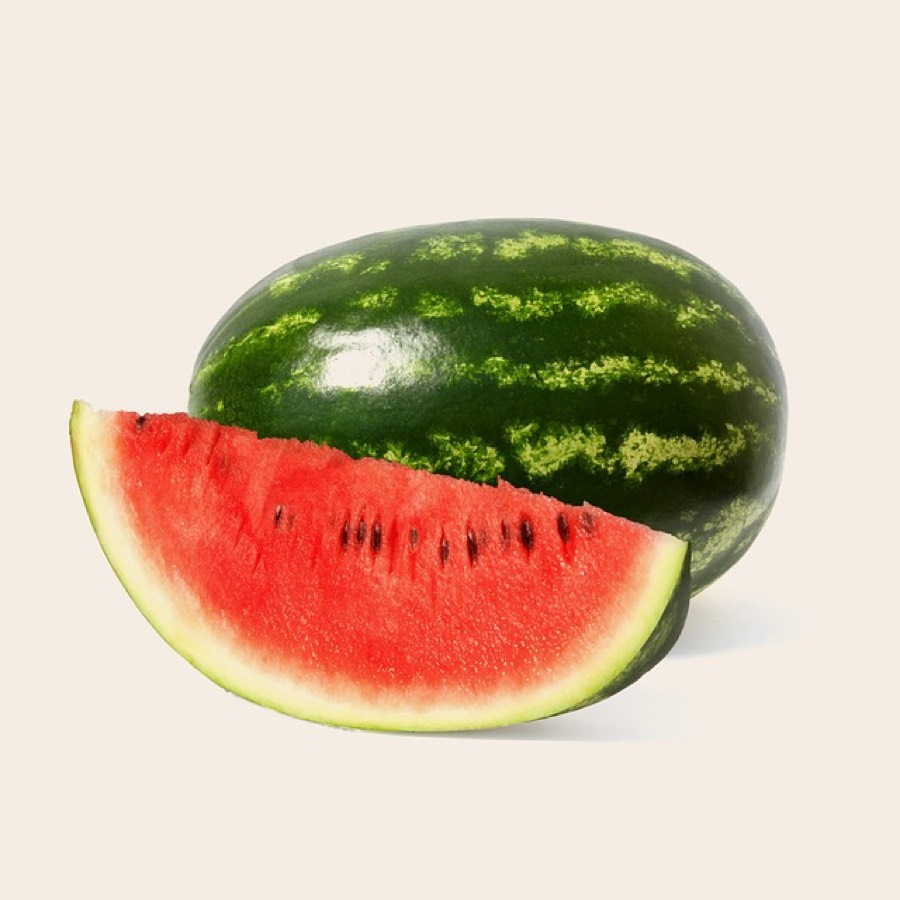
A whole watermelon with a fresh red wedge cut from it

Watermelon

Anti-InflammatoryFruits
Low
Inflammation Score
2/10
Anti-inflammatoryInflammatory
Serving size
1 cup diced (152 g)
Key nutrients
LycopeneCitrullineVitamin CPotassium
How often
Daily in season, a cup or two

Why watermelon is anti-inflammatory

Watermelon is anti-inflammatory, and the giveaway is the colour. That red is lycopene, the same pigment that makes a tomato red. Gram for gram, watermelon carries close to twice as much of it. Lycopene is an antioxidant, so it mops up the cell damage that keeps low-grade inflammation ticking over. It needs a little fat to be absorbed well, so a slice after a meal does more than a slice on its own.

The other half of the story is citrulline, and no common food carries more of it. Citrulline is an amino acid your body turns into nitric oxide, a gas that tells the walls of your blood vessels to relax. Stiff vessels are part of how quiet, long-running inflammation does its damage. Eaten regularly, watermelon leaves arteries a little less stiff, and in older adults it brings blood pressure down slightly.

So why does watermelon score 2 out of 10 instead of 1? Not because of the sugar. It gets listed as a fruit to avoid because of how fast its carbohydrate raises blood sugar. But that ranking measures a fixed amount of pure carbohydrate. Watermelon is more than nine tenths water, and a normal slice never gets near that amount.

What holds it back is the dose. The capsules behind the citrulline research hold what you would have to eat kilos of melon to match. And with almost no fibre in it, nothing slows the sugar down.

Watermelon on the AIP diet

Watermelon is allowed on the Autoimmune Protocol in every phase, elimination included. It is a fruit, so it stays clear of the grains, legumes, nuts, seeds, nightshades and dairy that come out. The protocol asks you to keep fruit sugar modest across the day. Watermelon is mostly water, so a cup of it costs you very little. It is also one of the easiest fruits to eat four cups of without noticing.

Benefits

  • Its red colour is lycopene, and gram for gram it beats a raw tomato
  • The best food source of citrulline, which your body uses to relax blood vessels
  • Eaten regularly, it leaves arteries a little less stiff
  • More than nine tenths water, so a big bowl brings very little sugar

Watch out for

  • Easy to eat half a melon in one sitting without noticing
  • Almost no fibre, so nothing slows the sugar down
  • The citrulline in the fruit is a fraction of what the capsules give
  • The sugars in it ferment easily, so a big portion can bloat a sensitive gut

Get the inflammation score of any meal

Just snap a photo or describe your food to get its inflammation score and uncover hidden patterns that may be affecting your well-being.

Download on the App StoreGet it on Google Play
InflammaScan app

Frequently asked

Is watermelon inflammatory?

No, watermelon is anti-inflammatory. The red colour is lycopene, an antioxidant it holds more of than a raw tomato does. It is also the best food source of citrulline, which your body uses to relax the walls of your blood vessels.

Does watermelon spike your blood sugar?

Less than its reputation suggests. It gets ranked as a high sugar fruit, but that ranking is measured on a fixed amount of pure carbohydrate. Watermelon is more than nine tenths water, so a normal slice holds very little of it. The catch is the portion, because half a melon goes down easily.

Should you eat the white part of the watermelon?

If you can stand it, yes. The pale rind next to the skin holds more citrulline than the sweet red flesh does. Almost nobody eats it plain. Blended into a smoothie or pickled it disappears, and it is the part that usually goes in the bin.

Is watermelon allowed on the AIP diet?

Yes, in every phase including elimination. It is a fruit, so it avoids the grains, legumes, nuts, seeds, nightshades and dairy that AIP takes out. The only thing to watch is the total fruit sugar across the day, and that is a question of how much melon, not which melon.

The easiest way to follow an anti-inflammatory diet.

Identify inflammatory foods in seconds, log your symptoms and discover what’s inflaming you. Includes hundreds of recipes.

Download on the App StoreGet it on Google Play
InflammaScan app