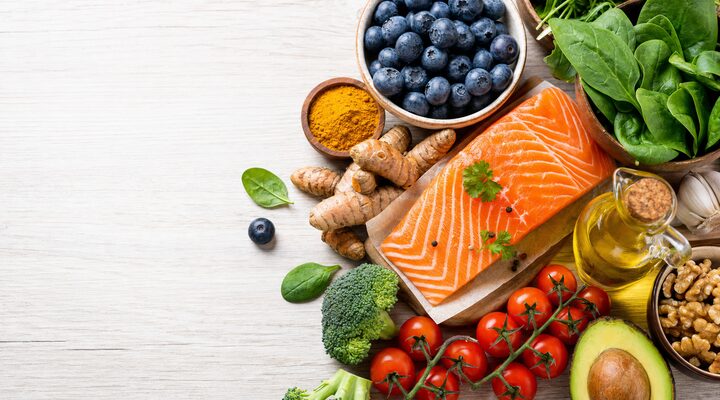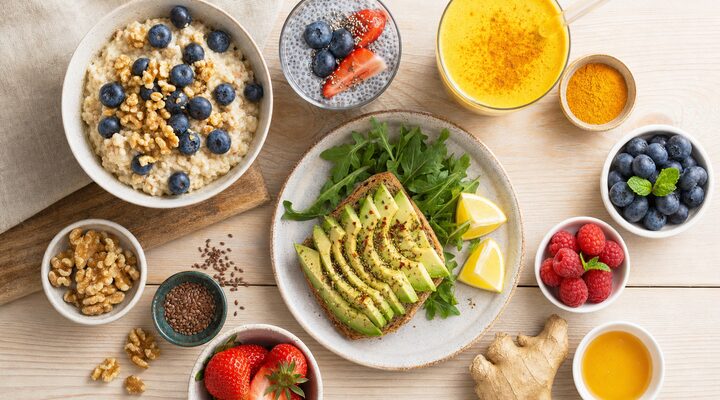
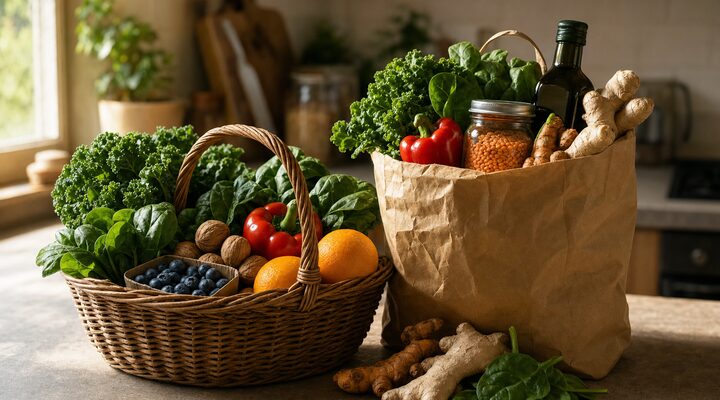
Ask what the best anti-inflammatory foods are and most answers stop at a short list: berries, salmon, maybe turmeric. That’s not wrong, it’s just a fraction of what actually counts.
But systemic chronic inflammation has been tied to cardiovascular disease, cancer, diabetes, and autoimmune and neurodegenerative conditions, with poor diet named as one of the lifestyle factors that drive it. So which foods make it onto the plate, and how often, carries more weight than a handful of trendy ingredients.
Anti inflammatory foods fall into eight overlapping categories, and eating from most of them regularly matters more than leaning on any single ingredient:
- Vegetables and leafy greens
- Fruit and berries
- Fatty fish and seafood
- Nuts and seeds
- Legumes
- Whole grains
- Olive oil, avocado, and other healthy fats
- Herbs, spices, tea, and coffee
Of those eight, fatty fish, colorful vegetables and fruit, and extra virgin olive oil have the most consistent evidence behind them.
What makes a food anti-inflammatory?
An anti-inflammatory food supplies compounds that interfere with the pathways behind chronic, low-grade inflammation. These foods deliver phytochemicals, antioxidants, and fiber that prevent cellular stress, dial down inflammatory signaling, support gut bacteria, and blunt blood sugar spikes. None of that shows up as a symptom you’d notice day to day: this kind of background inflammation, sometimes called metaflammation, tends to run quietly.
Researchers track that background activity with blood markers, chiefly C-reactive protein (CRP), interleukin-6, and TNF-α. Whole diets get scored on the same scale by the Dietary Inflammatory Index, which was built by reading roughly 1,900 published studies to score how 45 separate food components move six of those markers. Foods land on the anti-inflammatory side of that scale or the pro-inflammatory one.
The scale isn’t academic. Pooling 15 meta-analyses covering more than 4.3 million people, an umbrella review found that a pro-inflammatory diet was linked to 27 of the 38 health outcomes examined, from heart attack to all-cause mortality.
But no single food on the list below moves that score alone. What makes a diet anti-inflammatory is the sum of what someone eats day after day, not any one ingredient, with fresh, minimally processed foods outperforming their packaged versions. That’s the logic behind building an anti-inflammatory diet plan around this pattern instead of chasing individual superfoods: eat more from the eight categories below, eat less from the list of foods that cause inflammation, and the daily average shifts even when one meal doesn’t.
The anti-inflammatory foods with the strongest evidence
There isn’t one single strongest anti-inflammatory food. The research points to a handful of categories with the most consistent backing, not one ingredient that beats the rest.
- Fatty fish: across 68 randomized trials covering 4,601 people, marine omega-3s lowered CRP, interleukin-6, and TNF-α, and longer supplementation produced a bigger effect.
- Colorful vegetables and fruit: the carotenoids in carrots, peppers, and many fruits are tied to the same drop in CRP.
- Extra virgin olive oil: the standard guidance is 2 to 3 tablespoons a day, worked into cooking or dressing.
- Fiber from legumes, nuts, and whole grains: fiber from whole foods lowers CRP more than the same amount from a supplement does.
That doesn’t make the rest of this list optional. It’s the combination across categories that does the work, not any one item on its own.
Vegetables and leafy greens
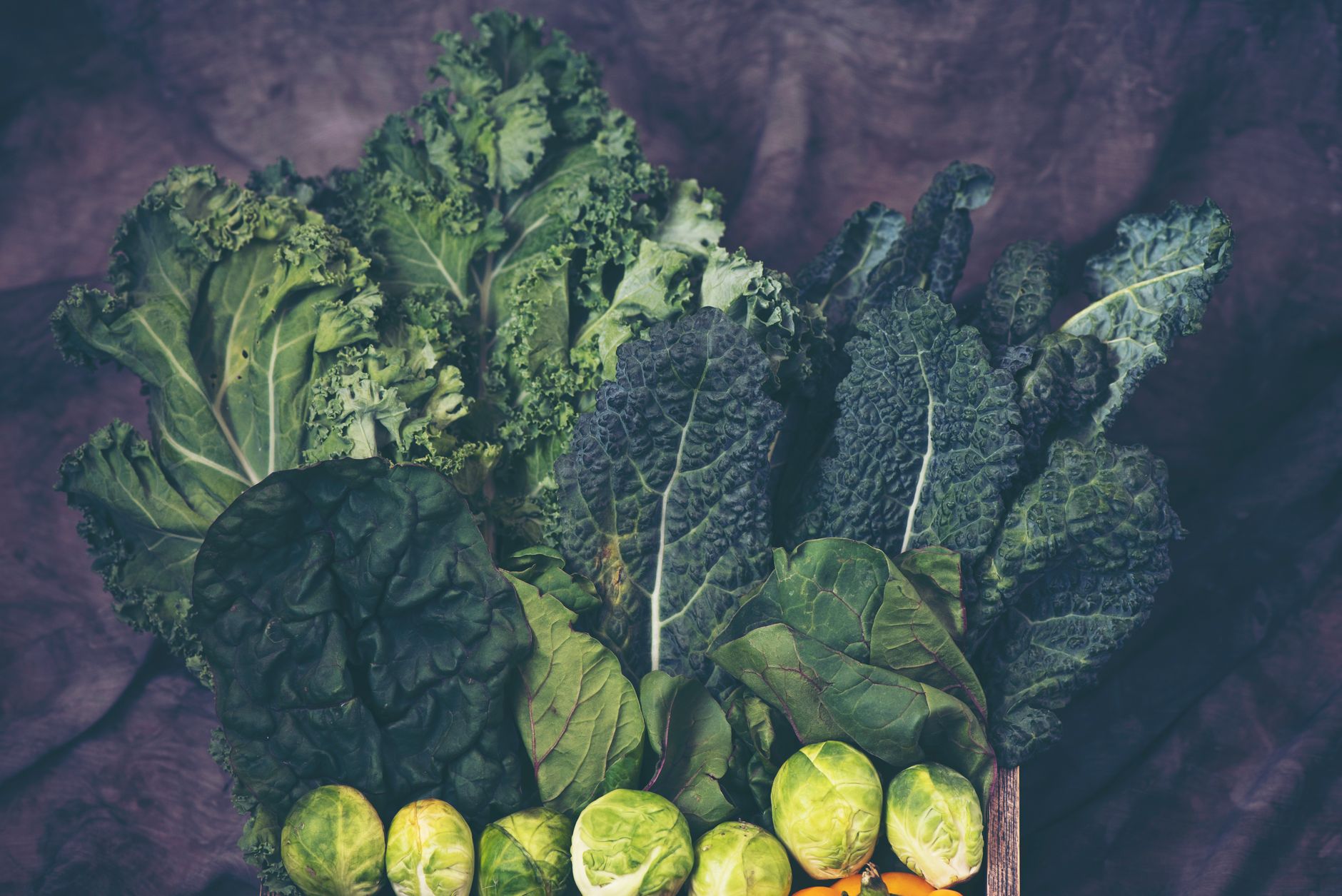
Among anti inflammatory vegetables, leafy greens and cruciferous vegetables carry the most carotenoids, the plant pigments responsible for their color, and higher carotenoid intake is linked to lower CRP.
- Spinach
- Kale
- Broccoli
- Cauliflower
- Brussels sprouts
- Bell peppers
- Carrots
The deeper the color, generally the more of those pigments the vegetable carries, which is why dark leafy greens tend to outperform paler ones like iceberg lettuce. Carotenoids are fat-soluble, so cooking carrots or peppers with a little olive oil helps the body absorb them, and raw and lightly sautéed both have a place.
Leafy greens and cruciferous vegetables also stand out in the mortality data. A dose-response meta-analysis of 95 studies found that risk of cardiovascular disease and early death kept falling up to around 800 grams of fruit and vegetables a day, with those two groups among the types most consistently tied to the benefit.
Tomatoes and peppers belong to the nightshade family, and despite their reputation for triggering flare-ups, the evidence behind that specific claim is limited.
How much: The guidance behind this pattern calls for 2 to 3 cups of vegetables a day, and filling half the plate with them at each meal is the simplest way to get there without counting.
Our pomegranate and walnut kale salad covers a good chunk of that in one sitting, and it stacks nuts on top of the greens.
Fruit and berries
Berries and citrus fruit concentrate anthocyanins and vitamin C, antioxidant compounds that help offset the cellular stress behind chronic inflammation.
- Blueberries
- Strawberries
- Blackberries
- Cherries
- Oranges
- Grapefruit
- Pomegranate
Anthocyanins are what give blueberries and blackberries their deep color, part of why the dark berries show up on nearly every anti inflammatory foods list. Frozen fruit counts here too, so a bag in the freezer does the job as well as a fresh pint out of season.
Whole fruit also brings fiber that juice strips away, and fiber is one of the components tied to lower CRP.
How much: The same guidance calls for 1.5 to 2 cups of fruit a day, roughly a piece of fruit plus a handful of berries.
Breakfast is the easiest place to stack a couple of those servings at once, which is what our coconut blueberry smoothie bowl does.
Fatty fish and seafood
Fatty fish supplies EPA and DHA, the omega-3 fats linked to lower CRP and interleukin-6, two of the clearest food-based effects on this entire list.
- Salmon
- Sardines
- Mackerel
- Herring
- Anchovies
- Tuna
Smaller, oilier fish like sardines and anchovies pack a similar dose of omega-3s into a smaller portion, and canned versions count just as much as fresh fillets. Canned sardines eaten with the bones in also add calcium, which most other items on this list don’t offer.
How much: The American Heart Association advises one to two seafood meals a week to cut the risk of heart failure, coronary heart disease, and stroke, and the portion behind that is 3 to 4 ounces, roughly the size of a deck of cards.
One of those two weekly servings becomes an actual meal in our wild salmon poke bowl instead of a plain fillet on a plate.
Nuts and seeds
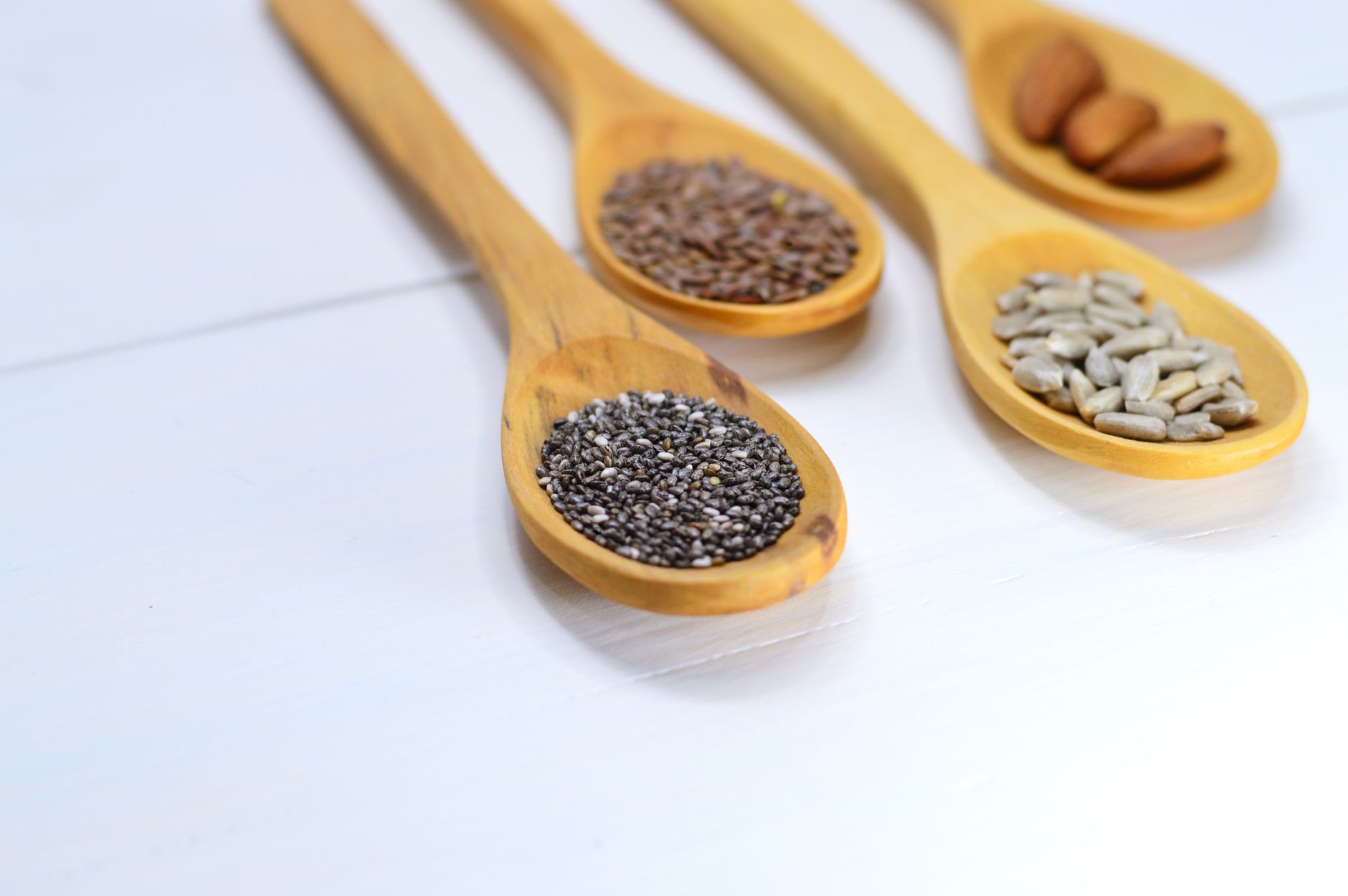
Walnuts, almonds, and other nuts combine unsaturated fat with fiber, and fiber from whole foods lowers CRP more than the same amount from a supplement does.
- Walnuts
- Almonds
- Pistachios
- Pecans
- Chia seeds
- Flaxseed
- Pumpkin seeds
Walnuts stand out because they’re one of the few nuts that also supply plant-based omega-3 fat, not just unsaturated fat in general. Chia and flax add fiber and fat in a form that blends into oatmeal, yogurt, or a smoothie rather than needing to be eaten on their own.
The direct evidence here is thinner than for fish, and worth being straight about. Pooling 32 randomized trials, researchers found no clear sign that nuts lower inflammatory markers on their own, though the same analysis did find they improved blood vessel function, and the authors called for more work on the question. Nuts earn their place on this list through their fat and fiber, not through a proven drop in CRP.
How much: The guidance calls for about 1.5 ounces a day, roughly a handful, enough to matter without turning nuts into a meal on their own.
That daily handful can arrive at breakfast instead: our chia flax breakfast porridge is built on chia and flax alone.
Legumes
Lentils, chickpeas, and beans deliver fiber and plant protein in the same bite, and that fiber is part of what this pattern credits for lowering CRP more than a supplement would.
- Lentils
- Chickpeas
- Black beans
- Kidney beans
- Pinto beans
- Edamame
Canned versions count as much as dried ones nutritionally, and rinsing canned beans washes off some of the added sodium. Swapping a legume in for red meat a few nights a week covers two goals at once: more fiber, less of the meat this pattern recommends limiting.
The size of the fiber effect is modest and it takes a real increase to show up. Across 14 randomized trials in adults with overweight or obesity, fiber-rich food cut CRP by 0.37 mg/L, and only in the trials where fiber intake rose by at least 8 grams a day. A cup of lentils covers most of that increase on its own.
How much: The guidance calls for at least 1 cup of legumes twice a week, which a single can of beans covers in two servings.
Our chickpea and spinach stew with cumin makes that swap taste like the point of the meal rather than a compromise.
Whole grains
Whole grains keep the bran and germ that milling strips out of refined grains, and that intact fiber is what slows the blood sugar spike a refined version would cause.
- Oats
- Barley
- Quinoa
- Brown rice
- Black rice
- Buckwheat
- Bulgur
Oats and barley are the two most commonly named whole grains in this pattern, and both work in savory dishes as easily as a sweet breakfast bowl. Quinoa and buckwheat also bring plant protein that white rice or plain pasta don’t, which matters for anyone leaning on grains to fill out a meal.
Who’s eating them changes the result. A meta-analysis of 14 randomized trials found that whole grains brought CRP down in the people who started with raised inflammation, and in trials that held calories steady, without moving the average across everyone. If lowering inflammation is the reason for the swap, that’s the group the swap was measured in.
How much: No specific serving size for whole grains comes attached to this pattern, so the practical version is to swap a whole grain in wherever a refined one would normally go: rice, bread, pasta.
Our turmeric spiced quinoa breakfast bowl makes that swap at the meal where refined grains are hardest to avoid.
Olive oil, avocado and other healthy fats
Extra virgin olive oil and avocado supply monounsaturated fat in place of the saturated fat this pattern recommends limiting, and olive oil is one of the most consistently named foods across anti inflammatory eating.
- Extra virgin olive oil
- Avocado
- Avocado oil
- Tahini
- Nut butters
Extra virgin olive oil is less refined and processed than standard varieties, so it retains more of its nutrients, which is why recommendations specify the extra virgin kind rather than olive oil in general. That distinction holds up in trials: across 26 studies, olive oil high in polyphenols beat the low-polyphenol kind on oxidized LDL, cholesterol, and markers of oxidative stress, with several of those studies also reporting improvements in inflammatory markers.
Avocado works the same way in a different form: mashed on toast, blended into a smoothie, or sliced into a bowl, it replaces butter or mayonnaise without changing much else about the dish.
How much: The guidance calls for 2 to 3 tablespoons of olive oil a day, split between cooking and dressing rather than poured on all at once.
Our avocado and cucumber wraps use two of these in the same meal instead of picking one.
Herbs, spices, tea and coffee
Turmeric, ginger, and garlic carry concentrated plant compounds in a much smaller volume than a serving of vegetables, which is why they show up in recipes as an add-in rather than a main ingredient.
- Turmeric
- Ginger
- Garlic
- Cinnamon
- Rosemary
- Green tea
- Black tea
- Coffee
- Dark chocolate (70% cacao or higher)
Tea and coffee count toward this category too: both are sources of polyphenols, the same family of plant compounds behind the color in berries and the bitterness in dark chocolate. Dark chocolate has to be 70 percent cacao or higher to count for much, since the milk chocolate version dilutes the compounds this pattern is built around.
How much: No fixed serving size comes attached to this category either, but a cup of tea or coffee and a pinch of turmeric or ginger worked into a meal a few times a week is the practical version.
Working two of them into one dish, the way our coconut turmeric quinoa pilaf does, is closer to how this pattern plays out than isolating a single spice.
How much of each, and how often
This anti inflammatory diet food list gets easier to use once amounts and frequency are attached to it. Vegetables, fruit, fatty fish, nuts, legumes, and olive oil each have a specific serving target behind them. Whole grains and the herbs, spices, tea, and coffee category don’t, so those two carry practical guidance instead.
| Food group | How much | How often | Easiest way to hit it |
|---|---|---|---|
| Vegetables | 2 to 3 cups | Daily | Fill half the plate at each meal |
| Fruit | 1.5 to 2 cups | Daily | A piece of fruit plus a handful of berries |
| Fatty fish | 3 to 4 ounces | At least twice a week | Canned salmon or sardines when fresh isn’t on hand |
| Nuts and seeds | About 1.5 ounces | Daily | One handful as a snack |
| Legumes | At least 1 cup | At least twice a week | One can of beans covers two servings |
| Whole grains | No fixed amount | Most meals that include a grain | Swap in oats, quinoa, or brown rice wherever a refined grain would go |
| Olive oil | 2 to 3 tablespoons | Daily | Split between cooking and dressing |
| Herbs, spices, tea, coffee | No fixed amount | A few times a week or more | A cup of tea or coffee, plus turmeric or ginger worked into a meal |
None of these targets need to land exactly on a given day. Hitting most of them most days is what the research behind this pattern is actually describing.
Turning the list into actual meals
A list of foods that fight inflammation doesn’t cook itself, and most people don’t have the bandwidth to plan eight food groups into three meals from scratch every day.
The easier path is picking one recipe per category and rotating them, rather than trying to hit every category at every meal. Our anti-inflammatory recipes are organized the same way this list is, by ingredient, so finding one that uses up whatever’s in the fridge takes a minute, not a menu-planning session.
For a version that’s already mapped out meal by meal, the 21-day anti-inflammatory diet meal plan spreads this pattern across three weeks so the categories above show up without a daily decision. The meal planner works alongside it for lining up a week of recipes in advance instead of deciding each night.
Frequently asked questions
What is the strongest anti-inflammatory food?
There isn’t one single strongest anti-inflammatory food: fatty fish, colorful vegetables and fruit, and extra virgin olive oil carry the most consistent evidence of the group, mainly through their effect on CRP and interleukin-6. Nuts and legumes come close behind through the fiber they supply. The combination across categories matters more than any single item within one.
How many servings of anti-inflammatory foods should you eat a day?
A practical daily target looks like 2 to 3 cups of vegetables, 1.5 to 2 cups of fruit, about 1.5 ounces of nuts or seeds, and 2 to 3 tablespoons of olive oil, plus fish and legumes at least twice a week each. Those numbers reflect general guidance for this eating pattern, not a fixed prescription for every person.
What reduces inflammation quickly?
Nothing reduces inflammation overnight, and treating any single meal or ingredient as a quick fix sets up disappointment. What the research behind this pattern supports is a sustained shift: more vegetables, fruit, fish, nuts, and olive oil, less of the foods that promote inflammation, kept up over weeks and months rather than days.
Do you need supplements if you eat anti-inflammatory foods?
Not for most people building this pattern around whole foods, since fiber from food outperforms the same amount from a supplement for lowering CRP. Anyone managing a diagnosed condition, or considering a supplement for a specific reason, should run that decision by a doctor or registered dietitian rather than deciding from a food list alone.