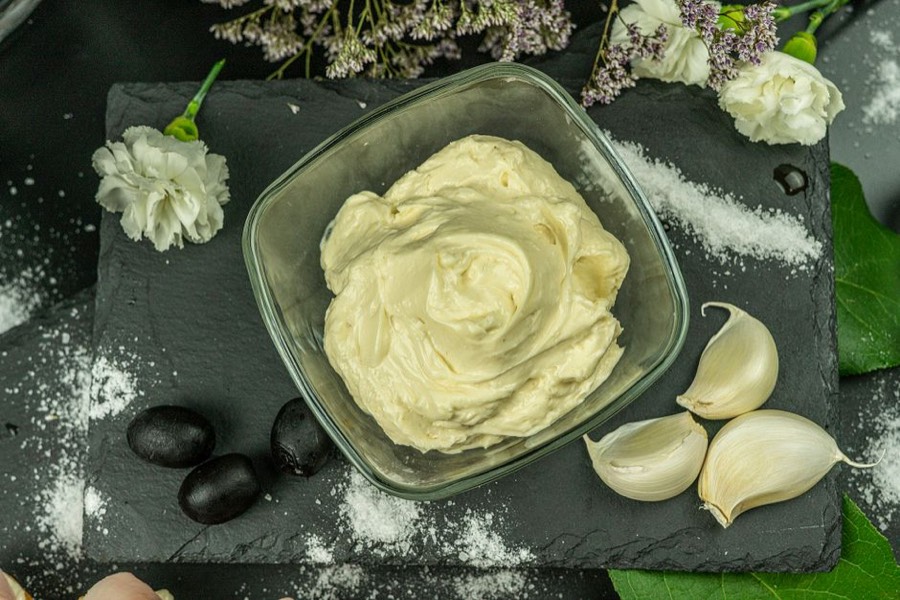
Mayo
Why mayo is inflammatory
Mayo is inflammatory. It is refined oil whisked into egg yolk with vinegar until it thickens, and the oil makes up about three quarters of the jar. In most brands that oil is soybean or rapeseed, so one tablespoon carries around 100 calories, nearly all of them fat.
The omega-6 fat is not what makes mayo inflammatory. Mayo is rich in linoleic acid, the main omega-6 fat in the diet, and trials that raised linoleic acid intake found no change in inflammation markers in the blood. Mayo scores 7 out of 10 on our inflammation scale for what it is as a whole: a manufactured condiment that adds a lot of calories, no fibre and none of the plant compounds that put olive oil at 1. Diets in which ultra-processed foods make up the largest share of the calories are linked to higher inflammation markers, and supermarket mayo belongs to that group.
Read the ingredients rather than the front of the jar. Plain mayo is oil, egg, vinegar and salt, while most supermarket versions add sugar and a preservative. Jars sold as olive oil mayo usually use rapeseed for most of the volume, with the olive oil far down the list. Light versions take the oil out and put water, starch and sugar in.
If you eat it often, make it at home: one egg yolk, a teaspoon of mustard and 150 ml of olive or avocado oil poured in slowly while you whisk. It contains raw egg, so keep it in the fridge and use it within three days.

Mayo on the AIP diet
Mayo is not allowed during the elimination phase of the Autoimmune Protocol, and two of its four ingredients are why: eggs come out, and so do seed oils such as soybean and rapeseed. Versions made with avocado or olive oil fix the oil but not the yolk, which is usually one of the first foods people add back. Until then, mashed avocado covers the same job.
Benefits
- Plain mayo is four ingredients: oil, egg, vinegar and salt
- The oil carries vitamin E, which protects fats in the body from oxidising
- Made at home with olive or avocado oil, the same recipe scores far lower
- A spoonful makes plain vegetables and dry sandwiches easier to eat
Watch out for
- Around 100 calories a tablespoon, almost all of it refined oil
- No fibre and none of the plant compounds that make olive oil useful
- Light versions replace the oil with water, starch and added sugar
- Easy to eat by the spoonful without noticing, on sandwiches, chips and salads
Frequently asked
Is mayo inflammatory?
Yes, though not for the omega-6 fat it usually gets blamed for. Trials that raised omega-6 intake found no change in inflammation markers. Mayo sits high on our scale for what the whole product is: around 100 calories of refined oil a tablespoon, with no fibre and nothing else of value, and sugar and preservatives in most jars.
Is olive oil mayo healthier?
A little, if it really is made with olive oil. Most jars sold that way use rapeseed for the bulk of the volume and add a small amount of olive oil, which the order of the ingredients will show you. Mayo made at home with olive oil is a different product and a much better one.
Is light mayo better than regular?
Not necessarily. Taking the oil out leaves water, starch and sugar in its place, so you save calories and gain added sugar. If you want less mayo, use less of the full-fat version rather than more of the light one.
What can I use instead of mayo?
Mashed avocado does the same job in a sandwich or a tuna salad, and brings fibre and monounsaturated fat with it. Plain yogurt with lemon and mustard works for coleslaw and potato salad, and hummus works as a spread.