Barley vs Quinoa: Which Is Less Inflammatory?
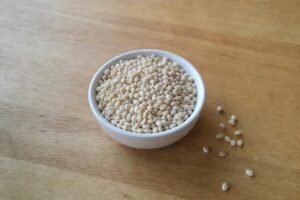
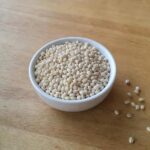
Barley
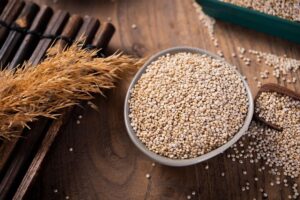
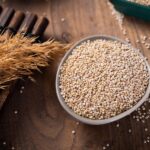
Quinoa
Quinoa is less inflammatory than barley, but only just: both are anti-inflammatory, one point apart on the inflammation scale. Both end up in the same spot on a plate, the chewy scoop next to a piece of fish or stirred through a salad.
Barley is unusual among grains. Polishing the bran off to make pearl barley still leaves most of its beta-glucan behind, so even the quick-cooking kind keeps the fibre that matters. That fibre sets into a gel and slows the starch down, which keeps blood sugar from climbing sharply, and sharp rises in blood sugar feed inflammation. Barley sits a point above quinoa because it carries gluten, and gluten damages the gut lining in coeliac disease.
Quinoa has no gluten in the seed itself, and not because anything was done to it in a factory. It is a seed rather than a cereal, and because you eat the whole seed, the magnesium and the quercetin in its coat come with it. Quercetin is a plant pigment that lowers the signals the body uses to start inflammation. If gluten is a problem in your house, quinoa does the barley job in a soup and brings none with it: cook it into the next pot you make.
Side by side
| Barley | Quinoa | |
|---|---|---|
| Inflammation Score | Low · 3/10 | Low · 2/10 |
| Category | Grains | Grains |
| Serving size | 1/4 cup dry pearl barley (50 g) | 1 cup cooked (185 g) |
| Key nutrients | Beta-glucan, Tocotrienols (vitamin E), Manganese, Selenium | Complete protein (lysine), Magnesium, Quercetin, Insoluble fibre |
| How often | A few times a week, a quarter cup dry in soup or as a side | Most days, a cup cooked, in place of a refined grain |
On the AIP diet
Barley
Barley is not allowed on the AIP diet. The elimination phase takes out every grain, and barley carries gluten on top of that. The combination puts it late in the queue for reintroduction, and many people who follow AIP leave gluten grains out for good. For a similar chew in a soup or a salad, cauliflower rice or diced cooked squash stands in well.
Quinoa
Quinoa is not allowed on the Autoimmune Protocol. Being a seed rather than a cereal sounds like it should get through a protocol built around grains, and it does not: AIP takes out seeds as well, and the saponins in quinoa's coat are exactly the plant defence the elimination phase clears out. The wait is shorter than for bread, because seeds come back early. Meanwhile cauliflower rice is the usual stand-in.
What each one brings
Barley
- Beta-glucan feeds the bacteria in your large intestine, which helps keep the gut lining sound
- The same fibre lowers cholesterol, an effect measured again and again in feeding trials
- It thickens in the gut and slows the starch down, so blood sugar rises gently
- Unusually for a grain, polishing off the bran still leaves most of the beta-glucan in place
Quinoa
- A seed rather than a cereal, so it brings protein and minerals, not mostly starch
- Carries a full set of the amino acids the body cannot build, which few plants manage
- Gluten free in the seed itself, not because of anything done to it afterwards
- You eat the whole seed, so the magnesium, fibre and antioxidants in the coat stay
Watch out for
Barley
- Contains gluten, so it is off limits with coeliac disease or a gluten sensitivity
- Malt syrup and malt extract are made from barley, and they arrive as sugar without the fibre
- Pearl barley has had its bran polished off, so it carries less fibre than hulled barley
- Barley is starchy, so the portion matters more here than with a vegetable
Quinoa
- The coat carries bitter saponins, so an unrinsed bag tastes faintly of soap
- Still a starchy side, and it is easy to serve a bowlful as though it were salad
- About 220 calories in a cooked cup, more than the same volume of vegetables
- Carries phytic acid, which holds on to part of the iron and zinc in the meal
Get the inflammation score of any meal
Just snap a photo or describe your food to get its inflammation score and uncover hidden patterns that may be affecting your well-being.