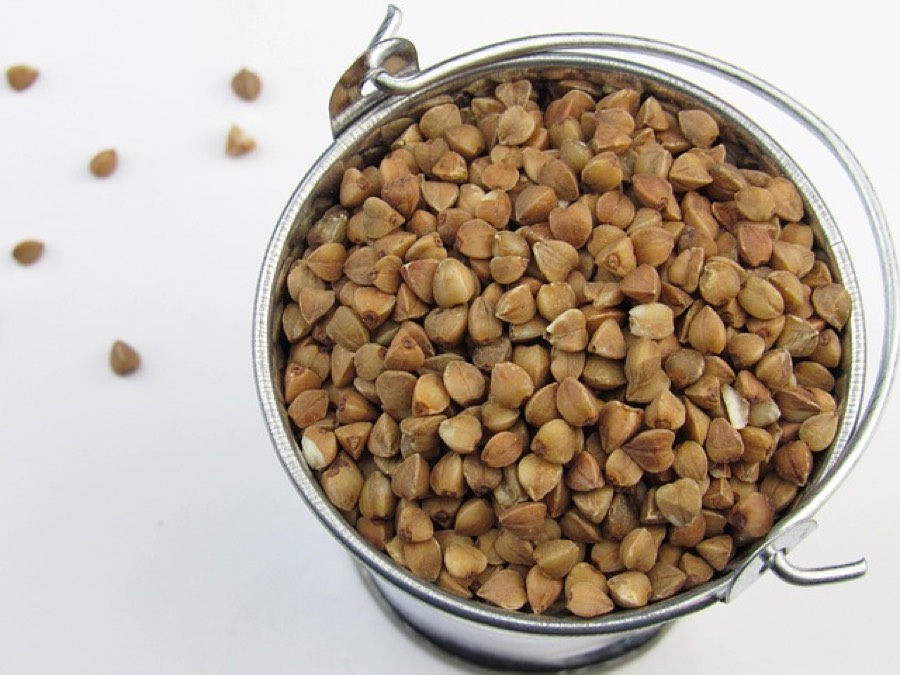
Raw buckwheat groats filling a small metal pail on a white surface

Buckwheat

Anti-InflammatoryGrains
Low
Inflammation Score
2/10
Anti-inflammatoryInflammatory
Serving size
1 cup cooked groats (168 g)
Key nutrients
RutinMagnesiumLysineResistant starch
How often
Two or three times a week, a cup cooked, in place of white rice

Why buckwheat is anti-inflammatory

Buckwheat is anti-inflammatory because of rutin, a plant flavonoid it carries far more of than any cereal. Despite the name it is not a kind of wheat and holds no gluten. You eat the whole seed, so the outer layer holding the rutin is never milled away.

Rutin has mostly been studied on its own, at doses a bowl of buckwheat cannot reach, so those findings do not transfer to the food. In people with type 2 diabetes, swapping part of the daily staple for buckwheat brought insulin and cholesterol down over four weeks, though the trial used the bitter tartary variety rather than the sort most shops sell. Pooling the human trials leaves a softer picture, with changes too small to be sure of.

Chilling cooked buckwheat turns part of its starch into a form the gut cannot break down, so less of the meal reaches the blood as sugar. Steadier blood sugar keeps inflammation lower over years.

Most buckwheat on a shelf is not the whole seed. Soba noodles are the usual case: unless the packet says they are all buckwheat, most of what is inside is wheat flour. Dark buckwheat flour keeps more of the seed than pale flour, and most of the rutin with it.

Groats come raw or roasted, and the roasted kind is sold as kasha. Both cook in about ten minutes in twice their volume of water. Buckwheat allergy is uncommon but can be serious, and a past reaction rules it out.

Buckwheat on the AIP diet

Buckwheat is not allowed on the Autoimmune Protocol, though not for the reason the name suggests. It has no gluten and no link to wheat. It is out because the elimination phase clears seeds as well as grains, and buckwheat is a seed. Reintroduction usually puts it with the other seeds, which come back before bread does. Cooked squash does the same job on the plate meanwhile.

Benefits

  • Carries rutin, a flavonoid almost no other everyday food supplies in useful amounts
  • Eaten as whole groats, so the outer layer holding the rutin stays in
  • No gluten in the seed itself, unlike every true cereal
  • Its protein is high in lysine, the amino acid cereals are short of

Watch out for

  • Soba noodles are usually mostly wheat flour, gluten included, despite the name
  • Buckwheat allergy is uncommon but can be severe, unlike most grain reactions
  • Pale buckwheat flour has lost the layer where most of the rutin sits
  • Still starchy, so a heaped bowl undoes much of the point

Get the inflammation score of any meal

Just snap a photo or describe your food to get its inflammation score and uncover hidden patterns that may be affecting your well-being.

Download on the App StoreGet it on Google Play
InflammaScan app

Frequently asked

Is buckwheat anti-inflammatory?

Yes. The compound doing most of the work is rutin, a plant flavonoid buckwheat carries far more of than wheat, rice or oats. Because you eat the whole seed rather than a milled version of it, the outer layer where the rutin sits stays on your plate. It is a good everyday swap for a refined grain rather than a food that changes anything on its own.

Is buckwheat gluten free?

The seed is. Buckwheat is not related to wheat and holds no gluten of its own. Two things get in the way. Soba noodles are usually part wheat flour unless the packet says otherwise, and buckwheat is often milled on equipment that also runs wheat, so with coeliac disease look for the certified label.

Is buckwheat a grain?

Not really. It is a seed that happens to cook and taste like a grain, which is why it sits on the same shelf. That matters for what is inside it: a seed stores protein, minerals and plant compounds where a cereal grain mostly stores starch.

Is buckwheat allowed on the AIP diet?

No, not during the elimination phase. Being a seed instead of a cereal does not get it through, because AIP removes seeds as well as grains. It tends to come back with the other seeds, which is earlier in the reintroduction than bread or pasta.

The easiest way to follow an anti-inflammatory diet.

Identify inflammatory foods in seconds, log your symptoms and discover what’s inflaming you. Includes hundreds of recipes.

Download on the App StoreGet it on Google Play
InflammaScan app