Potato
Where potato sits on the inflammation scale
Potato is not an anti-inflammatory food, and on the inflammation scale it sits in the middle, at 5 out of 10. It is the tuber of a nightshade plant, like the tomato and the pepper. Most of it is starch, and cooking makes that starch quick to digest, so a boiled potato lifts blood sugar about as fast as white bread. Diets built on foods that do that are linked to higher inflammation markers in a blood test.
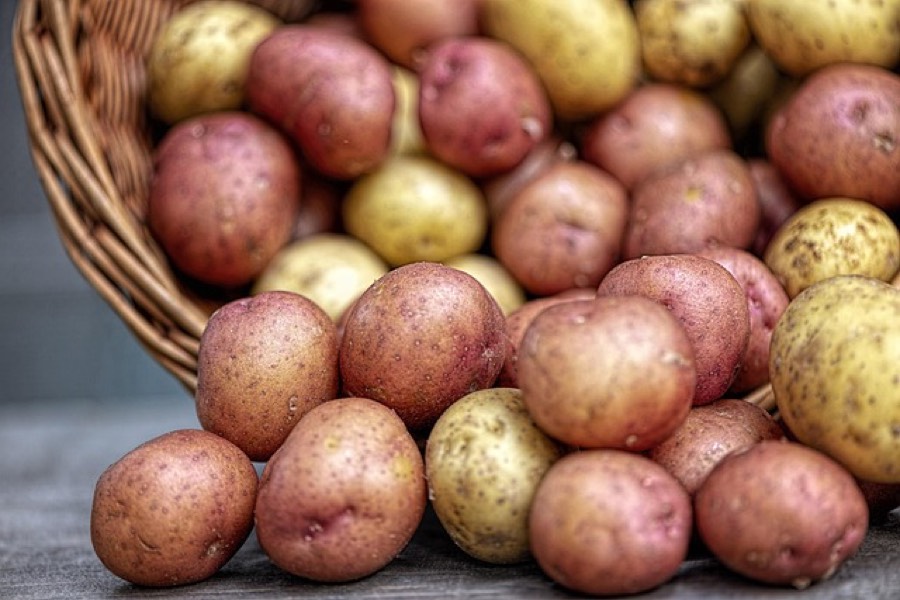
Yellow and purple potatoes carry pigments that work as antioxidants, and white ones hold very little of them. In one study, men who ate coloured potatoes every day for six weeks showed lower signs of inflammation in their blood than men eating white ones. The study compared potato with potato, so it says which to pick, not whether potatoes help.
The plant also defends itself with glycoalkaloids, a group of natural pesticides. In the laboratory these compounds damage the lining of the intestine, though that has not been shown in people eating normal amounts. That is one reason people with an irritable bowel are often told to test nightshades first.
Crisps, chips and hash browns are potato cooked in refined oil and salted, and the fat and salt matter more for inflammation than the potato itself. Green patches and sprouts mean more glycoalkaloids, and a knife takes them off.
Boil or steam them with the skin on, because the fibre just under it slows the starch down. Cook them a day ahead and eat them cold, and part of that starch reaches your blood more slowly.

Potato on the AIP diet
Potato is not allowed on the Autoimmune Protocol. It is a nightshade, and the elimination phase takes out every nightshade because of the glycoalkaloids in them. Sweet potato is a different plant and stays, which is why it becomes the main starchy food on an AIP plate. Nightshades are usually reintroduced late, and green or sprouting potatoes stay out even then.
Benefits
- A whole vegetable, and most of the fibre sits in the skin you can keep on
- One medium potato carries more potassium than a banana
- Yellow and purple flesh contains pigments that work against cell damage
- Cooked a day ahead and eaten cold, part of its starch feeds your gut bacteria
Watch out for
- A plain boiled potato lifts blood sugar about as fast as white bread
- Most potatoes are eaten fried, which adds refined oil and salt
- It is a nightshade, so it comes out during the AIP elimination phase
- Green patches and sprouts hold more glycoalkaloids and are worth cutting away
Frequently asked
Is potato inflammatory?
Not on its own, but it is not an anti-inflammatory food either. A plain potato is a whole vegetable with potassium and fibre in it, and it also raises blood sugar quickly, which is the part that works against you when it happens at every meal. How you cook it decides most of the answer: boiled and cooled is a different food from deep fried.
Are potatoes bad for arthritis?
For most people, no. Potatoes are nightshades, and in the laboratory the glycoalkaloids in them damage the lining of the intestine, which is where the reputation comes from. Whether that affects joint pain in people has not been shown. The way to find out is to cut them out for three weeks and then bring them back.
Is sweet potato better than potato?
For blood sugar and antioxidants, usually yes, and the two are not related as plants. A sweet potato carries beta-carotene, which a white one has none of, and it is not a nightshade. How you cook either of them still changes more than the choice between them.
Can I eat potatoes on an anti-inflammatory diet?
Yes, if you cook them yourself. Boil or steam them with the skin on, pick yellow or purple flesh where you find it, and keep them out of the fryer. The exception is the Autoimmune Protocol, which removes every nightshade during the elimination phase.