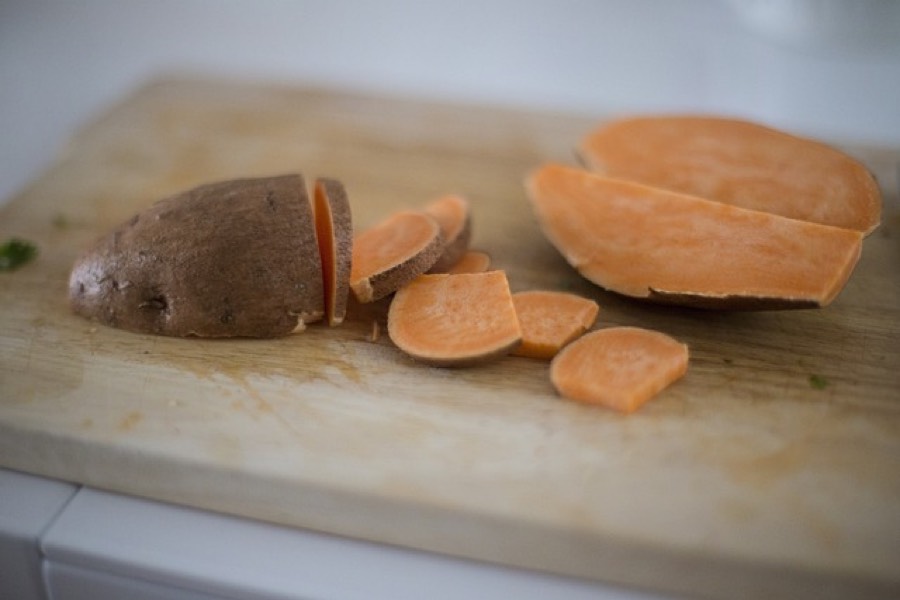
Sweet Potato
Why sweet potato is anti-inflammatory
Sweet potato is anti-inflammatory, and the place to start is that it is not a potato. The two plants are not related. A white potato is a nightshade, from the same family as tomatoes and peppers. A sweet potato is not, which is why people who cut nightshades out keep eating it. The orange flesh means beta-carotene, an antioxidant that slows the wear and tear inside cells that keeps inflammation ticking along. Your body turns part of it into vitamin A as well. Sweet potato scores 2 out of 10 on the inflammation scale.
It is still a starchy food, and how you cook it decides how fast that starch reaches you. A slow bake lets an enzyme inside the root turn part of the starch into sugar. That is why a baked sweet potato tastes almost like dessert, and why it lifts blood sugar about as hard as white bread. Boil or steam the same root and that barely happens, so the rise is roughly half as steep. Nobody expects the pan to matter more than the vegetable, but with this one it does.
The rest is about what gets added. Candied sweet potato is brown sugar with a vegetable underneath, and the fries go into a deep fryer like any other chip. Keep the skin on, because a good share of the fibre sits right under it, and that fibre is the brake on the starch.
Sweet Potato on the AIP diet
Sweet potato is allowed on the Autoimmune Protocol from the first day of the elimination phase. The name causes the doubt: a white potato is a nightshade and comes out, while a sweet potato belongs to a different plant family and stays. It also earns its place, because with grains, beans and white potatoes gone it is the main starchy food left on the list.
Benefits
- Orange flesh means beta-carotene, an antioxidant your body also turns into vitamin A
- Not a nightshade, so it stays on the plate when tomatoes and peppers come out
- The starch arrives with fibre, and a good share of that fibre sits under the skin
- Cheap, keeps for weeks in a dark cupboard and needs no skill to cook
Watch out for
- A slow bake turns part of the starch into sugar and doubles the blood sugar rise
- Still a starchy food, so a medium one is a portion
- Candied sweet potato is brown sugar with a vegetable underneath
- Peeling throws away a good share of the fibre
Frequently asked
Is sweet potato inflammatory?
No, sweet potato is anti-inflammatory. The orange flesh carries beta-carotene, an antioxidant, and the starch comes with enough fibre to slow a meal down instead of spiking it.
Is sweet potato better than white potato?
Usually, and the two are not even related as plants. A sweet potato brings beta-carotene, which a white one has none of, and it holds on to more fibre. How you cook either of them still changes more than which one you pick.
Is baked or boiled sweet potato better?
Boiled or steamed, if you care about blood sugar. A slow bake lets an enzyme turn part of the starch into sugar, which is exactly why baked sweet potato tastes sweeter, and it roughly doubles the rise. Baked is still a good food, it just goes down faster.
Can you eat sweet potato on the AIP diet?
Yes, in every phase including elimination. It is a root vegetable and not a nightshade, so it gets through the cut that takes out white potatoes, and it becomes the main starchy food on the plate.
Anti-inflammatory recipes with Sweet Potato
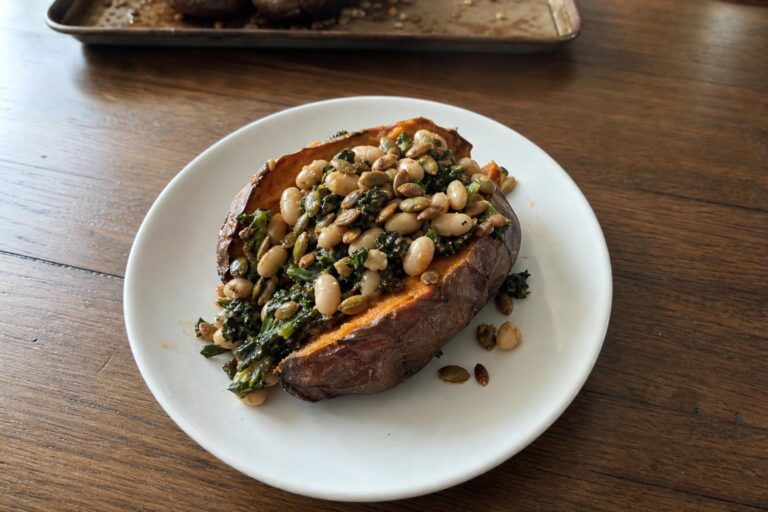
White Bean and Kale Stuffed Sweet Potatoes Recipe
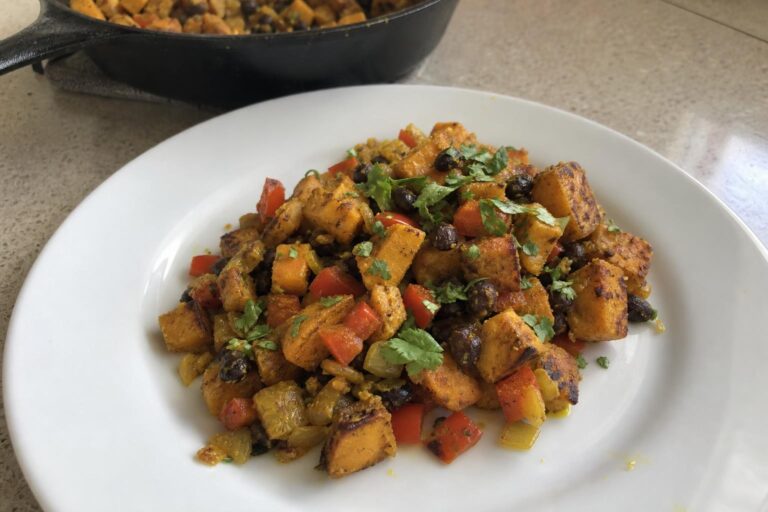
Sweet Potato and Black Bean Breakfast Hash Recipe
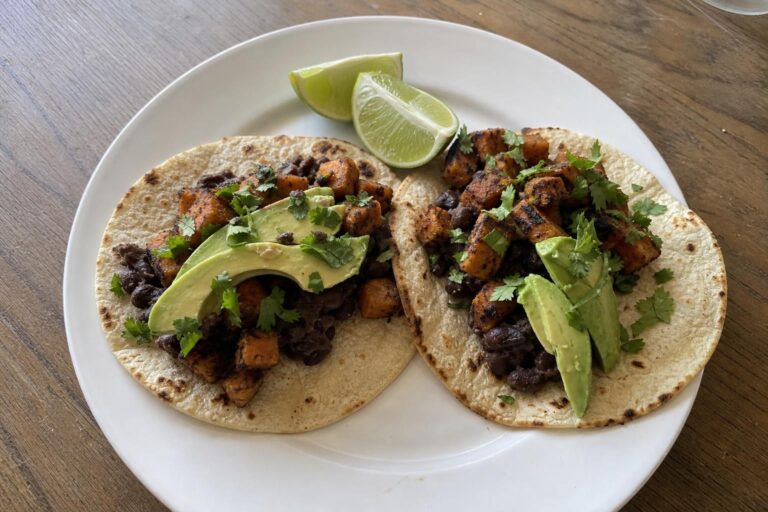
Black Bean and Sweet Potato Tacos Recipe
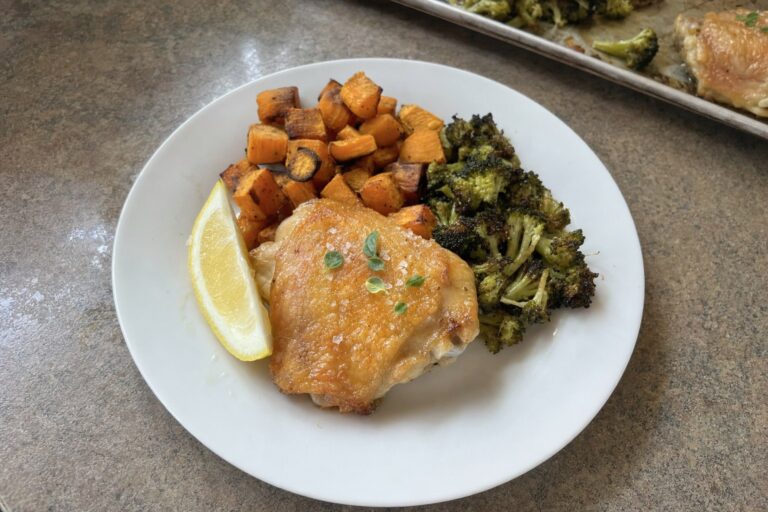
Sheet-Pan Chicken with Broccoli, Sweet Potato and Oregano Recipe
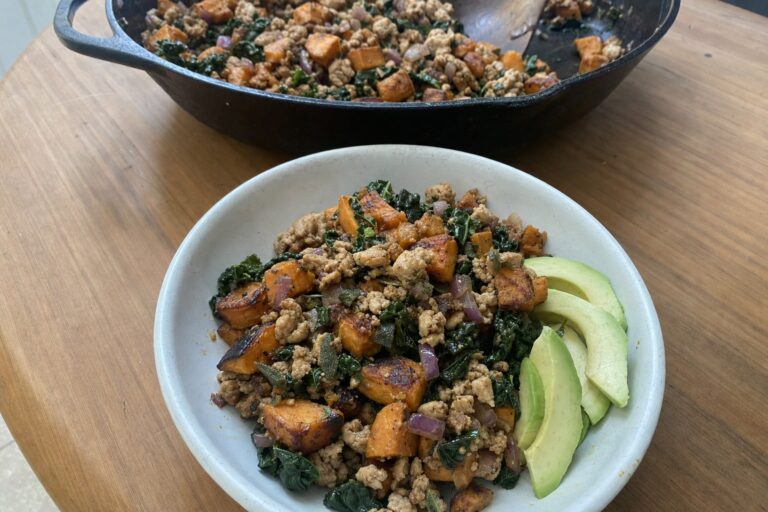
Sweet Potato, Turkey and Sage Breakfast Hash Recipe