| Prep Time | Cook Time | Total Time | Servings |
|---|---|---|---|
| 20 minutes | 3 hours | 3 hours 20 minutes | 6 |
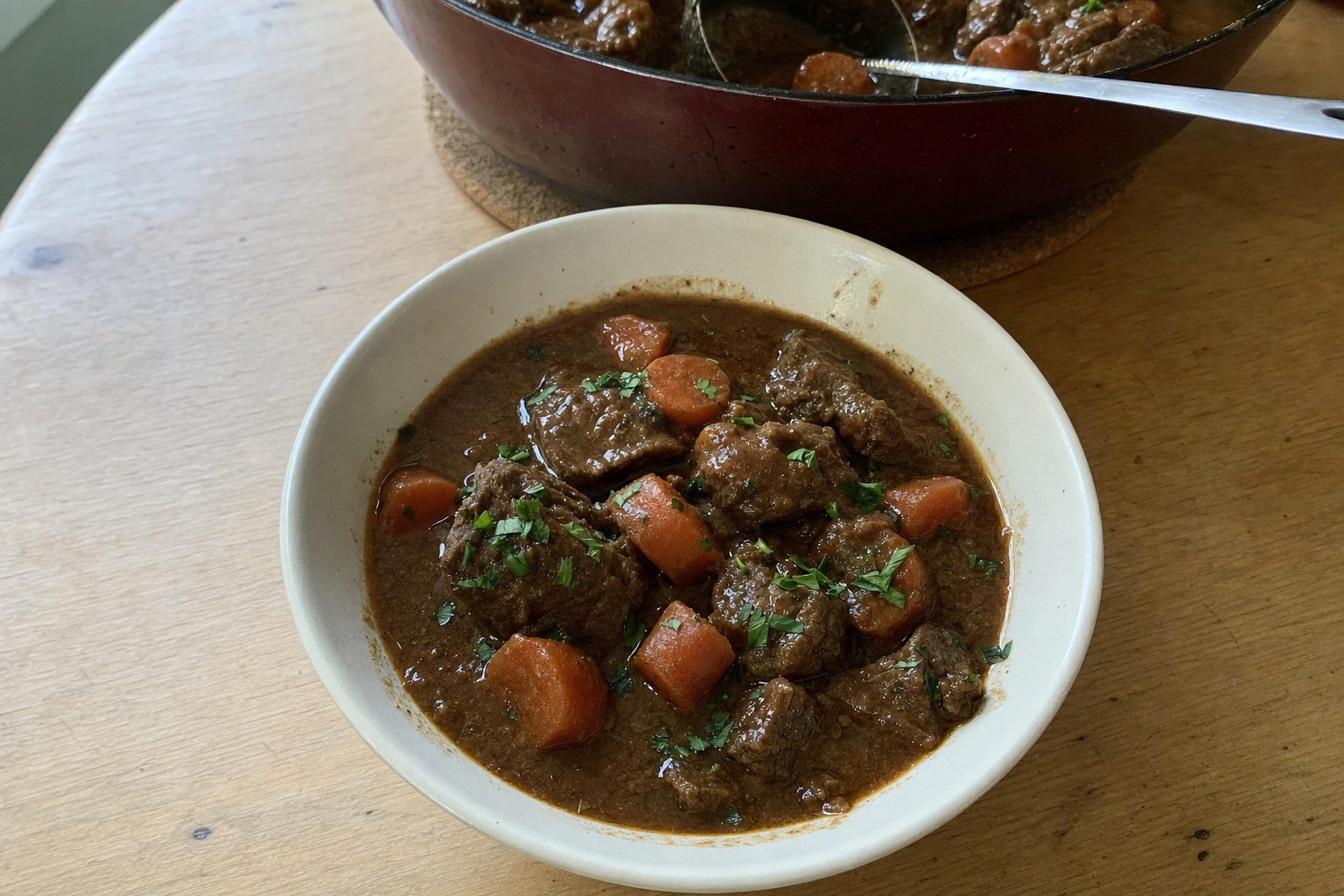
What Is Slow-Cooked Beef and Carrot Stew with Rosemary?
Slow braising is the oldest trick for turning a cheap, tough cut into something tender, since hours of low heat break the connective tissue down into gelatin and thicken the broth on the way. This version leans on carrot and onion for the sweetness that usually comes from a splash of wine, and thickens with arrowroot rather than flour, so the sauce still coats a spoon. It also delivers collagen-rich broth, beta-carotene and iron in one pot, which is why stew is what people cook when someone needs building up.
What Makes This Recipe Anti-Inflammatory?
The long simmer pulls collagen and glycine out of the beef and into the broth, and glycine is the compound behind bone broth’s reputation in gut-repair protocols. Carrots bring beta-carotene, and rosemary carries rosmarinic and carnosic acid, both of which survive slow cooking better than the volatile compounds in delicate herbs.
Grass-fed beef also carries more omega-3 and less omega-6 than grain-fed, which matters in a dish where the fat renders into the sauce and you eat all of it.
Every ingredient is compliant with the AIP elimination phase. There are no grains, legumes, nightshades, dairy, eggs, nuts, seeds or seed-based spices, and the stew is thickened with arrowroot instead of the flour a classic braise would use.
Ingredients
- 2 pounds beef chuck, cut into 2-inch chunks
- 1 pound carrots, cut into thick rounds
- 1 large onion, cut into wedges
- 4 garlic cloves, crushed
- 4 cups chicken or beef bone broth, homemade
- 3 sprigs fresh rosemary
- 3 sprigs fresh thyme
- 2 bay leaves
- 2 tablespoons extra virgin olive oil
- 2 tablespoons arrowroot starch
- 1 teaspoon sea salt
- 2 tablespoons fresh parsley, chopped, for serving
Directions
Step 1
Pat the beef chunks dry and season them with half the salt. Heat the olive oil in a heavy pot over medium-high heat until it shimmers.
Step 2
Brown the beef in two or three batches, giving each piece room and about 3 minutes a side. Crowding the pot drops the temperature and the meat steams grey instead of browning, which is where most of the finished flavour comes from.
Step 3
Set the beef aside and cook the onion wedges and garlic in the same pot for 3 minutes, scraping the browned bits off the bottom as they soften.
Step 4
Return the beef, pour in the broth and add the rosemary, thyme, bay leaves and remaining salt. Bring it to a bare simmer, then cover and cook on the lowest heat for 2 hours.
Step 5
Add the carrots and cook uncovered for another 45 to 60 minutes, until the beef pulls apart under a fork and the carrots are tender but still hold their shape.
Step 6
Whisk the arrowroot with 3 tablespoons of cold water, stir it into the simmering stew and cook for 2 more minutes until the sauce thickens. Fish out the herb stems and bay leaves, scatter the parsley and serve.
Nutrition Facts (per serving)
| Calories | 375 |
| Fat | 23g |
| Carbs | 11g |
| Protein | 29g |
InflammaScore
1 Good! Very low inflammation potential
Q&A
Q1: Is this recipe suitable for the AIP elimination phase?
A1: Yes. Beef, carrots, onion, garlic, homemade bone broth, rosemary, thyme, bay leaf, olive oil, arrowroot and parsley are all permitted during elimination. There is no black pepper in the ingredient list, and the stew skips the flour, wine and shop-bought stock cubes that a traditional braise relies on.
Q2: Why arrowroot instead of flour?
A2: Arrowroot comes from a root rather than a grain, so it thickens without wheat. Whisk it with cold water first, since powder dropped into hot liquid makes lumps that never dissolve, and add it at the very end because prolonged boiling breaks it down again.
Q3: Can I make this in a slow cooker?
A3: Brown the beef in a skillet first, then transfer everything except the carrots and arrowroot to the slow cooker for 7 hours on low. Add the carrots for the final hour so they do not collapse, and stir the slurry in with the lid off.
Q4: Which cut of beef works best?
A4: Chuck is the classic choice because its connective tissue melts into gelatin over a long cook. Brisket, shin and oxtail work the same way, while lean cuts like sirloin turn dry and stringy no matter how gently you treat them.
Q5: How well does it keep?
A5: It keeps for four days in the fridge and freezes for three months, and the flavour improves overnight as the broth reabsorbs into the meat. Reheat gently rather than at a hard boil, which toughens beef that has already been cooked once.