| Prep Time | 20 minutes |
|---|---|
| Cook Time | 1 hour 10 minutes |
| Total Time | 1 hour 30 minutes |
| Servings | 4 |
What Is Garlic Ginger Vegetable Broth?
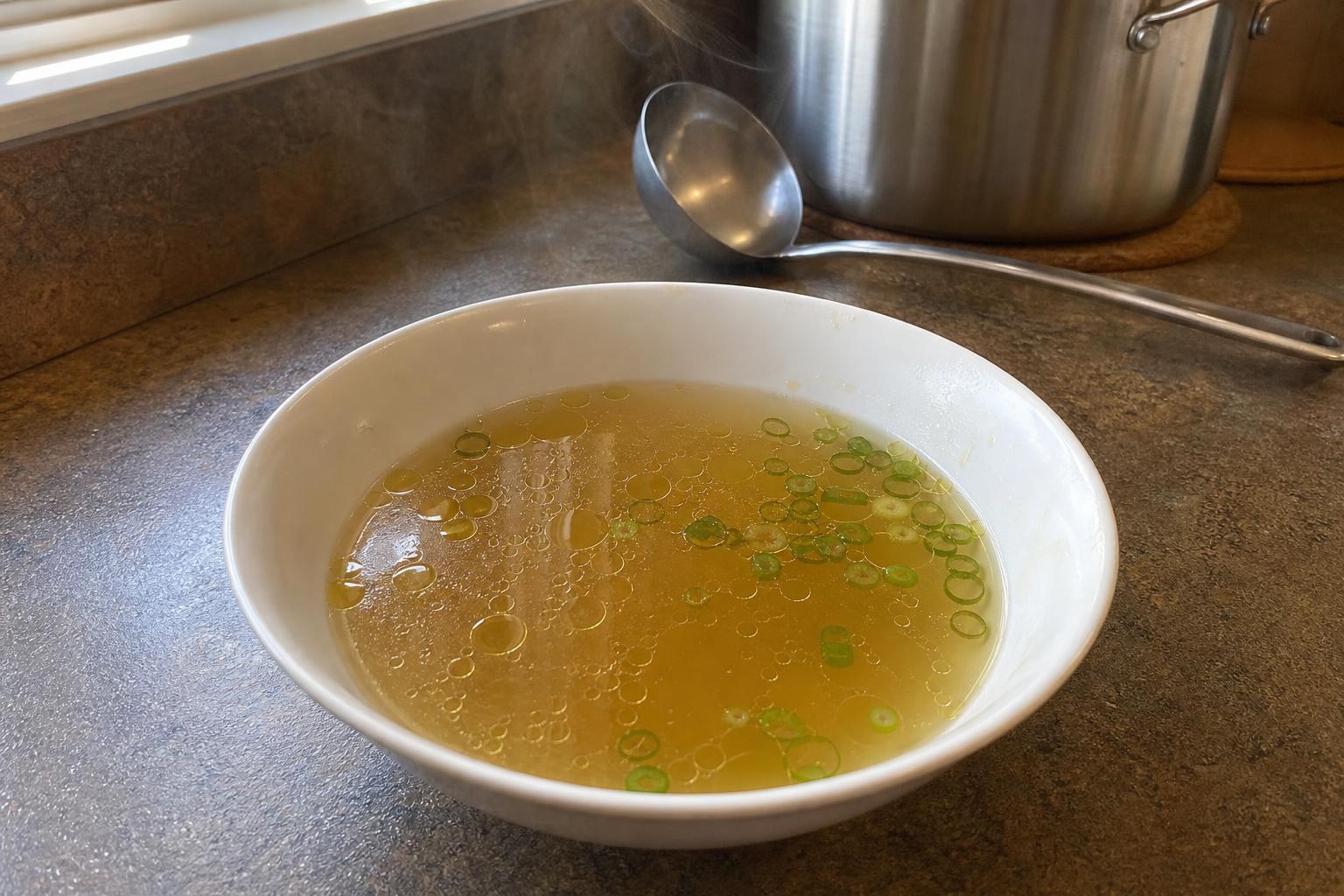
Garlic Ginger Vegetable Broth is made from scratch: a whole head of garlic, fresh ginger in thin coins, vegetables browned in olive oil before the water goes in and strained out, the liquid finished with coconut aminos and apple cider vinegar. The golden amber broth is spicy from ginger and sweet from cooked garlic, served hot in a mug or used as a base for soups and grains instead of boxed broth.
What Makes This Recipe Anti-Inflammatory?
Garlic provides allicin, which forms when the cloves are crushed, along with S-allyl cysteine. Fresh ginger adds gingerols and shogaols, and turmeric adds curcumin. Curcumin dissolves in fat, so the recipe heats it in olive oil for 30 seconds before any water goes in, carrying it through the whole pot.
Extra-virgin olive oil brings oleocanthal. Onion releases quercetin, a water-soluble flavonol that moves easily into the broth. Celery contributes apigenin and luteolin, and cremini mushrooms provide ergothioneine and beta-glucans. There are no bouillon cubes, yeast extracts, powdered enhancers, refined seed oils or added sugar, and the added salt is one teaspoon divided across four servings.
Ingredients
- 3 tablespoons extra-virgin olive oil
- 1 large yellow onion, quartered
- 2 medium carrots, cut into 1-inch pieces
- 3 celery stalks, cut into 1-inch pieces
- 8 ounces cremini mushrooms, halved
- 1 whole head garlic (about 12 cloves), peeled and smashed
- 1 piece fresh ginger (about 3 inches), sliced into thin coins
- 1 teaspoon ground turmeric
- 10 cups water
- 2 bay leaves
- 1 teaspoon sea salt, plus more to taste
- 2 tablespoons coconut aminos
- 1 tablespoon apple cider vinegar
- 2 green onions, thinly sliced, for serving
Directions
Step 1
Heat the 3 tablespoons of extra-virgin olive oil in a large stockpot over medium heat. Add the onion quarters, carrots, celery and the mushrooms, cut side down. Cook for 10 minutes, stirring occasionally, until the onion edges turn golden and the mushroom liquid has evaporated. The pot should sizzle again when you stir.
Step 2
Add the smashed garlic cloves and the ginger coins. Cook for 2 minutes, stirring, until they smell fragrant. Watch the garlic closely: once it takes on color, the whole pot turns bitter, and nothing later in the recipe can fix that.
Step 3
Sprinkle in the teaspoon of ground turmeric and stir for 30 seconds. The oil on the bottom of the pot should turn orange. Curcumin dissolves in fat, so this brief rest in the oil spreads it through the finished broth better than water would.
Step 4
Pour in the 10 cups of water, the 2 bay leaves and the teaspoon of sea salt. Bring to a boil, then lower the heat until the surface barely moves and an occasional bubble rises. Cover halfway and cook for 55 minutes, until the liquid reduces to about 6 cups and turns golden amber.
Step 5
Remove the pot from the heat and take out the bay leaves. Strain the broth through a fine-mesh strainer set over a large bowl, pressing the vegetables with the back of a ladle, then discard them. Stir in the 2 tablespoons of coconut aminos and the tablespoon of apple cider vinegar and adjust the salt.
Step 6
Ladle the hot broth into four bowls or mugs and scatter the 2 sliced green onions on top. The olive oil from the base rises and settles as loose droplets on the surface. Stir before each ladleful so the oil and the salt distribute evenly across all four bowls.
Nutrition Facts (per serving)
| Calories | 90 |
|---|---|
| Fat | 7g |
| Carbs | 5g |
| Protein | 1g |
InflammaScore
1 Good! Very low inflammation potential
Q&A
Q1: Is this broth a drink on its own, or do I need to add something to it?
A1: It makes 6 cups, about 1 1/2 cups per serving, drunk hot from a mug. It also works as a soup base, for cooking rice or quinoa, or for thinning a sauce.
Q2: How long does the broth keep, and can I freeze it?
A2: It lasts 5 days in a sealed jar in the refrigerator and 3 months in the freezer. Freeze it in 1-cup portions and leave a finger of space, since liquid expands when frozen.
Q3: Why did my broth come out cloudy or bitter?
A3: Cloudiness comes from boiling in Step 4: a rolling boil breaks the vegetables apart and clouds the liquid. Bitterness comes from letting the garlic take on color in Step 2.
Q4: Can I use other vegetables or the odds and ends from the crisper drawer?
A4: Yes to celery leaves, carrot tops and mushroom stems. Leave out cabbage, broccoli and cauliflower, which release sulfur compounds over 55 minutes of cooking, beets, which turn the broth red, and potatoes, which leave it cloudy and thick.
Q5: Can I skip the straining and eat the vegetables?
A5: You can, but then it is a soup, because the vegetables have given their flavor to the liquid. To eat with a spoon, cook freshly cut vegetables in the strained broth for 8 minutes.
One unhurried simmer leaves 6 cups of strained broth in the refrigerator, enough to replace boxed broth for the whole week.