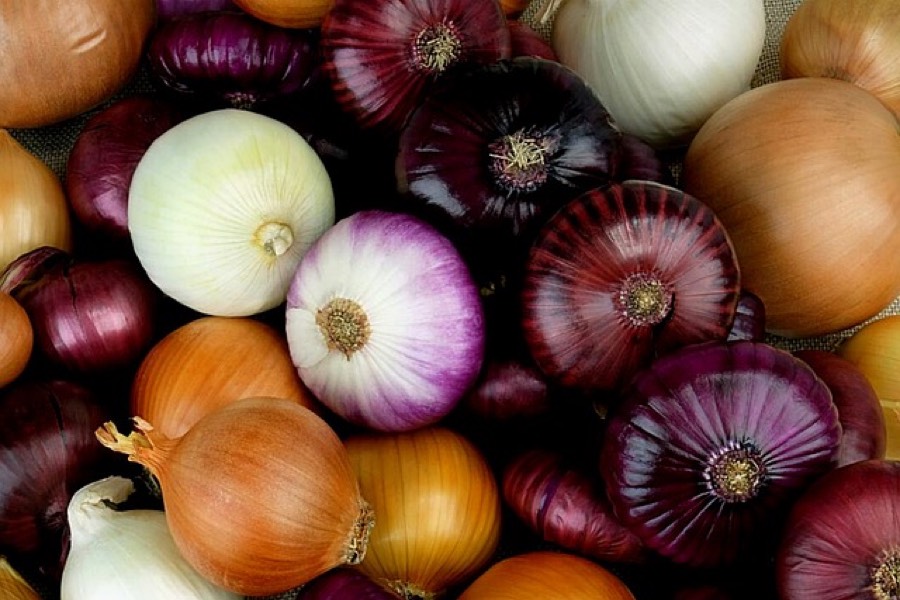
Yellow, white and red onions piled together, whole and unpeeled

Onion

Anti-InflammatoryVegetables
Low
Inflammation Score
2/10
Anti-inflammatoryInflammatory
Serving size
1 medium onion (110 g)
Key nutrients
QuercetinSulfur compoundsInulin (prebiotic fibre)Vitamin C
How often
Most days, in whatever you are already cooking

Why onion is anti-inflammatory

Onion is anti-inflammatory, and the compound behind that is quercetin, a plant pigment that onions contain in larger amounts than most foods.

Quercetin has been studied mainly as a supplement. In those studies, adults who took it daily saw a small drop in one of the markers of inflammation measured in blood. An onion contains far less quercetin than those supplement doses, so eating onions is a small, steady contribution rather than a treatment.

Most of the quercetin sits in the outer layers, so peel only the dry skin and the first layer. Red onions generally contain more quercetin than yellow or white ones. Onion rings, crispy fried onions, onion dip and onion soup powder contain little onion: they are mostly batter, oil, salt and flavouring.

Onion also contains sulfur compounds, the ones that sting your eyes when you chop it. Your body uses sulfur to make one of its own antioxidants, a substance that helps limit the cell damage linked to inflammation.

Onion is high in FODMAPs, a group of fermentable sugars, and it is a common trigger for people with irritable bowel syndrome. If that is not you, use it freely: it is cheap, keeps for weeks, and goes into almost anything you cook.

Onion on the AIP diet

Onion stays in through every phase of the Autoimmune Protocol, elimination included. It is a bulb, so nothing on the removal list applies: not a grain, legume, nut, seed, nightshade or dairy. It also earns its keep, because a slowly softened onion turns plain meat and vegetables into a meal. Watch your own gut, though. Onion is very high in FODMAPs and a frequent trigger for sensitive digestion.

Benefits

  • The richest everyday source of quercetin, the compound behind most of the effect
  • Brings sulfur, which your body uses to build its own antioxidant
  • Cheap, sold everywhere, and already in most of what you cook
  • Allowed on the AIP diet from the first day of elimination

Watch out for

  • Very high in FODMAPs, so a common trigger if you have IBS
  • Onion rings and crispy fried onions are mostly batter and oil
  • Onion soup powder and dip are salt and flavouring, not onion
  • Peeling three layers throws away where most of the quercetin sits

Get the inflammation score of any meal

Just snap a photo or describe your food to get its inflammation score and uncover hidden patterns that may be affecting your well-being.

Download on the App StoreGet it on Google Play
InflammaScan app

Frequently asked

Is onion inflammatory?

No, onion is anti-inflammatory. It is the richest everyday source of quercetin, a plant compound that works on the slow kind of inflammation, and it also brings the sulfur your body uses to build its own antioxidant.

Is raw onion better than cooked onion?

Raw keeps everything, including the sharp taste most people cook away. Quercetin survives a hot pan well, so a roasted or fried onion still counts. The method to avoid is a long boil, because the quercetin leaches out into the water.

Is red onion healthier than yellow onion?

For inflammation, yes. Red onions hold more quercetin than yellow ones, and white ones hold the least. The red skin also carries a pigment of its own that does similar work, and it costs the same.

Can you eat onion on the AIP diet?

Yes. Nothing on the AIP removal list applies to an onion, so it stays on the plate through elimination and every phase after. Go slowly if your digestion is touchy: onion is one of the highest-FODMAP vegetables there is.

The easiest way to follow an anti-inflammatory diet.

Identify inflammatory foods in seconds, log your symptoms and discover what’s inflaming you. Includes hundreds of recipes.

Download on the App StoreGet it on Google Play
InflammaScan app