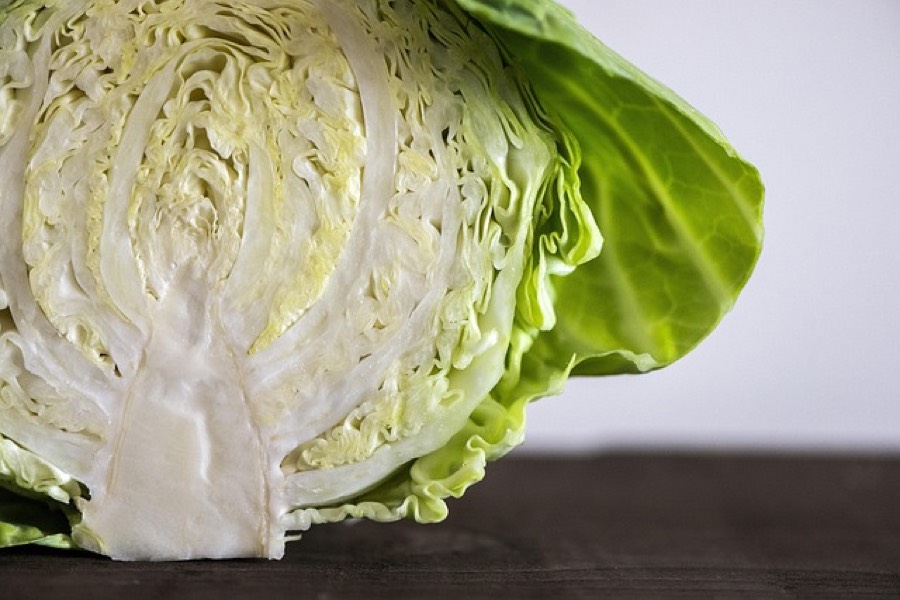
A green cabbage cut in half, showing the pale leaves packed tight in layers inside the head

Cabbage

Anti-InflammatoryVegetables
Low
Inflammation Score
2/10
Anti-inflammatoryInflammatory
Serving size
1 cup shredded (89 g)
Key nutrients
GlucosinolatesVitamin CVitamin KAnthocyanins (red cabbage)
How often
Most days, a cup shredded raw or cooked quickly

Why cabbage is anti-inflammatory

Cabbage is anti-inflammatory, and it comes from the same family as broccoli and kale. Cutting or chewing a leaf sets off a reaction that makes sulphur compounds. Women who eat the most of these vegetables carry lower levels of the inflammation markers measured in blood than those who eat the least. A cup of raw shredded cabbage also covers about half a day of vitamin C.

Cabbage is built differently from its cousins. It is not a loose leaf but a bud, layer wrapped over layer and packed so tight that light and air never reach the inside. So a head keeps for a month in the fridge while spinach turns to slime in a week. The vitamin C is still in there when you get round to using it.

Take the red one when you get a choice. Its colour comes from anthocyanins, the same antioxidant pigment that makes blueberries blue, and green cabbage has none of it. Red costs the same.

A long boil undoes most of the work, because vitamin C dissolves in water and goes down the sink with it. Shred it raw or cook it fast and hot. Most cabbage sold ready to eat is coleslaw, drowned in mayonnaise.

Sauerkraut and kimchi are cabbage too, and they bring live bacteria. Buy those cold, because the jars on the shelf have been heated or pickled in vinegar and nothing in them is alive.

Cabbage on the AIP diet

Cabbage stays on the plate through every phase of the Autoimmune Protocol, elimination included. Nothing about it is on the removal list: it is not a grain, a legume, a nut, a seed, a nightshade or dairy. Plain sauerkraut passes too, and it is one of the few live-bacteria foods left once yogurt goes. Kimchi does not, because it is made with chilli, a nightshade.

Benefits

  • Cruciferous, so chewing it makes the same sulphur compounds as broccoli
  • A cup of raw shredded leaf covers about half a day of vitamin C
  • The tight-packed head keeps for weeks, so less of it gets thrown away
  • Red cabbage adds anthocyanins, the pigment that makes blueberries blue

Watch out for

  • A long boil washes most of the vitamin C into the water
  • Most cabbage sold ready to eat is coleslaw, drowned in mayonnaise
  • Shelf-stable sauerkraut is heated or vinegar-pickled, so nothing in it is alive
  • Raw cabbage in quantity gives plenty of people gas and bloating

Get the inflammation score of any meal

Just snap a photo or describe your food to get its inflammation score and uncover hidden patterns that may be affecting your well-being.

Download on the App StoreGet it on Google Play
InflammaScan app

Frequently asked

Is cabbage inflammatory?

No, cabbage is anti-inflammatory. It is a cruciferous vegetable like broccoli, so chewing it makes the same sulphur compounds, and a cup of raw shredded leaf covers about half a day of vitamin C.

Is raw cabbage better than cooked?

Raw keeps everything, and cabbage is one of the few vegetables people happily eat that way. Cooked is fine as long as it is quick: a hot pan or a few minutes of steam. It is the long boil that costs you the vitamin C.

Is red cabbage healthier than green?

Slightly, and the colour is the reason. Red cabbage carries anthocyanins, the pigment that makes blueberries blue, and green cabbage has none. They cost about the same, so take the red one when you have the choice.

Is sauerkraut as good as fresh cabbage?

It is still cabbage, and the fermented version adds live bacteria. That only holds for the sort sold cold in the fridge section. Jars off the shelf have been heated or pickled in vinegar, which leaves nothing alive in them.

The easiest way to follow an anti-inflammatory diet.

Identify inflammatory foods in seconds, log your symptoms and discover what’s inflaming you. Includes hundreds of recipes.

Download on the App StoreGet it on Google Play
InflammaScan app