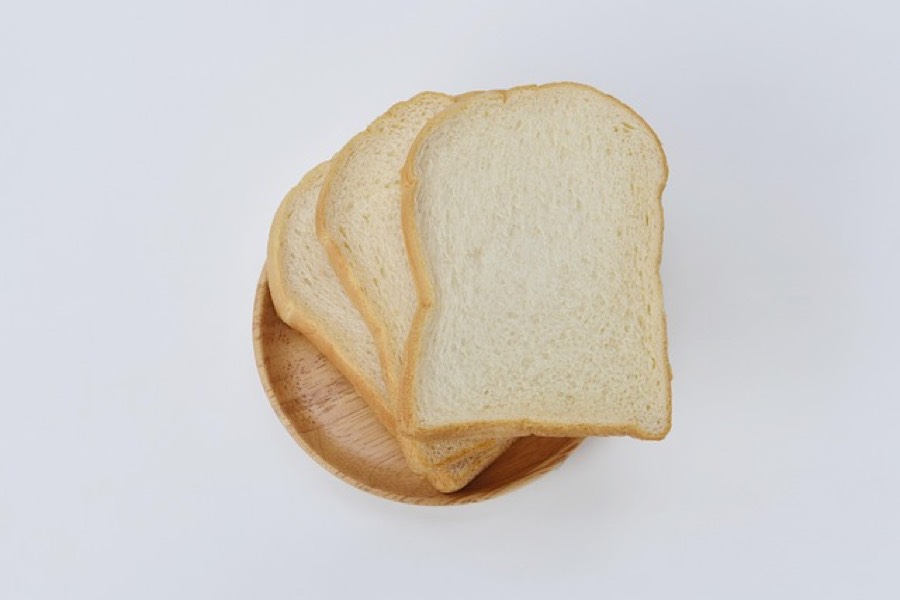
White Bread
Why white bread is inflammatory
White bread is inflammatory, and the reason is what milling removes from the flour. A wheat grain has a fibrous outer layer and an oily germ. White flour is the starchy centre left once both are stripped off, milled to a powder. The fibre in that outer layer normally slows starch down. Without it, the starch turns into sugar quickly and blood sugar climbs soon after a meal. A diet built on those quick rises is linked to low-level inflammation.
Eating the whole grain instead makes a measurable difference. Middle-aged and older adults who replaced their usual refined staples with whole grain ones ended with lower inflammation signals in their blood. The change was measured in a blood test, not in how anyone felt, and one sandwich does nothing either way. What counts is how much of the week comes from refined flour.
Many labels list enriched or fortified flour, which means iron and a few B vitamins are added back after milling. Fibre and magnesium are not, and fibre was the part holding the starch back. Further down the list, plain white bread is flour, water, salt and yeast. Soft sandwich loaves add sugar and fat so they stay soft for a week.
Storage changes how fast a slice digests. White bread that had been frozen and defrosted, toasted, or both, raised blood sugar less than the same loaf eaten fresh. Top it with eggs, fish or olive oil rather than jam, and the whole meal slows down.

White Bread on the AIP diet
White bread is not allowed during the elimination phase of the Autoimmune Protocol, which takes out every grain. Wheat is the clearest case, because gluten is one of the proteins the diet was built to remove. It is also among the last foods people test when adding things back, and many never bring it back. Cassava flatbreads and plantain crackers are the compliant way to keep something to hold a topping.
Benefits
- Low in fibre, so it is gentle on a gut that is irritated or recovering
- Enriched flour carries added iron and folic acid, which matter in pregnancy
- Freezing it, toasting it, or both lowers the blood sugar rise it causes
- Cheap, keeps for days and carries protein and vegetables well
Watch out for
- Milling takes off the bran and the germ, and the fibre goes with them
- With no fibre to slow it, the starch turns into sugar within minutes
- Several slices a day make it a large share of the salt many people eat
- Not an option in coeliac disease, and every grain is out in AIP elimination
Frequently asked
Is white bread inflammatory?
Yes, in the way it is usually eaten. Milling has taken the fibre out of the flour, so the starch turns into sugar fast and blood sugar rises soon after. A slice inside a meal with protein and vegetables does very little. A day of toast, sandwiches and rolls is a different matter.
Is brown bread better than white bread?
Only if wholemeal flour is the first ingredient. The bran and the germ stay in, and they slow digestion down. Plenty of brown loaves are white flour coloured with malt or caramel, so the ingredients list tells you more than the shade of the crumb.
Does toasting white bread make it healthier?
It lowers the blood sugar rise a little. White bread that has been frozen and defrosted, toasted, or both, produces a smaller rise than the same bread eaten fresh. It puts no fibre back, so this is a small improvement rather than a fix.
Can I eat white bread on an anti-inflammatory diet?
Occasionally, and not on its own. Keep it to a slice or two inside a meal that also brings protein, vegetables and some fat, and choose wholegrain when bread is a daily habit. It is out in coeliac disease and during the elimination phase of the Autoimmune Protocol.