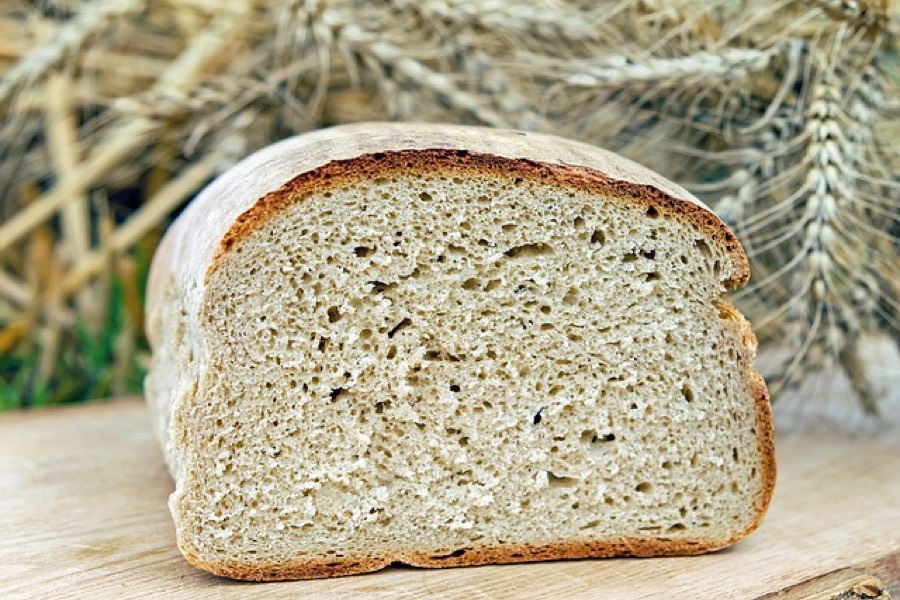
Half a loaf of white bread cut open to show the airy crumb, with ears of wheat behind it

Bread

InflammatoryGrains
High
Inflammation Score
7/10
Anti-inflammatoryInflammatory
Serving size
2 slices (60 g)
Key nutrients
Refined wheat starchGluten (wheat protein)FructansSodium
Better swap

Why bread is inflammatory

Bread is inflammatory for most people, and the reason is how quickly it digests. White flour is ground to a fine powder, and baking turns it into an airy crumb with little left for the gut to work through. The starch becomes sugar within minutes, so blood sugar rises fast, and a diet built on those spikes is linked to low-level inflammation.

Bread scores 7 out of 10 on the inflammation scale, and that number is about the white sliced loaf most people eat. Wholegrain is better, though not by as much as the packaging suggests. When adults ate whole grains in place of refined grains, the inflammation markers in their blood fell only a little.

The second problem is gluten, the protein in wheat. In coeliac disease, which affects about one person in a hundred, the immune system attacks gluten and damages the lining of the gut. Plenty of people feel bloated after bread without having coeliac disease, and the fructans in wheat, a carbohydrate the gut ferments, explain part of that.

Read the ingredients rather than the front of the packet. Wholemeal flour first on the list means the bran and the germ are still there, which slows digestion. Brown colour means nothing on its own, because it often comes from added malt or caramel.

Sourdough helps, within limits. Slow fermentation lowers the sugar spike from some loaves, but that depends on the starter and the flour. Much supermarket sourdough is made quickly with baker’s yeast. Two slices eaten with eggs, fish or vegetables digest more slowly than four on their own.

Bread on the AIP diet

Bread is out during the elimination phase of the Autoimmune Protocol, which removes every grain. Wheat bread is the clearest case of all, because one slice brings gluten and refined flour together, and both are common triggers. For something to hold a topping, cassava flour flatbreads or thick slices of roasted sweet potato are compliant.

Benefits

  • Wholegrain loaves keep the bran and the germ, so they digest more slowly than white bread
  • Slow fermented sourdough can lower the sugar spike a loaf produces
  • Wholegrain bread brings fibre, magnesium and B vitamins that white flour has lost
  • Cheap, filling and easy to build a meal around with protein and vegetables

Watch out for

  • White flour bread digests fast and pushes blood sugar up quickly
  • It is one of the biggest sources of salt in most diets
  • Gluten rules it out for coeliacs, and every grain is off during AIP elimination
  • The fructans in wheat ferment in the gut and can leave you bloated

Get the inflammation score of any meal

Just snap a photo or describe your food to get its inflammation score and uncover hidden patterns that may be affecting your well-being.

Download on the App StoreGet it on Google Play
InflammaScan app

Frequently asked

Is bread inflammatory?

Yes, in the form most people eat it. White flour is ground fine and baked into an airy crumb, so it digests fast and pushes blood sugar up quickly. Wholegrain and slow fermented loaves are gentler, and a couple of slices inside a proper meal do far less than a day built on toast and sandwiches.

Is wholemeal bread better than white bread?

Yes, as long as wholemeal flour is the first ingredient. The bran and the germ stay in, which adds fibre and slows digestion. Many brown loaves are white flour with malt or caramel added for colour, so the ingredients list matters more than the shade.

Is sourdough bread anti-inflammatory?

Not on its own. Slow fermentation can lower the sugar spike some loaves produce, but that depends on the starter, the flour and how long the dough ferments, and much supermarket sourdough is made quickly with added yeast. A slow fermented wholegrain sourdough is the best version of bread, not a health food.

Can I eat bread on an anti-inflammatory diet?

Yes, with two conditions. Choose wholegrain, and treat it as part of a meal rather than the meal, so two slices with eggs, fish or vegetables rather than bread at every sitting. The exceptions are coeliac disease and the elimination phase of the Autoimmune Protocol, where wheat bread is out entirely.

The easiest way to follow an anti-inflammatory diet.

Identify inflammatory foods in seconds, log your symptoms and discover what’s inflaming you. Includes hundreds of recipes.

Download on the App StoreGet it on Google Play
InflammaScan app