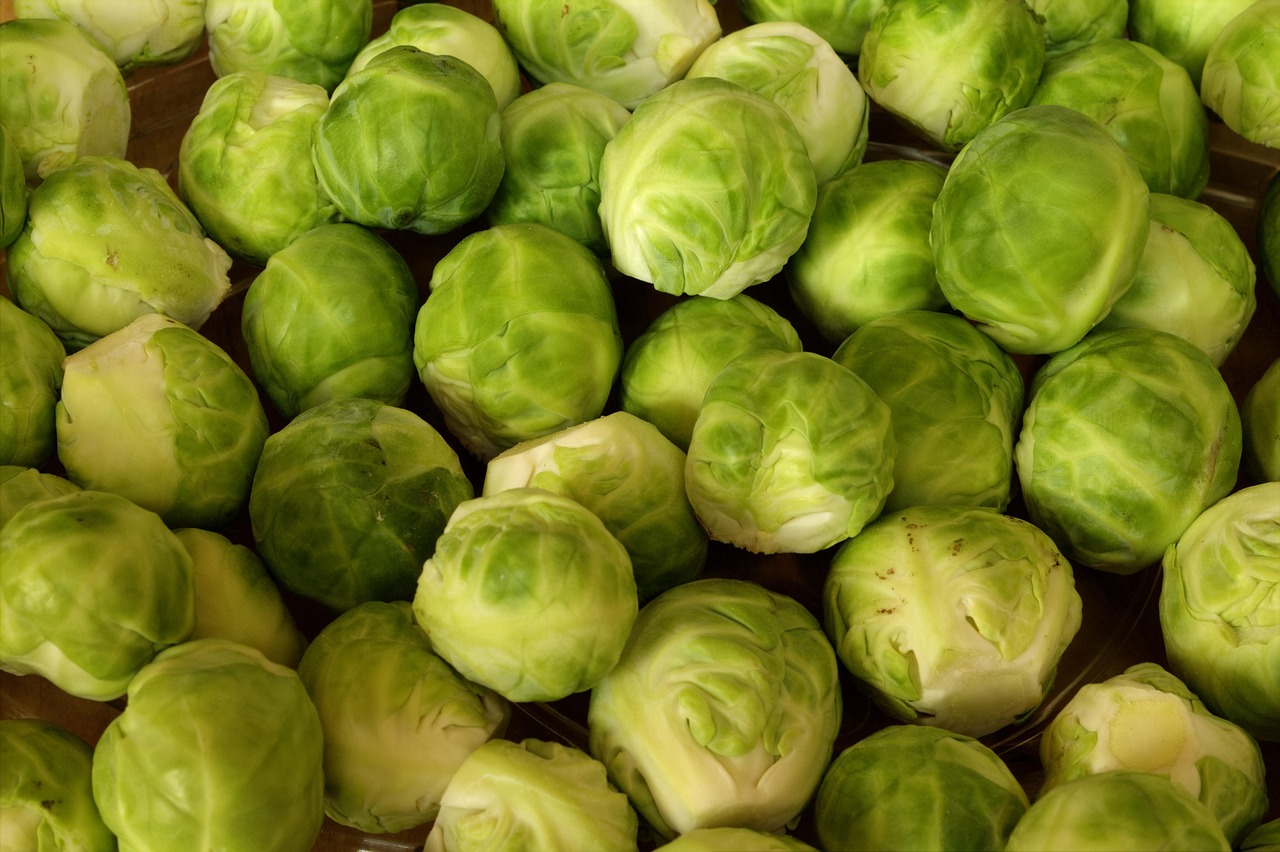
Brussels Sprouts
Why Brussels sprouts are anti-inflammatory
Brussels sprouts are anti-inflammatory largely because of sinigrin, a sulphur compound of the cabbage family that sprouts are especially rich in. Sinigrin only becomes active when the sprout is damaged. Cutting or chewing one breaks the cells, and an enzyme inside turns the sinigrin into allyl isothiocyanate, the sharp substance that gives mustard its bite. The bitterness people complain about comes from the same chemistry.
Allyl isothiocyanate has mostly been studied in cells and in mice, where it quietens the signals immune cells use to start inflammation. The sprout itself has been tested in people less often. Volunteers who ate a bag of cooked sprouts a day for three weeks passed less of a marker of cell damage in their urine. Cell damage and inflammation go together, but the trial did not measure inflammation.
Vitamin C is the plainer reason to eat them. A cup of them, cooked, covers more than a day’s worth. Vitamin C is an antioxidant: it neutralises reactive molecules that would otherwise damage cells.
Buy them small and firm. Big loose heads and yellowing outer leaves mean the sprout has been out of the ground a while. Frozen sprouts are boiled for a moment before freezing, which destroys the enzyme that makes allyl isothiocyanate. The vitamin C survives.
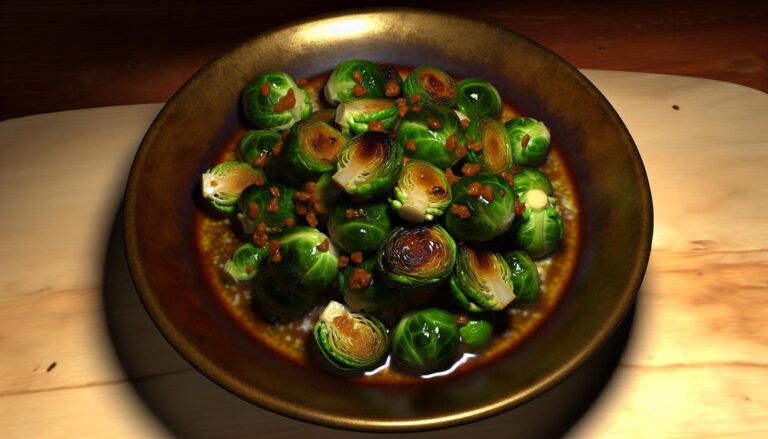
Halve them and roast or fry them hot. A long boil is where the sprout got its bad reputation: the vitamin C goes into the water and the smell goes into the kitchen.

Brussels Sprouts on the AIP diet
Brussels sprouts are allowed on the Autoimmune Protocol from the first day of the elimination phase. Nothing about a cabbage-family vegetable belongs to the groups that come out: grains, legumes, nuts, seeds, nightshades and dairy. Watch what they are cooked with rather than the sprout. Shredded with cheese, or finished with a splash of soy sauce, and the dish stops being compliant even though the vegetable still is.
Benefits
- Cutting or chewing a sprout makes allyl isothiocyanate, the compound behind its effect
- A cup of them cooked covers more than a day of vitamin C, an antioxidant
- Cheap and at their best in winter, when little else green is in season
- High in fibre, which feeds the gut bacteria involved in keeping inflammation down
Watch out for
- A long boil sends the vitamin C and the sulphur compounds into the water
- Frozen sprouts are boiled briefly first, so the enzyme that makes the compound is gone
- Their vitamin K interferes with warfarin and other blood thinners, so keep portions steady
- Roasted in bacon fat they stop being a light plate of vegetables
Frequently asked
Are Brussels sprouts inflammatory?
No, Brussels sprouts are anti-inflammatory. Cutting or chewing one turns sinigrin, a sulphur compound of the cabbage family, into allyl isothiocyanate, the sharp substance that also gives mustard its bite.
Why do Brussels sprouts taste bitter?
The bitterness comes from the same sulphur compounds the vegetable is valued for. Roasting softens it, because the heat browns the sugars in the outer leaves. Boiling them for a long time makes it worse.
Are frozen Brussels sprouts as good as fresh?
They are boiled for a moment before freezing, and that destroys the enzyme that turns sinigrin into the active compound. The vitamin C and the fibre survive, so a frozen bag is still worth having.
Can you eat Brussels sprouts on the AIP diet?
Yes, from the first day of the elimination phase. They are a cabbage-family vegetable, not a grain, legume, nut, seed, nightshade or dairy. Check what they are cooked with instead.