Pizza
Why pizza is inflammatory
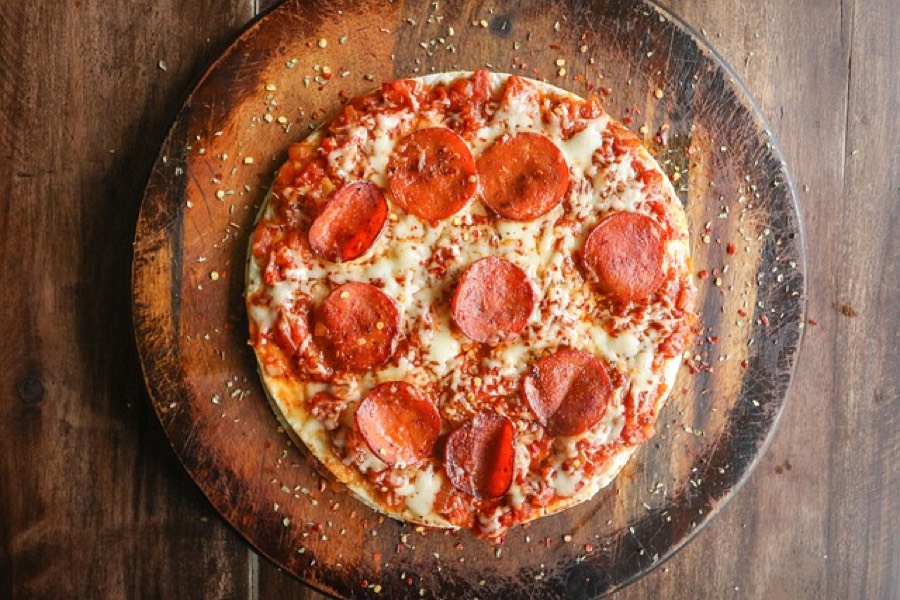
Pizza is inflammatory, and what makes it so is the stack rather than any one ingredient. The base is white flour, which digests fast and carries almost no fibre. On top go cheese, salt and, on most orders, cured meat, which sits even higher on our inflammation scale than the white bread underneath.
The 8 out of 10 it scores describes the pizza that arrives in a box. Delivery and frozen pizzas are ultra-processed, put together in a factory from refined flour, fat, salt and additives. Adults who eat a lot of that kind of food tend to show higher inflammation markers in their blood. That research compares whole diets, so it says more about pizza every week than about one pizza.
Salt is the part people underestimate. Two slices of a shop-bought pepperoni pizza can carry half an adult’s sodium for the day. Salt does more than raise blood pressure: in the laboratory, high levels push one type of immune cell toward a more inflammatory state.
A thin base with tomato, mozzarella and olive oil is a different meal from a deep crust under pepperoni. Of everything you can put on a pizza, cured meat moves it furthest up the scale. On a frozen box, read the salt for the portion you will really eat, not per 100 grams.
Made at home, most of this is negotiable. You set the salt, choose the flour, and cover the surface with vegetables instead of pepperoni. Serve it with a salad, and make it an occasional dinner rather than a weekly one.

Pizza on the AIP diet
Pizza is out during the elimination phase of the Autoimmune Protocol, and not on one count but four: wheat in the base, dairy in the cheese, tomato in the sauce and cured meat on top. Tomato is a nightshade, and those come back last of all, so even a plain margherita stays out for months. A cassava flour base with basil and olive oil is the compliant version.
Benefits
- The tomato sauce brings lycopene, and cooking it makes that easier to absorb
- Cheese adds calcium and protein, so a slice fills you more than plain bread
- Vegetable toppings count: peppers, onion and mushroom put back some fibre
- Made at home you control the flour, the salt and how much meat goes on
Watch out for
- Two slices can carry half an adult's sodium for the day
- The white flour base digests fast and leaves little fibre behind
- Pepperoni and salami are processed meat, cured with salt and preservatives
- Delivery and frozen pizzas are ultra-processed, and few people stop at one slice
Frequently asked
Is pizza inflammatory?
Yes. The base is white flour, the toppings are usually salty and fatty, and a delivery or frozen pizza is ultra-processed food. A pizza now and then does very little. Pizza most weeks, in the portions it is normally served in, is the part that adds up.
Is homemade pizza better than delivery?
Yes, and by more than most people expect. You decide the salt, the flour and the toppings, and vegetables can take the place of pepperoni. It is still bread with cheese on it, so the portion still counts.
Which pizza topping is the worst?
Cured meat. Pepperoni, salami and sausage bring salt and the preservatives that come with processed meat. Vegetable toppings are the opposite case: mushroom, pepper and onion add the fibre the base has lost.
Can I eat pizza on an anti-inflammatory diet?
Yes, occasionally. Keep it to a couple of slices next to a salad rather than half a pizza on its own, and pick tomato, vegetables and mozzarella over a meat feast. The exception is the Autoimmune Protocol, where wheat, dairy and tomato are all out during elimination.