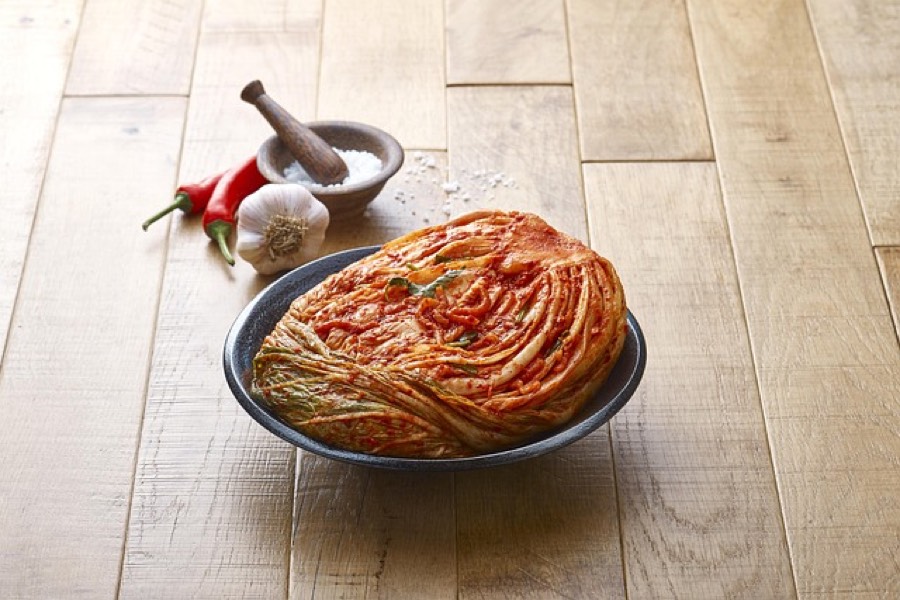
Whole napa cabbage kimchi in a dark bowl, with red chilli, garlic and salt beside it

Kimchi

Anti-InflammatoryVegetables
Low
Inflammation Score
2/10
Anti-inflammatoryInflammatory
Serving size
1/2 cup (75 g)
Key nutrients
Live cultures (LactobacillusLeuconostoc)Vitamin CFibreSodium
How often
A side portion most days, from the fridge section

Why kimchi is anti-inflammatory

Kimchi is anti-inflammatory, and the reason is the bacteria that make it. Cabbage is salted, coated in chilli, garlic and ginger, and left to sour for days or weeks. Lactic acid bacteria do the souring, and a jar that has not been heated still carries them alive when you eat it.

The bacteria in kimchi join the ones already living in your gut, and eating it regularly makes that population more varied. In a study where healthy adults built their meals around fermented foods, that variety went up and their blood markers of inflammation came down. Kimchi was one food among several on that menu. On its own it has mostly been tested on blood sugar and blood pressure, and both came down a little.

Salt is the one thing working against kimchi. Fermentation needs enough of it to keep the wrong microbes out, so a side portion carries a noticeable share of the salt an adult should have in a day. That salt is what keeps kimchi at 2 out of 10 on our inflammation scale.

Buy it from the fridge rather than the ambient shelf. Kimchi heated in the jar keeps its taste and loses its live bacteria, which is what a pasteurised label tells you. Check the ingredients for added sugar, and for the fish sauce or salted shrimp most recipes include.

Eat it cold, a few forkfuls beside whatever you are already having, because stirring it into a hot stew kills the bacteria.

Kimchi on the AIP diet

Kimchi is out during the elimination phase of the Autoimmune Protocol, and the chilli is why. Gochugaru is made from peppers, and peppers are nightshades, a family the protocol removes in full. Fish sauce and salted shrimp are fine; the sugar some brands add is not. Plain sauerkraut, or white kimchi made without chilli, carries the same live bacteria until peppers come back in.

Benefits

  • Carries live lactic acid bacteria that join the ones already in your gut
  • A diet built on fermented foods lowered blood markers of inflammation
  • Kimchi trials saw blood sugar and blood pressure come down a little
  • A portion adds vegetables, fibre and vitamin C to the meal

Watch out for

  • Salty: a side portion carries a noticeable share of a day's salt
  • Pasteurised jars have been heated, so no live bacteria are left
  • Some brands add sugar to the paste to speed the fermentation
  • Usually made with fish sauce or salted shrimp, so rarely vegan

Get the inflammation score of any meal

Just snap a photo or describe your food to get its inflammation score and uncover hidden patterns that may be affecting your well-being.

Download on the App StoreGet it on Google Play
InflammaScan app

Frequently asked

Is kimchi inflammatory?

No. It is vegetables soured by lactic acid bacteria, and those bacteria tend to settle the gut rather than irritate it. The salt is the part worth watching, not the fermentation.

Does shop-bought kimchi still have live bacteria?

It depends on the jar. Kimchi sold from the fridge is usually still fermenting, while anything labelled pasteurised has been heated and no longer carries live bacteria. The taste survives that; the microbes do not.

Is kimchi too salty to eat every day?

Not at the size it is normally served, which is a few forkfuls beside a meal. It adds up if you eat it by the bowlful, or if the rest of what you eat is already salty.

Is kimchi allowed on the AIP diet?

No. The chilli powder makes it a nightshade food, and the elimination phase of the Autoimmune Protocol takes out that whole family. Plain sauerkraut or white kimchi, made without chilli, gives you the same live bacteria.

The easiest way to follow an anti-inflammatory diet.

Identify inflammatory foods in seconds, log your symptoms and discover what’s inflaming you. Includes hundreds of recipes.

Download on the App StoreGet it on Google Play
InflammaScan app



