Kale
Why kale is anti-inflammatory
Kale is anti-inflammatory, and the compound doing most of that work is kaempferol. Kaempferol is a flavonoid, one of the substances a leaf makes to protect itself, and kale carries more of it than most vegetables in the shop. In laboratory work, kaempferol blocks some of the signals immune cells use to start inflammation.
In people the evidence is looser. A large survey of American adults found less of an inflammation marker in the blood of those whose diets carried the most flavonoids. Flavonoids also come from tea, onions and berries, so that link is about a way of eating rather than about kale alone.
Kale also belongs to the cabbage family, and that brings a second kind of compound. Sulphur substances stay inactive inside the leaf until a knife or a chew breaks the cells open. People who eat plenty of cabbage-family vegetables show lower inflammation markers in a blood test than those who rarely eat them.
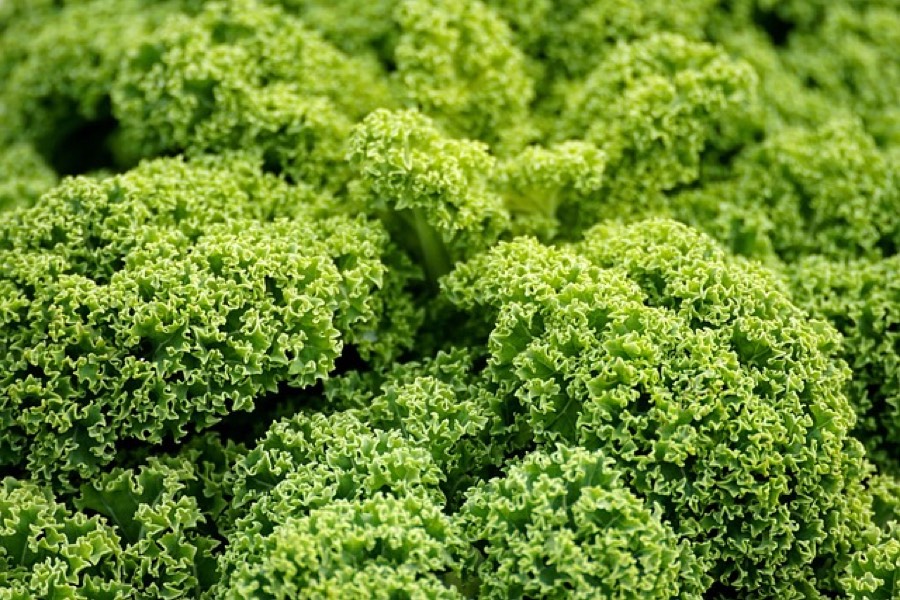
Kale comes in two shapes. Curly kale has stiff ruffled leaves on a woody stem worth stripping out. Cavolo nero, sold as black or dinosaur kale, is flatter, softer and quicker to cook.
Rub raw leaves with oil for a minute and they soften enough for a salad. Cooked, keep it fast and hot, because a long boil washes the flavonoids and the sulphur compounds into the water. If you take warfarin, the vitamin K in kale changes how the drug works, so keep your portions steady and tell your doctor.

Kale on the AIP diet
Kale is allowed on the Autoimmune Protocol from the first day of the elimination phase. It is a leafy green in the cabbage family, and nothing about it belongs to the groups that come out: grains, legumes, nuts, seeds, nightshades or dairy. Watch the extras rather than the leaf. Kale salads from a deli counter often arrive with cashews, parmesan or a mustard dressing, and all three are out in that phase.
Benefits
- A rich everyday source of kaempferol, the flavonoid behind most of its anti-inflammatory reputation
- Cabbage-family sulphur compounds as well, released when you cut or chew a leaf
- Low in oxalate, unlike spinach, so the calcium it carries is actually absorbed
- Rich in vitamin C, and one serving carries several days' worth of vitamin K
Watch out for
- Its vitamin K interferes with warfarin and other blood thinners, so keep portions steady
- A long boil washes the flavonoids and sulphur compounds into the water
- Bagged kale chips are usually fried and salted, so treat them as a crisp
- Bottled green juices often carry a splash of kale behind cheaper fruit
Frequently asked
Is kale inflammatory?
No, kale is anti-inflammatory. It is one of the best everyday sources of kaempferol, a flavonoid that interferes with the signals immune cells use to start inflammation, and it carries cabbage-family sulphur compounds on top of that.
Is raw or cooked kale better?
Both work. Raw keeps everything in the leaf, and rubbing it with oil for a minute makes it soft enough for a salad. Cooked is fine as long as it is quick, in a hot pan or a few minutes of steam. The long boil is the one to avoid.
Is cavolo nero the same as kale?
Yes. Cavolo nero, also sold as black or dinosaur kale, is the same vegetable in a different shape: flatter, softer leaves that cook faster than the curly sort. Buy whichever suits what you are cooking.
Can you eat kale on the AIP diet?
Yes, from the first day of the elimination phase. It is a leafy green, not a grain, legume, nut, seed, nightshade or dairy. Watch what comes with it in a ready-made salad, because cashews, cheese and mustard dressings are all out.
Anti-inflammatory recipes with Kale

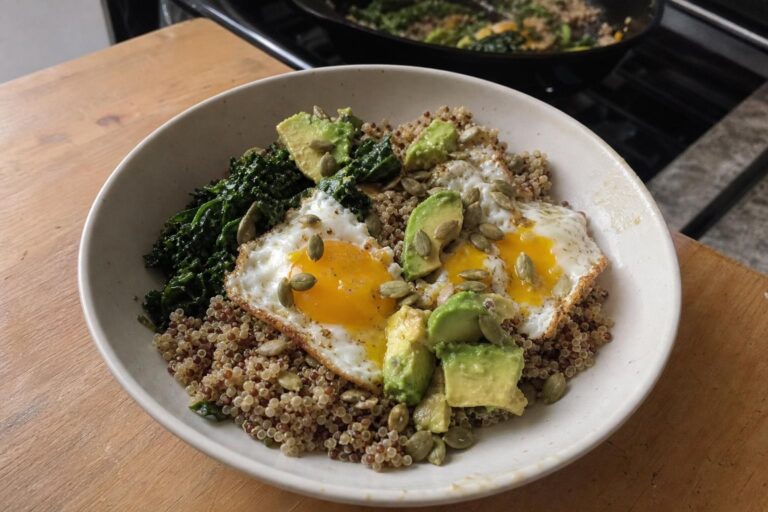
Savory Quinoa Breakfast Bowl with Kale and Eggs Recipe

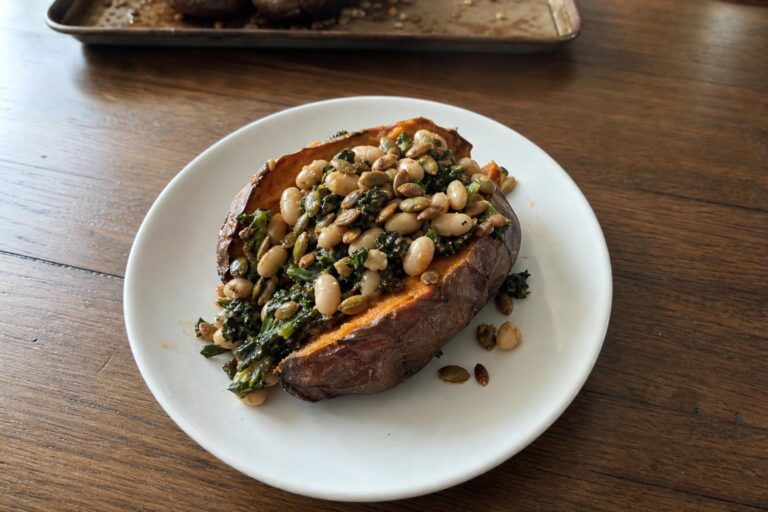
White Bean and Kale Stuffed Sweet Potatoes Recipe

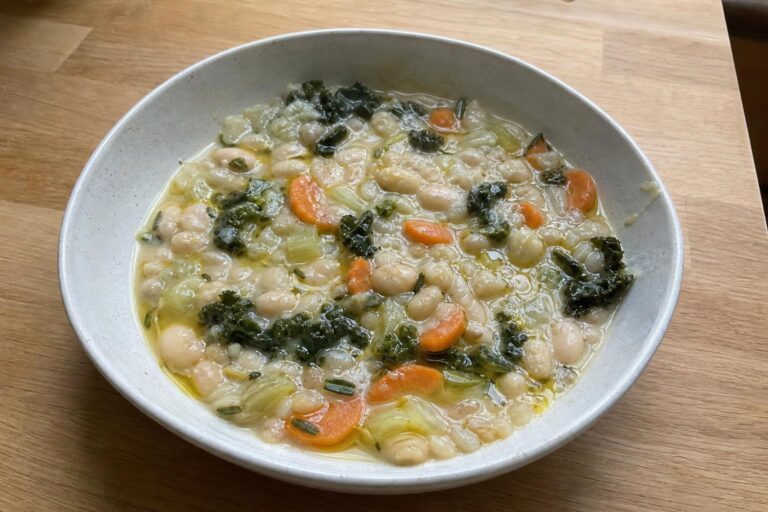
White Bean and Rosemary Stew Recipe

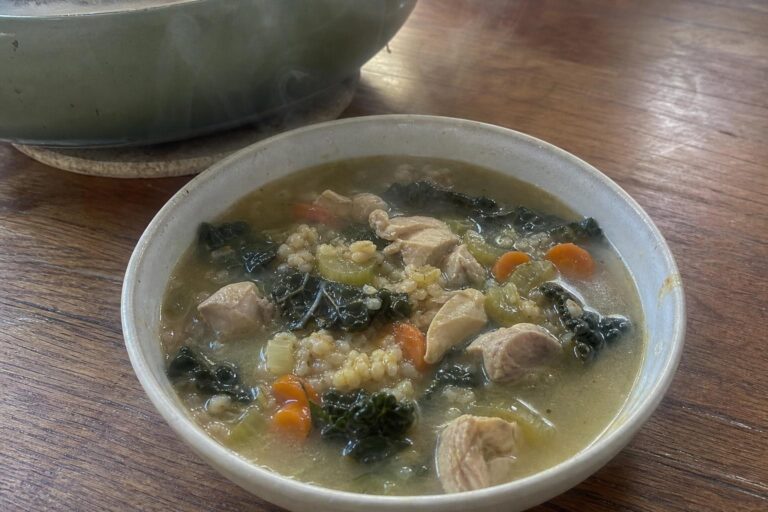
Chicken, Brown Rice, and Kale Soup Recipe

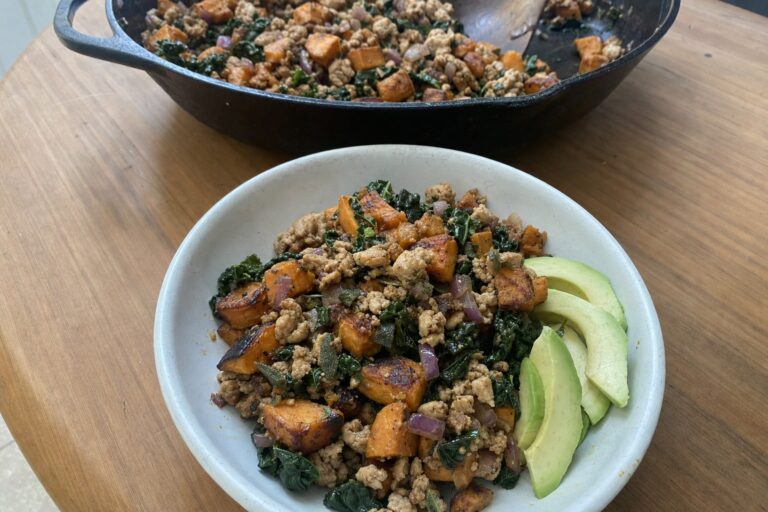
Sweet Potato, Turkey and Sage Breakfast Hash Recipe