Grapefruit vs Grapes: Which Is Less Inflammatory?
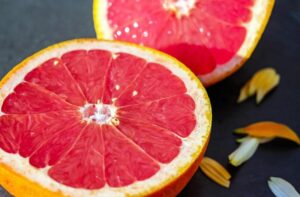
Grapefruit

Grapes
Neither grapefruit nor grapes is less inflammatory than the other: both score 2 on the inflammation scale. They sit in the same part of the fruit bowl, and both earn that score on what they contain rather than on a result in a blood test.
The bitterness in grapefruit is naringin, a flavonoid your gut turns into naringenin, and pink and red varieties add lycopene, an antioxidant the white ones lack. Half a grapefruit covers about half a day of vitamin C. Six months of daily grapefruit juice left women’s arteries slightly less stiff, although six weeks of eating the fruit daily left the inflammation marker in the blood unchanged. One warning outweighs all of that: grapefruit blocks a gut enzyme that breaks down many common medicines, and the block lasts about a day, so taking your pill at another hour does not get around it. Check your prescriptions before you make grapefruit a habit.
Grapes keep their best part in the skin, the dark pigments and tannins, so black and red grapes beat green ones. Sugar is the weak spot: a grape holds little fibre for a fruit and gives you nothing to slow down for, no peel and no core, so a bunch disappears faster than a bowl of berries would. Grape seed extract, the concentrated form, brings blood pressure down a little, but grapes themselves have not reliably shifted the inflammation markers. Eat grapefruit in segments rather than as juice, because most of the naringin sits in the pith that juicing throws away, and serve grapes in a bowl instead of eating from the bag.
Side by side
| Grapefruit | Grapes | |
|---|---|---|
| Inflammation Score | Low · 2/10 | Low · 2/10 |
| Category | Fruits | Fruits |
| Serving size | Half a medium grapefruit (123 g) | 1 cup (151 g) |
| Key nutrients | Naringin, Lycopene (pink and red), Vitamin C, Pectin | Anthocyanins, Proanthocyanidins, Resveratrol, Vitamin K |
| How often | Half a fruit most days, medicines permitting | Daily, the darkest bunch you can find |
On the AIP diet
Grapefruit
Grapefruit is allowed on the Autoimmune Protocol from day one, elimination included. It is a fruit, so it holds none of the grains, legumes, nuts, seeds, nightshades or dairy the protocol takes out. Two things still apply. AIP asks you to keep total fruit sugar modest across the day, and the medicine interaction has nothing to do with which diet you follow, so check your prescriptions first.
Grapes
Grapes pass the Autoimmune Protocol from day one, elimination included. Fruit is not on the list the protocol takes out, and a bowl of grapes is one of the few sweet things left standing once sugar and dessert are gone. Two things to check: keep the total fruit sugar across the day modest, and read the packet on raisins, which are often oiled and treated with sulphites.
What each one brings
Grapefruit
- The bitterness is naringin, a flavonoid your gut turns into naringenin
- Pink and red varieties carry lycopene, an antioxidant white grapefruit lacks
- Half a grapefruit holds about half a day's vitamin C, another antioxidant
- Six months of daily juice left women's arteries slightly less stiff
Grapes
- The skin carries the dark pigments and tannins, so black and red grapes beat green
- Grape seed extract, the concentrated form, brings blood pressure down a little
- Sweet enough to stand in for a dessert while still being whole fruit
- A cup covers roughly a fifth of a day's vitamin K
Watch out for
Grapefruit
- Furanocoumarins block the gut enzyme that breaks down many common medicines
- The interaction lasts about a day, so moving your dose away from breakfast does not help
- Eaten daily for six weeks, it left the blood marker of inflammation unchanged
- Most of the naringin sits in the pith, and juice leaves it behind
Grapes
- Easy to overeat: no peel, no core, nothing that makes you stop
- Low in fibre for a fruit, so the sugar arrives faster than it does from berries
- Raisins are the same grape with the water gone, so a small box is a big bunch
- Grape polyphenols do not reliably move the inflammation markers in a blood test
Get the inflammation score of any meal
Just snap a photo or describe your food to get its inflammation score and uncover hidden patterns that may be affecting your well-being.